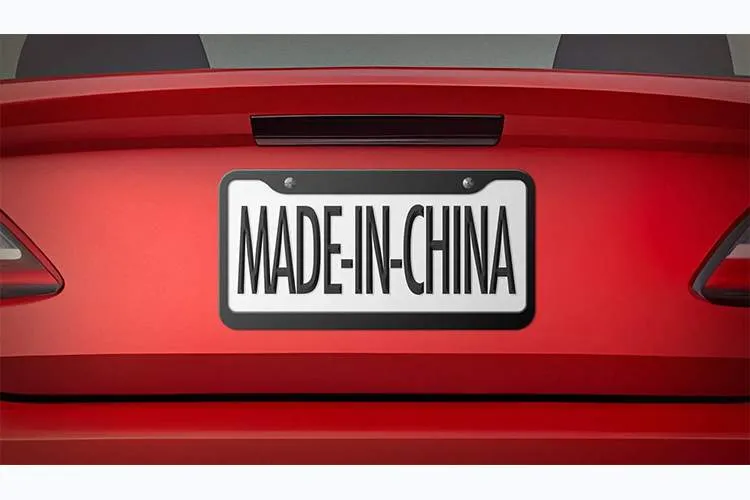
The relationship between the U.S. and Chinese auto industries is entering a new phase. According to ETNA, American automakers that for years considered China one of their most important growth markets and production bases are now reducing their presence in the country; meanwhile Chinese rivals, by rapidly developing products and increasing production capacity, are moving closer to global markets including the United States.
Ford has announced it will stop producing Lincoln luxury brand vehicles in China for export to the United States. The company intends to increase Lincoln production at plants inside the U.S., including its facilities in Louisville and Chicago.
On the other side, General Motors is reportedly stopping sales of Chevrolet-branded vehicles in China. However, the company will continue producing Chevrolets in China for export to other markets and will focus its China market efforts more on the Buick and Cadillac brands.
These changes indicate a decline in the attractiveness of the Chinese market for traditional American automakers. China was once one of the most important growth engines for global carmakers, but in recent years domestic Chinese automakers, including BYD and Geely, have grown rapidly and expanded their presence in international markets.
One of the most important reasons for this shift is intense price competition in China’s auto industry. High production capacity among Chinese automakers has led companies to enter price wars to maintain market share and offer their products at more competitive prices in various markets. At the same time, the quality of Chinese cars has improved significantly in recent years and the gap between them and products from American, European, Japanese, and Korean automakers has narrowed.
According to AXIOS, these conditions have had serious consequences for legacy automakers. According to Tu Lo, founder of Sino Auto Insights, Chinese companies are the only big players in the auto industry that are still growing, while traditional automakers are cutting staff on a large scale.
But the more interesting part of the story is that despite U.S. efforts to limit the entry of Chinese cars, these companies may find another route to the American market: production in North America. Direct exports of cars from China to the U.S. still face serious trade and tariff barriers. For this reason, some experts believe Chinese automakers may build factories in Mexico or even on U.S. soil instead of shipping cars produced in China, using regional production capacity to enter the U.S. market.
Mexico could play an important role in this. The Mexican government, in negotiations over revising the U.S.-Mexico-Canada trade agreement, is seeking to reduce tariffs on cars produced in North America. Currently the U.S. applies a 25 percent tariff for non-American content of cars imported from Canada and Mexico, and Mexico seeks to reduce this rate to 10 percent.
However, the pathway for Chinese automakers to enter the U.S. is still not simple. The U.S. is sensitive to the use of Mexico as a route to circumvent China import tariffs, and Washington has recently accused Mexico of facilitating the indirect entry of Chinese products by allowing the operation of certain networks connected to Chinese companies.
On the other hand, technological restrictions are another barrier. The U.S. has previously restricted the use of some internet-connected car technologies originating from China, and this policy was recently applied to the electric brand Polestar, which is under Chinese ownership. Therefore, even producing cars in North America will not necessarily mean Chinese automakers have free access to the U.S. market.
Despite these obstacles, the overall trend in the auto industry is changing. On one hand, American companies are reducing their presence in China, and on the other, Chinese automakers are building production capacity outside China. If these companies can overcome U.S. trade and regulatory barriers, their competition with American automakers could enter a completely new phase.
This shift could also have implications beyond the auto industry. The transfer of production capacity, battery supply chains, electric vehicle technology, and Chinese automakers’ investment to North America could shift the industrial balance of power between the two countries; especially if Chinese cars can enter the U.S. market with lower prices and competitive technology.
In such circumstances, Ford and General Motors’ retreat from part of the Chinese market cannot be seen merely as an ordinary business decision. This development is part of a larger realignment of the global automotive supply chain; a realignment in which China has shifted from being an important market for Western automakers to becoming a global competitor and a potential rival for the U.S. market itself.