The sky over Kish

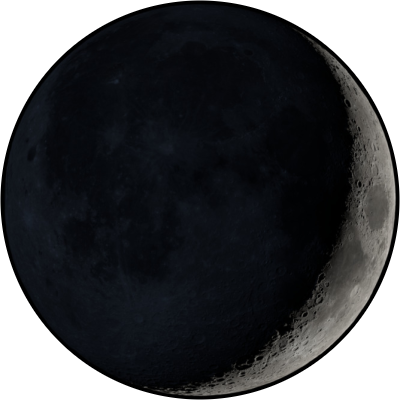
The moon

Waxing crescent
Illuminated 9%
Age of the moon 2.6 days
Moonrise 07:55
Moonset 20:11
Distance 374,111 km

Where the month is

New moon 12 August
First quarter 20 August

First quarter in 5 days.

The sun

Sunrise 05:25
Solar noon 11:58
Sunset 18:30
Daylight 13 h 5 min

When it actually gets dark

Civil dusk 18:55
Nautical dusk 19:23
Astronomical dusk 19:53

Astronomical dusk is when the sky stops adding its own light. That is when to look.

  • The moon is nearly dark, so this is one of the best weeks of the month for seeing faint stars.
  • Days are getting shorter — about 1 minutes less daylight than yesterday.

The planets tonight

Venus

After dusk
Rises 08:54
Sets 20:40
Brightness mag -4.4

Bright enough to see from a lit street.

Saturn

Later tonight
Rises 21:05
Sets 09:25
Brightness mag 0.6

Bright enough to see from a lit street.

Mars

Before dawn
Rises 01:37
Sets 15:23
Brightness mag 1.3

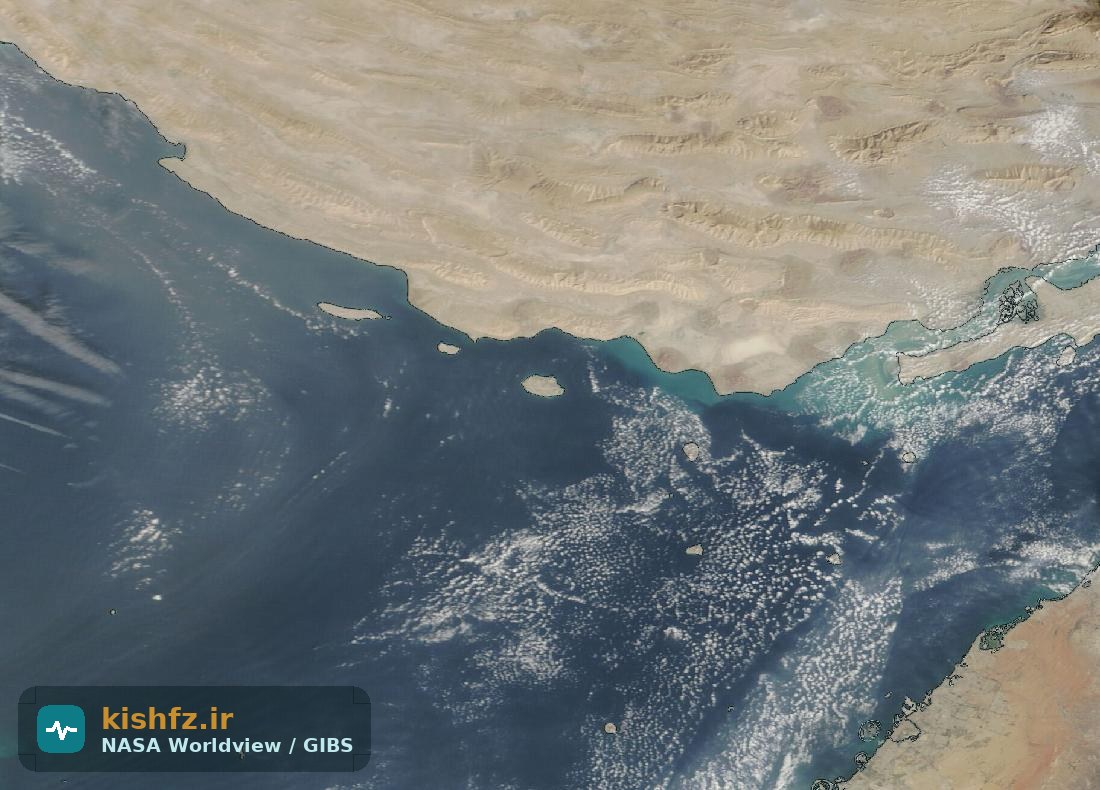
Kish from orbit

Kish from orbit
Kish from orbit True colour, from the MODIS instrument on NASA’s Terra satellite. 13 August 2026
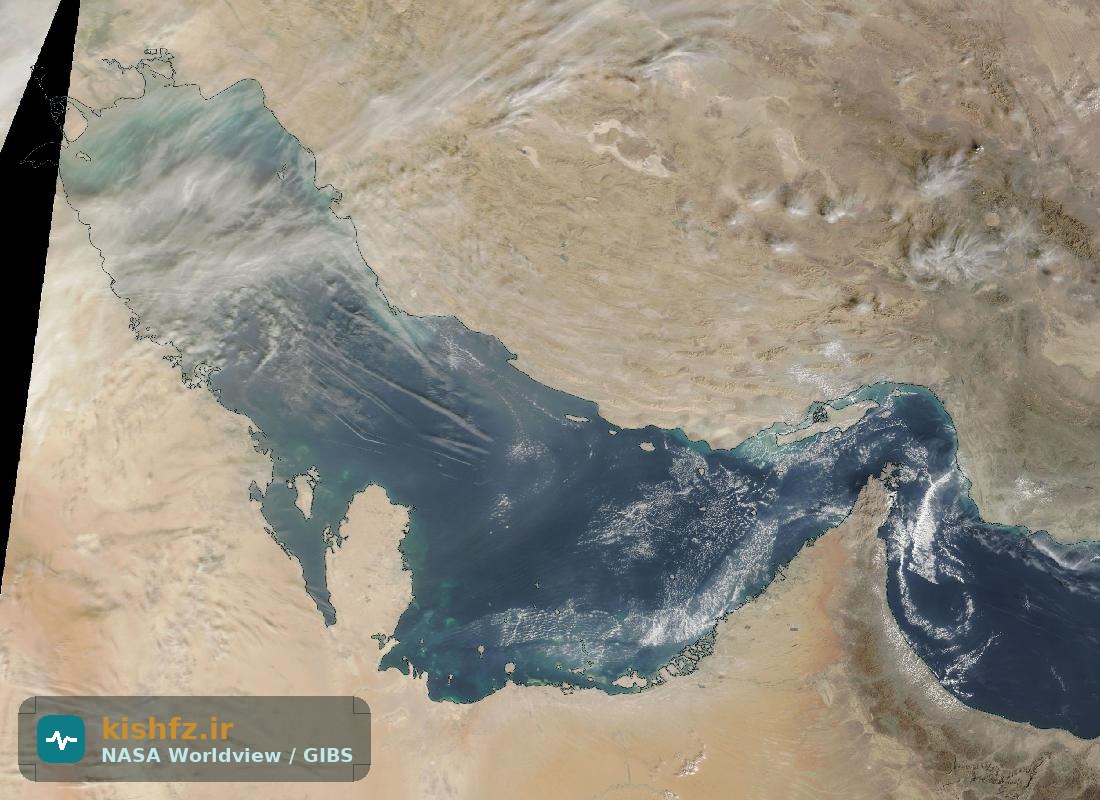
The Persian Gulf by day
The Persian Gulf by day The whole Persian Gulf in one pass, with the coastlines drawn on. 13 August 2026
The Persian Gulf at night
The Persian Gulf at night VIIRS is sensitive enough to image city light: this is the region drawn by where people are. 13 August 2026

These are assembled from the strips the satellite saw as it passed. A seam, a black band or a missing corner is a gap in that day’s coverage, not a fault in the picture.

NASA’s picture of the day

Total Solar Eclipse from Greenland
Total Solar Eclipse from Greenland © On August 12 On August 12, the Moon's shadow reached out to touch our fair planet. Beginning in the Arctic Ocean, it swept along a narrow track that led the dark lunar umbra across parts of Greenland, Iceland, the Atlantic, Portugal, and northern Spain. And for a moment, denizens of Earth who found themselves with clear skies under the shadow of the Moon could witness a total solar eclipse. After dodging the weather by sea and making a landing along Rype Fjord on the Greenland east coast (at 71.07055N, 27.71252W), this hard-won snapshot was captured at 17:33:26 UTC. That's near the initial reach of clearing skies along the path of totality, so the image is likely one of the first unobstructed views of the totally eclipsed Sun. Through a break in the clouds, the stunning photo also records one of this eclipse's transient diamond rings and the magnificent solar corona emerging near the moment totality began. More spectacular eclipse images: Solar Eclipse of 2026 August 12 Published by NASA on 14 August 2026

Positions, times and imagery from NASA — the JPL DE421 ephemeris, NASA Worldview satellite imagery, and the Astronomy Picture of the Day.