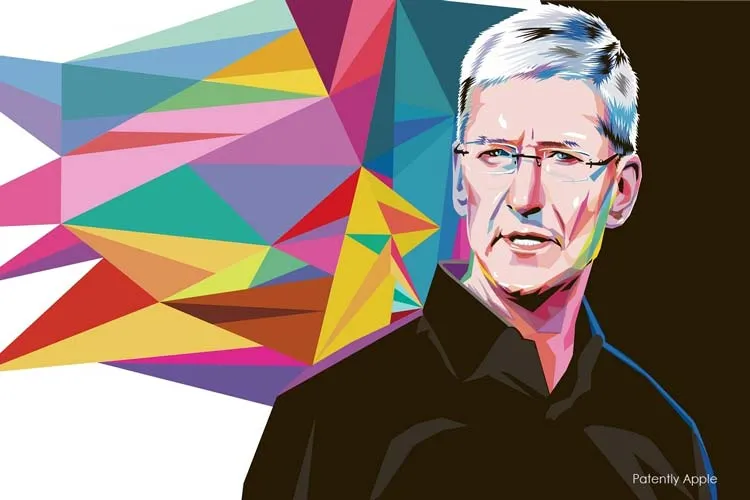
When Tim Cook became Apple’s CEO in August 2011, he assumed a heavy responsibility. He had succeeded Steve Jobs; a man many considered one of the greatest innovators in the world. Now, 15 years later, Cook has taken a different path and brought Apple to an unprecedented position, and John Ternus, Apple’s head of hardware engineering, who succeeded him on September 1, inherits a completely different legacy.
Cook will be remembered as an executive who turned the iPhone into an essential tool for performing a wide range of tasks; from buying a cup of coffee and listening to music to exercising and paying a credit card bill. All of this was made possible thanks to internet services and accessories that Cook advanced over the past decade.
According to CNN, Apple’s stock value rose more than 2,000 percent during his tenure. The company’s market value also briefly reached five trillion dollars in July, making Apple the second company ever to hit that milestone.
David Yoffie, a professor at Harvard Business School who conducted a case study on Apple and Tim Cook, says: “Cook managed to bring the iPhone to a level of ubiquity and success that no one considered likely or even possible.”
However, reaching this position was not solely the result of Cook’s smart product decisions. He was also forced to manage Apple’s political relationships in both the United States and China-two countries that play a vital role in Apple’s operations and the vast iPhone empire, at a time when relations between them were tense.
According to Gene Munster, managing partner at the technology investment firm Deepwater, who has tracked Apple’s developments since 2004, Cook was as much a “seasoned politician” as he was a CEO.
Cook rose to the position of Apple’s CEO thanks to his expertise in operations management and supply chain. Still, experts say it was his calm demeanor, quick decision-making, and negotiation skills that helped keep the vast iPhone production and sales apparatus running uninterrupted despite geopolitical challenges.
Ron Johnson, who led Apple’s retail operations from 2000 to 2011, described Cook-who at the time was the company’s chief operating officer-as a “smart” and “strategic” figure in the weekly meetings with Jobs and Apple’s senior executives. He told CNN: “He was perhaps the most thoughtful member of the senior leadership team. He always listened first and only spoke when he had something to add.”
Under his leadership, Apple made a decision that helped the company avoid the very heavy tariffs of the Trump administration. In response to pressure to manufacture its phones in the United States, Apple, instead of accepting that demand, pledged to invest $600 billion to expand its activities in the U.S.; an investment that also included producing critical iPhone components on American soil.
Even during Trump’s first term, he said that Cook was one of the few executives who contacted him personally.
Jeffrey Sonnenfeld, senior associate dean for leadership studies at Yale School of Management and a former White House adviser, said: “Among the CEOs the president respects, Tim Cook occupies a very high place.”
Cook pushed Apple to shift some production out of China and diversify its manufacturing base while still managing to maintain favorable views among Chinese consumers and officials; an achievement Munster described as remarkable. He said: “I don’t know how one can do that. I don’t know how that equation could even be feasible.”
However, the COVID pandemic and Trump-era tariffs showed that Apple’s extensive reliance on China could expose the company to serious problems, and reducing that dependence is only one of the challenges Ternus will face after becoming CEO.
Another challenge is Apple’s tense relations with regulators in Europe, the company’s second largest market. Apple was forced to change how it operates the App Store in the region. A redesigned version of Siri will also not be released in the continent due to European Union regulations.
Artificial intelligence is also another challenge. Pressure on Apple to make up for its lag in this area has been growing, especially after its most recent major product, Vision Pro, failed to meet expectations. Meanwhile, the ongoing shortage of memory chips due to AI-driven competition has forced Apple and other companies to raise their product prices.
Still, in one of the last earnings calls of his tenure, Cook advised Ternus to focus on making products that make customers’ lives “richer.”
In April he said: “If you remain focused on that goal and make decisions based on it, an extraordinary business will emerge. Then we can build more products and repeat that success many times over.”