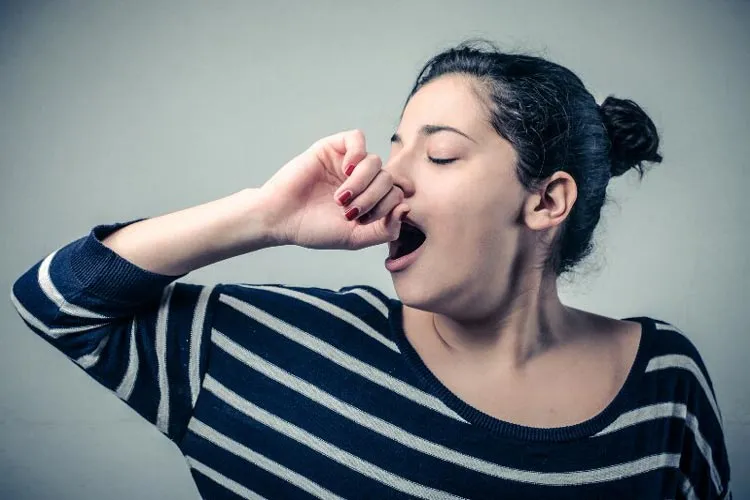
A new study shows that adolescents whose sleep schedules differ markedly between weekdays and weekends are more likely than others to develop anxiety; a finding that could draw special attention from parents and education officials on the eve of the school year.
The challenge of returning to the school routine after summer
With the start of the school year and the return of daily routines to normal, many adolescents who spent the summer going to bed late and keeping irregular schedules find it difficult to wake up early in the morning. During the school year, many students spend weekdays hoping to make up for lost sleep on weekend days; a pattern researchers call “social jetlag.”
Key findings of the University of Southampton study
According to a recent study at the University of Southampton, UK, this very phenomenon of social jetlag can have a significant negative impact on adolescents’ mental health. Researchers believe that given the biological changes in sleep during adolescence, paying serious attention to this age group’s sleep needs and even reconsidering school start times could be an effective approach.
In this research, conducted as a systematic review of twelve studies involving more than two hundred and thirty thousand people, it was found that adolescents who experience higher levels of social jetlag are more likely to report higher levels of anxiety. Interestingly, this relationship appears to operate as a vicious cycle; higher anxiety levels can in turn predict increased social jetlag. However, the study’s authors emphasized that this finding merely indicates a correlation, not a proven causal relationship.
According to the authors of this study, these findings highlight the importance of behavioral strategies focused on improving sleep quality and regularity as an effective tool for promoting mental health during adolescence.
The prevalence of anxiety among adolescents worldwide
Anxiety is already the most common mental health problem among adolescents. According to World Health Organization estimates, globally, 4.14 percent of children aged ten to fourteen and 5.05 percent of adolescents aged fifteen to nineteen suffer from anxiety disorders; a condition characterized by intense, persistent fear or worry that is difficult to control.
The main concern of experts is that mental health problems emerging during adolescence can have long-term consequences in later years of life; a matter that underscores the importance of early identification and intervention.
Why does adolescents’ biological clock change?
Each person has a chronotype or specific timing pattern that determines whether they are a morning person or a night owl. According to the study’s findings, although this trait usually remains stable across life, adolescence brings a notable shift toward an evening chronotype.
Sara Chelapa, one of the paper’s authors at the University of Southampton, explained that during puberty the body’s internal clock typically shifts later by several hours; meaning adolescents naturally feel sleepy later and, under ideal conditions, should also wake up later. She also referred to the multiple pressures adolescents face, including early school start times and the significant time they spend on social media; factors that particularly deprive them of adequate sleep on weekdays.
According to this researcher, the conflict between this biological tendency and early school start times creates conditions similar to a perfect storm for circadian misalignment; a state in which the internal clock is out of sync with the timing of the outside world.
The need to reconsider educational policies
Hannah Ravenhill, the lead author of this paper, stressed that it is necessary to look beyond individual actions and examine how broader social structures can affect people’s sleep quality. She said this path should begin with accepting biological changes in sleep during adolescence, continue with supporting this age group’s sleep needs, and ultimately include reconsidering secondary school start times to support adolescents’ health and wellbeing.
In conclusion, the study’s authors emphasized that public health recommendations should pay particular attention to promoting sleep health among adolescents and stress the importance of having a consistent, regular sleep schedule. In practice, this approach could mean schools reconsidering class start times and parents rethinking rules on screen use during evening hours; structural and seemingly small changes that, according to researchers, can be more effective for adolescents’ mental health than simple recommendations such as “go to bed earlier.”