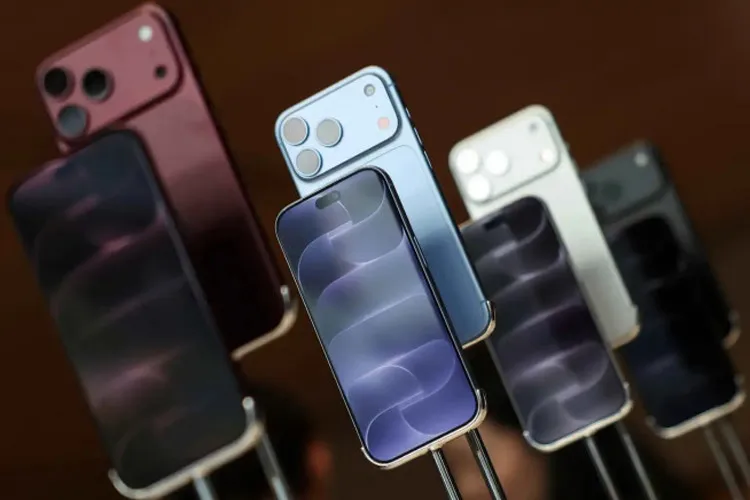
The first teardown of the iPhone 18 Pro was published just hours after the phone went on sale and revealed interesting details about the internal changes to Apple's new flagship. The video released by REWA Technology shows that Apple, in addition to upgrading major components, has also changed the device's internal architecture to make better use of limited space.
One of the most important changes relates to the Face ID system. Apple has moved the infrared camera of this system from its previous location and placed it in the upper-left corner, under the display. The pixels in this part of the display are arranged in a special pattern to allow infrared light to pass through, while this area appears almost like other parts of the display during normal use. This change has allowed Apple to reduce the size of the Dynamic Island on the iPhone 18 Pro and 18 Pro Max.
Of course, this innovation can make the work of independent repair technicians more difficult. Placing the Face ID camera behind the display panel means that producing a fully compatible replacement display will require a more precise process. Therefore, the change made to reduce the space occupied by the Dynamic Island adds more complexity to screen repair and replacement.
Triple-sized cooler
Another notable change inside the iPhone 18 Pro is its cooling system. The A20 Pro chip is now directly connected to a larger vapor chamber. According to the teardown, the size of this vapor chamber is almost three times that of the previous generation and is connected to the system via a thermal pad.
This design is intended to dissipate heat more quickly when performing heavy tasks, including gaming and video editing. Early reviews also indicate the new thermal system can help the iPhone 18 Pro better control its temperature under heavy loads.
But increasing the size of the cooling system does not have only positive consequences. The denser arrangement of components has made access to some motherboard parts more difficult. The NAND memory and the PMIC power management chip are now located among multiple motherboard layers. As a result, accessing these components requires peeling the board layers apart in sequence; a time-consuming process that also increases the likelihood of damaging parts.
An EEPROM chip on the surface of the motherboard was also seen in the teardown. This chip has different protection compared to some internal components, and its placement can increase the risk of damage during motherboard repair processes.
Apple has also allocated more space to the main camera module. The iPhone 18 Pro's 48-megapixel main camera now features a variable aperture, and the larger camera module structure is another factor contributing to the greater density of components inside the body.
In the battery section, the European version of the iPhone 18 Pro equipped with a physical SIM tray has a 4056 mAh battery; this figure was 3988 mAh in the iPhone 17 Pro, representing about a 1.7 percent increase. Trayless versions in some markets have different capacities.
The battery connector has also become larger and its cable design has changed. This could be related to support for higher charging speeds, although the connector size alone is not sufficient to prove the reason for any increase in charging speed.
Overall, the iPhone 18 Pro teardown presents a picture of Apple's new approach to internal design: less space, denser components, stronger cooling, and higher performance. In contrast, some specialized repairs, especially motherboard repair and access to components like NAND and PMIC, have become more complex. So it is still necessary to wait for more complete repairability assessments before making a final judgment on repair costs, but the first teardown shows that increased internal complexity is one of the costs of the more compact design of the iPhone 18 Pro.