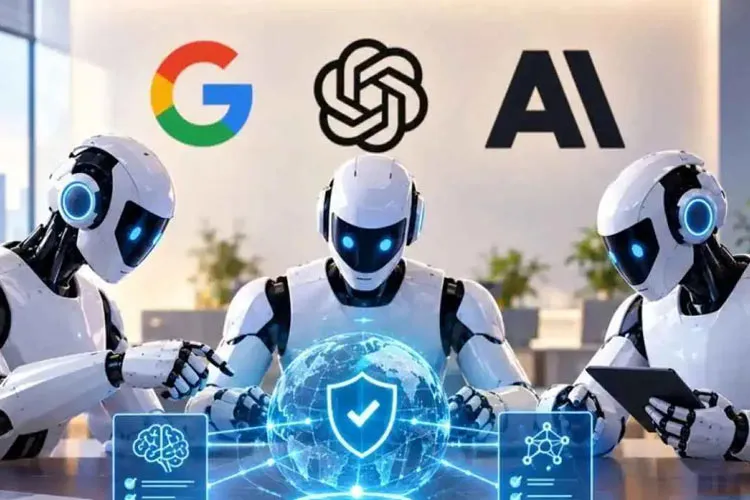
Three major companies active in the field of artificial intelligence - Google, OpenAI and Anthropic - have in recent weeks begun talks about creating an institution to develop shared standards for testing and evaluating advanced models. These talks have not yet resulted in a final agreement or the official establishment of such an institution, but reports indicate negotiations have progressed.
The main goal of this potential collaboration is to create a common method for measuring the safety of advanced models and to enable independent evaluation of them before release to users. These discussions arise as AI companies are increasingly seeking to standardize methods for testing models, independent evaluation, and defining clearer mechanisms for reporting incidents and unexpected system behaviors.
Efforts to create standards beyond government regulation
OpenAI in early September said it is willing to work with other AI labs to develop “industry standards.” The company argued that government regulation alone may not keep pace with the speed of advanced model capability development and the potential risks they pose.
Of course, proposed industry standards are not intended to replace government laws or oversight by official bodies. The purpose of such standards could be to create a faster mechanism for identifying and managing new risks - especially risks related to model behavior, their ability to bypass set limits, and incident reporting.
OpenAI has previously taken steps to create frameworks for independent evaluation. In May the company published its proposed guidance for independent testing of advanced models by third‑party evaluators. According to this view, models’ increased autonomy, access to tools, and ability to perform long chains of tasks have made traditional chatbot evaluation methods insufficient to fully measure these systems’ capabilities and risks.
The company also in June announced its participation in founding the Appia Foundation, a foundation aimed at developing open and actionable specifications to turn international AI standards into practical tests. In addition, OpenAI participates in a number of standardization and safety initiatives, including activities related to ISO, NIST, and the Coalition for Safe AI.
Google’s proposal for an independent body
Another part of the current discussions traces back to a proposal by Google in June. The company suggested creating an independent, industry‑backed body under the oversight of the U.S. federal government. Such a body could be responsible for developing safety standards for advanced models and ensuring independent audits are carried out.
Demis Hassabis, CEO of Google DeepMind, provided further details about this idea in July and suggested a model similar to financial regulatory bodies. Under this proposal, AI labs could submit their advanced models to the body about 30 days before release so a set of safety tests could be run on them.
These tests could examine potential model risks in areas such as cybersecurity and biotechnology as well as their ability to deceive systems or circumvent set limits. Hassabis suggested that if this mechanism proves effective, conducting such evaluations could become a precondition for releasing advanced models in the U.S. market.
Under the plan, the body’s funding would largely come from the tech industry and independent experts, government representatives, and members of the open‑source community would also participate in its activities.
Rivals collaborating on safety testing
Collaboration among competing companies on model safety is not new. OpenAI and Anthropic conducted a joint test in 2025 in which each company used its safety evaluation methods to examine the other company’s models. The aim of the collaboration was to identify weaknesses that might not appear in each company’s internal tests and to explore the possibility of rival labs cooperating to evaluate safety and alignment.
As AI models gain more ability to perform complex tasks autonomously, especially in areas like cybersecurity, the need for standardized evaluation methods has grown. As these models gain greater access to tools, the internet, and digital environments, setting common criteria to measure their behavior becomes increasingly important.
Anthropic has recently said it intends to allow independent evaluators access to parts of the company’s internal processes, systems, and data to review how safety measures and incident management are implemented. OpenAI, pointing to incidents that occurred during external security testing, has emphasized the necessity of developing new standards for designing and securing testing environments for advanced models.
According to TechCrunch, talks among the three companies are still under consideration and it is unclear whether they will ultimately lead to the formation of a formal joint body. However, the simultaneity of these talks with the companies’ separate proposals indicates that the discussion about standardizing safety evaluation for advanced models has moved beyond ad‑hoc cooperation and become a major industry issue.