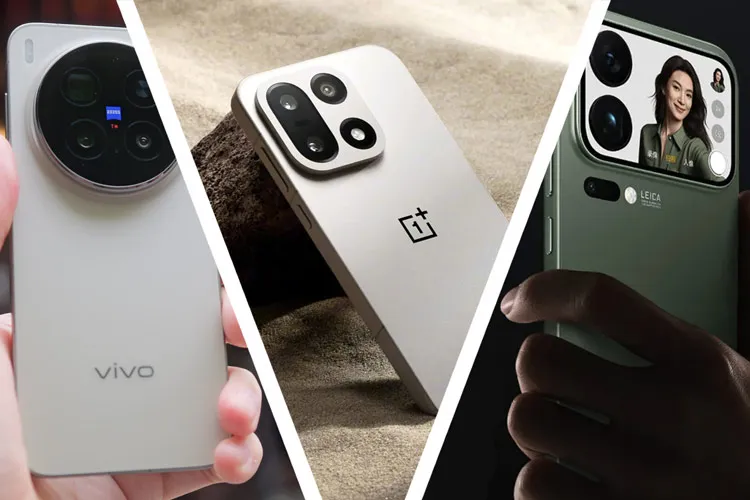
When it comes to the best smartphones, names like Apple and Samsung usually take center stage. However, the mobile market is much broader than these two companies, and a significant portion of hardware innovation and price competition in recent years has come from China.
The Chinese market, even as overall smartphone sales have declined, still witnesses fierce competition among domestic brands. According to IDC data, smartphone shipments in China in Q2 2026 fell about 4.3 percent year-on-year to around 66 million units. In the same period, Huawei ranked first with a 22.6 percent share, followed by Apple, Oppo, Vivo, Xiaomi and Honor.
But answering the question “Which brand is best?” is not simple. Each of these companies focuses more on a particular segment of the mobile market and pursues different strategies ranging from camera and foldables to price and performance.
Huawei; focus on independence and foldable phones
Huawei began its activities in 1987 as a telecommunications equipment manufacturer and later entered the smartphone market. The company became one of the major global mobile players in the 2010s, but trade restrictions and access to certain American technologies and components changed its path.
Following these restrictions, Huawei had to develop a large part of its hardware and software ecosystem. HarmonyOS and Kirin chips became important parts of that path.
Huawei still holds a strong position in the Chinese market. IDC data shows the company reached first place in Q2 2026 with 19.4 percent year-on-year shipment growth, while the overall Chinese market had shrunk.
One area Huawei has concentrated most on is foldable phones. Alongside book-style and slim foldables, the company has worked on different designs.
The Mate XT series with a three-piece design is an example of Huawei’s effort to create new forms in the foldable phone market. This approach shows Huawei does not only seek to compete with conventional phones but wants to shape part of the future of mobile hardware as well.
Honor; from budget phones to unusual technologies
Honor was initially launched by Huawei in 2013 and later separated from the company in 2020. After the split, Honor was able to follow its independent path and continues to use Qualcomm and MediaTek chips and the Android operating system.
The brand produces a wide range of phones; from budget and mid-range models to premium and foldable products.
One of Honor’s features is the effort to bring unusual technologies to smartphones. A notable example is the HONOR Robot Phone introduced in 2026. This phone features a motorized mechanical gimbal with four degrees of freedom, and Honor introduced it as a combination of artificial intelligence, motion control and professional imaging technology. Using ARRI imaging technology, this product leans more toward professional mobile filmmaking.
In the mid-range segment, Honor also has a strong presence, and models like the Honor 600 series try to combine high-end hardware specs, AMOLED displays and large batteries at competitive prices.
In Q2 2026, Honor held about 11.3 percent of China’s smartphone market and ranked sixth in the market.
Oppo and Vivo; competition over cameras and powerful flagships
Oppo and Vivo are among the most important Chinese names in the mobile market. These two brands share roots in the BBK corporate structure, although today they operate as independent companies.
In recent years Oppo has shown special attention to the cameras of its flagship phones. The company has worked with Hasselblad to bring professional imaging technology closer to smartphones.
The Find X9 Ultra is an example of this approach. This phone is equipped with a 50-megapixel telephoto camera with 10x optical zoom and also features two 200-megapixel cameras. Oppo has stated that the new periscope structure of the telephoto camera enables achieving 10x optical zoom within the phone’s body.
Vivo has followed a similar path with a focus on imaging and has made its collaboration with Zeiss one of the main elements of the X series flagships. The competition among Vivo, Oppo and Xiaomi in the camera segment has led Chinese flagship phones to be equipped with very complex imaging systems.
This competition is not only focused on megapixel counts; factors like sensor size, focal length, optical zoom, image processing and videography have also become battlegrounds.
In the Chinese market, these two companies also have significant shares. IDC data for Q2 2026 reports a 16 percent share for each of Oppo and Vivo.
Xiaomi; the combination of price, power and variety
Xiaomi entered the phone market later than many of its Chinese competitors. The company started in 2011 with the Mi 1 and quickly became one of the major smartphone makers.
Xiaomi’s strategy is not limited to one user group. Alongside its main brand, the company has released products under Redmi and Poco and also operates in other areas such as home appliances, personal devices and electric vehicles.
In the flagship segment, Xiaomi has in recent years tried to consolidate its position with a combination of powerful hardware and imaging collaborations. The use of the Leica brand in the company’s high-end products is part of this strategy.
On the other hand, Redmi continues to focus on offering high hardware specs at lower price points. Redmi phones in recent years have been equipped with large batteries, high-quality displays and powerful chips.
Xiaomi has also entered the foldable phone market and is expanding its presence in this segment. The company’s competition with Samsung and other manufacturers in foldables shows Xiaomi’s goal is no longer solely the budget phone market.
Despite this, Xiaomi faced a 21.7 percent year-on-year shipment decline in Q2 2026, and its share fell to 12.4 percent. This decline occurred as rising memory and component costs put pressure on many phone makers in China.
Which brand is more suitable for which user?
The competition among these companies shows that choosing a “best Chinese brand” depends on the user’s needs.
Huawei has invested a significant part of its strength in an independent ecosystem, foldable phones and developing proprietary technologies. Honor covers a wide range of products and, alongside budget and mid-range models, seeks to experiment with new ideas in imaging and artificial intelligence.
Oppo and Vivo compete very closely in the flagship segment, especially in cameras. Oppo’s collaboration with Hasselblad and Vivo’s collaboration with Zeiss also indicate the growing importance of imaging technology in the high-end products of these two brands.
Xiaomi is also trying to be present in various market segments; from budget Redmi phones and performance-oriented Poco models to flagships equipped with advanced cameras.
These differences become more important as the Chinese phone market moves toward greater concentration. According to IDC data, the six major brands in China held about 96 percent of the total market in Q2 2026; a fact that shows the main competition is between a small number of large manufacturers.
Therefore, the Chinese mobile market cannot be explained simply by asking “which brand is better?” In this market, each company tries to bring a different strength to the field: Huawei on independence and new forms, Honor on variety and new technologies, Oppo and Vivo on camera and imaging flagships, and Xiaomi on the combination of powerful hardware, variety and competitive pricing.
It is this competition that has made China’s market one of the most important testing grounds for the next generation of smartphones; a market where foldables, professional cameras, very large batteries and AI capabilities are all becoming tools for differentiating brands.