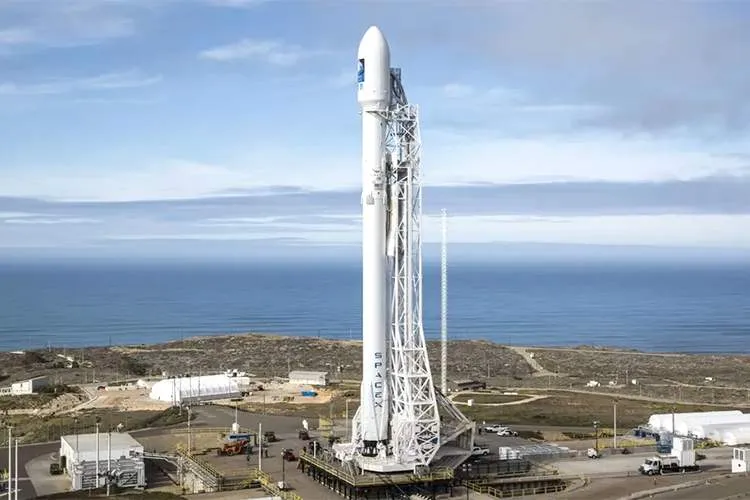
A SpaceX rocket launch at first glance has a familiar structure: the rocket rises, its stages separate, and the payload continues toward space.
But what is less well known is the fate of the hardware used along the way and the methods SpaceX has employed to alter systems that rockets typically discard or use only once.
According to ITNA quoting Interesting Engineering, some of these differences are obvious, such as a booster returning to the launch tower. Others are hidden inside the vehicle itself, where rocket propellant can help steer the engines or pressurized gas can separate the rocket stages.
1. Falcon 9 booster landing while the upper stage is still ascending
Most first stages of rockets are discarded after their mission ends. But the first stage of Falcon 9 can return and land while the second stage is still carrying the payload toward orbit; NASA documented this sequence precisely in SpaceX’s first successful orbital booster landing in 2015. This order is not always the same; in another flight documented by NASA, the Dragon capsule reached orbit before the booster landed.
2. SpaceX uses second-hand satellite fairings
The fairing is a protective shell that covers the satellite during ascent and separates after passing through the densest part of the atmosphere.
According to the Falcon user guide, fairing halves are recovered and reused many times; as of February 2025, recovered halves had been used in a total of 307 missions.
3. A booster used for a crewed launch can fly to space again
In 2020, a Falcon 9 took NASA astronauts Bob Behnken and Doug Hurley to space aboard the Dragon capsule. The same first-stage booster later launched an uncrewed cargo mission, which NASA said was the booster’s fourth flight.
4. Pressurized gas separates the Falcon stages
Stage separation is a critical moment; the spent booster must move away so the upper stage can continue its flight. According to the Falcon user guide, the pneumatic systems separate and push apart the Falcon stages and the Falcon Heavy side boosters.
Unlike explosive separation systems in traditional rockets, this pneumatic system allows SpaceX to pre-test the actual flight hardware.
5. Starship ignites its upper-stage engines before full separation is complete
Starship uses a “hot staging” method; that is, the upper-stage engines are ignited before the booster engines are completely shut down. This causes exhaust gases from the engines to be near the booster; in the Version 3 (V3) design, the forward dome of the booster fuel tank is directly exposed to this process, and the internal tank pressure along with a steel protective layer help it withstand it.
6. The Super Heavy returns to the launch tower instead of landing on a pad
Falcon 9 uses pads to land and support its weight, but SpaceX has chosen a different method for the Super Heavy booster of Starship: this booster returns to the launch site and the launch tower catches it. The interesting point is that the landing equipment is on the ground, not on the rocket itself.
The company did not stop at a single success: the Super Heavy booster that was caught after Starship’s seventh test flight was reused again on the ninth flight.
7. Falcon 9 uses rocket propellant to help steer its engines
Rocket engines must be gimballed during flight to maintain trajectory, and that requires force. According to the Falcon user guide, the first stage thrust vector control system uses the high-pressure RP-1 fuel system instead of carrying a separate hydraulic fluid tank. In other words, the rocket propellant has a second role before being burned. SpaceX says this eliminates potential failure points related to a separate hydraulic system and the risk of running out of hydraulic fluid.
Summary
SpaceX’s most well-known innovation is returning the booster to Earth; but these examples show a broader pattern: the company also recovers fairings, has altered stage separation methods, and assigns critical flight functions to systems already integrated on the rocket. Of course, not all these methods are used on every SpaceX vehicle or mission, and some have changed with design developments.