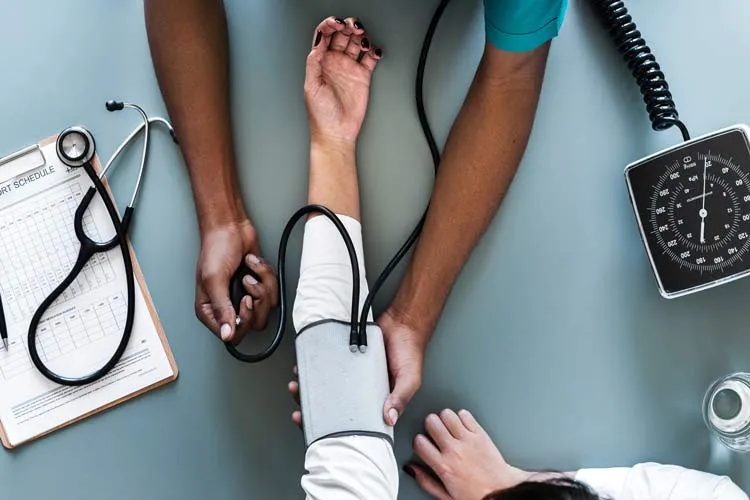
A new study in the UK, involving about 1,400,000 people in England, shows that more than one-third of adults have high blood pressure.
More worryingly, the study's findings indicate that about six out of every ten people with the condition, equivalent to 59 percent, are unaware of having this disease, known as the "silent killer," and are not receiving any treatment.
These statistics show that the health system still has serious shortcomings in identifying one of the most important risk factors for cardiovascular disease and strokes. This is while health experts increasingly emphasize the need to expand screening and early diagnosis programs-actions that could save millions of people from the deadly complications of this disease.
Sharp increase in high blood pressure with advancing age
Researchers in the Population Health department at the University of Oxford examined blood pressure measurement data from healthcare centers collected as part of the "Our Future Health" program, the largest health research project in the UK. These data belonged to people who participated in the program between 2022 and 2025.
For defining high blood pressure, the researchers based their criteria on World Health Organization standards. Accordingly, individuals whose systolic blood pressure-that is, the higher number-was 140 mmHg or higher, or whose diastolic blood pressure-the lower number-was 90 mmHg or higher, were classified as having high blood pressure. People who were already taking blood pressure–lowering medications were also categorized in this group.
The findings indicate a marked difference in the prevalence of the condition across age groups. While 15 percent of those aged 18 to 39 had high blood pressure, this rate gradually increased with age and reached 71 percent among those aged 80 and over.
The results also showed that men are more likely than women to have the condition. After adjusting for age groups, the prevalence of high blood pressure was estimated at 42 percent in men and 29 percent in women.
Half of treated patients still do not have controlled blood pressure
But the problem is not limited to those who are unaware of having high blood pressure. The study showed that half of the participants who were taking one or more medications to lower their blood pressure still had readings of 140 over 90 mmHg or higher-the range considered diagnostic for high blood pressure in this study.
According to the researchers, these findings indicate that despite years of clinical guideline implementation, problems related to diagnosing and controlling high blood pressure in the UK persist.
They noted that under current guidelines from the National Institute for Health and Care Excellence (NICE), a definitive diagnosis of high blood pressure requires multiple measurements, and in some cases it is recommended that lifestyle changes be tried before starting medication.
The researchers believe this approach may lead to some cases being missed or patients not gaining access to effective treatment.
Call for a change in approach; early diagnosis must be taken more seriously
Venuy Liu, a medical statistics specialist in the Population Health department at the University of Oxford and the study’s lead researcher, referring to high blood pressure often being called the "silent killer," emphasized that current methods of identifying and treating the condition need revision.
Liu warned that the crisis of this "silent killer" is not limited to the elderly. He said the study's results showed that more than 15 percent of young adults aged 18 to 39 also have high blood pressure.
He explained that this age group is currently usually not covered by the NHS health check program because the program starts at age 40. Liu believes this highlights the urgent need to review early diagnosis policies.
The researcher called for strengthening population-level prevention strategies while stressing that treatment should particularly focus on those at higher risk of heart disease and other cardiovascular complications.
Ian Turnbull, deputy chief medical officer of the "Our Future Health" program, a clinical researcher in the Population Health department at the University of Oxford and a general practitioner, also said the study's findings align with general practitioners' day-to-day observations; many cases of high blood pressure still go undetected or their treatment is not sufficiently effective.
He emphasized the need for a more proactive approach to identifying those affected and said it should be examined whether decisions to start treatment might be better based on each individual's predicted cardiovascular risk rather than relying solely on blood pressure numbers.
British Heart Foundation warning; golden prevention opportunities are being missed
Professor Brian Williams, Chief Scientific and Medical Officer at the British Heart Foundation, described the study's findings as concerning and said the results reveal both the extent of undiagnosed high blood pressure and the difficulties in controlling the condition among people who are currently being treated.
Williams emphasized that high blood pressure remains the most important modifiable risk factor for cardiovascular disease and is associated with about half of heart attacks and strokes in the UK.
He said millions of people are living with high blood pressure without knowing it; a situation that causes valuable opportunities for diagnosis and early intervention to be missed.
Williams believes that improving methods for identifying and treating high blood pressure could prevent tens of thousands of avoidable heart attacks and strokes.
However, he warned that achieving such a goal requires reviewing approaches to identifying people at risk, selecting treatment methods, and following up with patients-so that regular blood pressure measurement and access to effective treatment are not limited to a specific segment of the population but cover all groups in society.