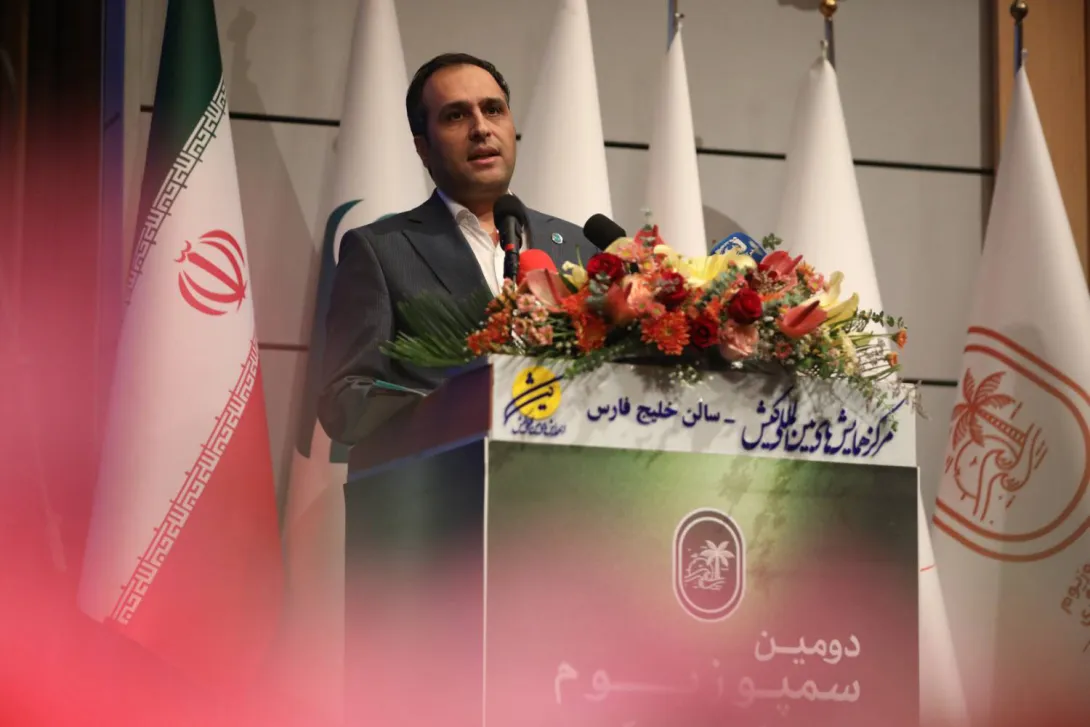
According to the Public Relations and International Affairs of the Kish Free Zone Organization, the opening ceremony of the second Symposium on the Tourism Market of the Economic Cooperation Organization (ECO) member countries was held on the evening of Tuesday, 18 Aban, with the presence of a number of senior managers, experts, tourism industry activists and investors in the Persian Gulf Hall of the Kish International Convention Center.
Ali Hasanlu, Deputy of Tourism of the Kish Free Zone Organization, began his remarks at the ceremony by posing the question, "Why, despite so many cultural, historical, geographical and economic commonalities among the countries of the region, have we not yet been able to make proper use of our tourism capacity?" and said: ECO countries together possess a unique collection of the world’s tourist attractions; however, in many cases, the region’s tourism has been confined more to domestic markets than to an interconnected regional market. It is time to change our perspective from introducing destinations separately to designing a regional tourism system.
He described the development of intra-regional tourism as a strategic opportunity and added: strengthening cultural understanding among peoples, reducing destinations’ dependence on limited markets, creating a more sustainable tourist flow, increasing cooperation among tourism companies and more widely distributing the economic benefits of travel among the region’s countries are advantages of this approach. The Deputy of Tourism of the Organization continued: Kish Island, with its geographical position in the Persian Gulf, its historical record of maritime trade, natural and marine attractions and modern tourism infrastructure, has the capacity to become one of the region’s important tourism destinations.
Hasanlu, emphasizing that increasing the number of accommodation beds alone does not guarantee tourism prosperity, stated: a successful destination must correctly know its markets, design an appropriate product for each market, enhance the quality of the tourist experience and maintain continuous contact with the distribution and sales network in target markets. ECO member countries such as Tajikistan, Uzbekistan, Azerbaijan, Turkey and Pakistan, given their cultural, economic characteristics and travel patterns of their citizens, also create valuable opportunities for cooperation with Kish, and we are working to design marketing programs and tourism products appropriate for each of these markets.
The Deputy of Tourism of the Kish Free Zone Organization considered the private sector the main driver of transformation in tourism and asserted: no tourism market will reach its true position without the active and effective participation of the private sector. Airlines, travel agencies, hotels, recreational centers, tourism platforms and tourism investors are the main actors in this field. He added: the duty of governmental and public institutions is to provide an appropriate environment, facilitate processes, reduce obstacles and create confidence for economic activity. Kish, benefiting from the legal and economic capacities of free zones, can provide a suitable platform for these cooperations, and we welcome the presence of investors and economic actors from ECO member countries and are ready to pursue cooperation opportunities with them in a specific and operational manner.
In another part of his remarks, he identified the symposium’s specialized axes, including sustainable and smart tourism, commercial tourism, cultural tourism, wellness and health tourism, and ecotourism, as subjects of strategic importance for the future of the tourism industry and said: wellness and health tourism can, by creating links among Iran’s medical centers, facilitation companies, accommodation centers and tourism actors, generate considerable economic value for the region’s countries.
Hasanlu emphasized: in this context Kish can play its role not merely as a place of treatment but as a platform for forming this chain. On the other hand, developing tourism on an island with a natural environment, beaches and a sensitive coral ecosystem like Kish requires attention to environmental considerations and the island’s carrying capacity. Referring to the necessity of employing modern technologies, artificial intelligence, data-driven approaches and digital marketing tools in the tourism industry, he stressed the importance of accurately understanding tourist behavior and designing services and products tailored to market needs.
Hasanlu stated that in this industry we do not sell destinations only; we create experience, memory, understanding and opportunities for connection among peoples, and concluded with the hope that the continuation of these events will lead to cooperations whose effects will be visible in increased travel, more flights, joint investments, business prosperity and tourist satisfaction.