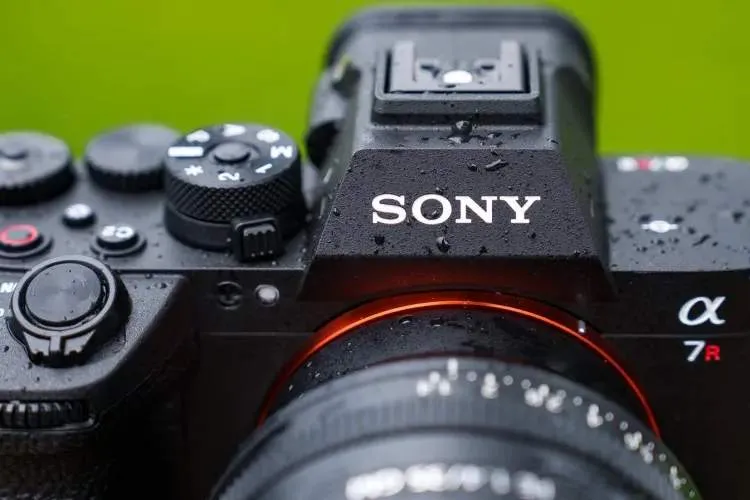
Sony, with the introduction of the Alpha 7R VI, has once again tackled one of the most challenging combinations in the world of professional cameras: very high resolution alongside impressive shooting speed. This camera is equipped with a full-frame, fully stacked Exmor RS sensor with an effective resolution of 66.8 megapixels, and Sony has designed it for a wide range of professional applications, from landscape and portrait photography to wildlife, sports, and photojournalism.
The most important feature of the A7R VI is that, unlike many ultra-resolution cameras, the increase in pixel count has not come at the cost of reduced speed.
This camera can capture full-resolution images at up to 30 frames per second, and thanks to the stacked sensor, image readout delay and rolling shutter effects have been reduced. There is also the possibility of using a completely silent electronic shutter; a capability that is very important for wildlife photography, events, and sound-sensitive environments.
Sony has used the new generation Bionz XR2 processor to process images in this camera, and the autofocus system equipped with AI-based features is also responsible for identifying and tracking subjects.
The combination of this system with the high-speed sensor makes the A7R VI an unusual option for photographers who need both abundant detail and fast performance.
Another strength of this camera is the ability to record RAW files of about 60 megabytes per photo. Such size and resolution provide great freedom for cropping images during editing and can be a major advantage in wildlife photography or distant subjects without physically approaching the subject.
Powerful stabilization and a familiar body
The A7R VI benefits from in-body image stabilization with performance up to 8.5 stops. The camera body is very similar in overall design to the previous generation, but Sony has made changes in some areas of ergonomics and controls to make long-term use easier for professional users.
The camera is also equipped with two USB-C ports and uses the new NP-SA100 battery. According to Sony, a full battery charge can record up to 710 shots using the LCD or 600 shots with the electronic viewfinder.
In storage, both memory card slots support CFexpress Type A and SD, which is important for managing the large file sizes produced by the 67-megapixel sensor.
Video capabilities
Despite the R series' primary focus on high-resolution photography, the A7R VI also offers notable video features. The camera can record 4K video at 60 frames per second and 4K video at 120 frames per second without crop, and it supports 4:2:2 color sampling and 10-bit color depth.
This combination shows Sony has tried not to present the A7R VI merely as a studio photography camera and to make it an all-purpose option for professional content creators as well.
Initial experience; "the pinnacle" of professional cameras?
The initial impression from outlets like The Verge of the A7R VI is very positive. After hands-on experience with the camera, that outlet described it as a product that unusually balances very high resolution, speed, silent operation, and portability.
An initial score of 9 out of 10 also indicates that the early evaluation of this camera has been very promising.
However, the natural downside of such a camera is the large size of image files and the greater need for storage space and powerful processing. Therefore, all the advantages of the 66.8-megapixel sensor are not essential for all users, and photographers who primarily shoot for the web or social networks will likely not need such resolution.
In contrast, for professional photographers who need extremely high detail, extensive cropping capability, high speed, and precise autofocus, the A7R VI can be one of the most flexible full-frame options on the market. Sony has essentially tried to remove the traditional limitation of high-resolution cameras - namely lower speed.
Sony has officially listed the A7R VI specifications including a 66.8-megapixel sensor, 4K/120p video, 759-point phase-detection autofocus, and an advanced OLED viewfinder.