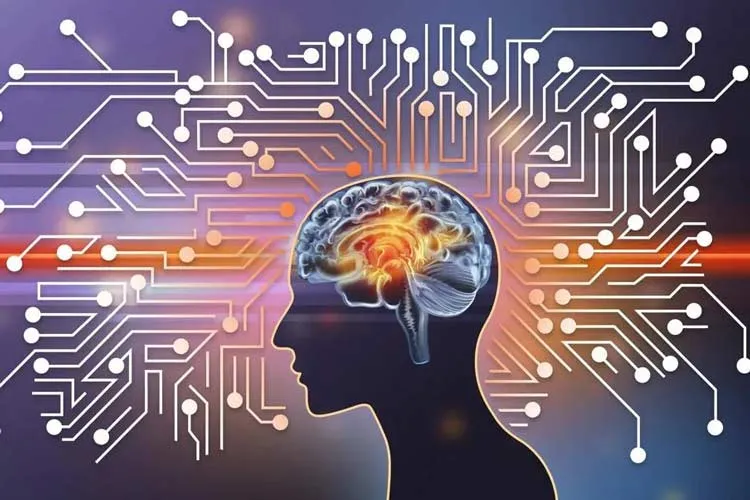
The attention crisis is no longer just an individual concern or a mental-health issue. Based on a recent analysis of the convergence of technology and human neurochemistry, smartphones, social networks, and generative AI, by exploiting the brain’s reward circuits, are changing the systems that control our attention. According to the author, this situation is not the result of users’ moral weakness but a natural consequence of these platforms’ design.
A slot-machine–like reward loop
At the core of almost all major social platforms and the smartphone ecosystem is something neuroscientists call the “variable reward loop.” Psychologically, this mechanism resembles slot machines. With every tap or notification, the brain awaits the next reward and secretes dopamine. This secretion is driven more by the anticipation of a valuable reward than by actually finding one.
Ana Lembke, a psychiatrist at Stanford University and author of the book The Dopamine Nation, has described the smartphone as a “modern subcutaneous needle” that supplies digital dopamine to the user around the clock. According to the central idea of that book, after each digital reward, dopamine levels fall slightly below baseline. The result can be anxiety, irritability, and the urge to scroll again simply to feel normal.
Every notification is a little stressor
The pressure does not come only from dopamine. According to Microsoft’s 2025 Work Trend Index, a knowledge worker receives on average 117 emails and 153 Teams messages per day. During peak work hours, interruptions occur roughly every two minutes, meaning nearly 275 interruptions in an eight-hour workday. The same report notes the emergence of the “endless workday”: 40 percent of employees check their email before 6 a.m., and evening meetings have increased by 16 percent.
Each alert can cause a transient rise in cortisol and norepinephrine and push the sympathetic nervous system into a low-grade “fight-or-flight” state. The cumulative result is chronic alertness, making deep focus harder for such a mind.
Declining focus in the data
Research shows that intense media multitasking is associated with structural changes in the brain. A 2014 study published in PLOS ONE found that people who switch among multiple streams of media have lower gray-matter density in the anterior cingulate cortex (ACC). This region plays a role in emotion regulation, cognitive control, and sustained attention. Of course, that study shows a correlational relationship and does not establish causation.
Behavioral data confirm the same trend. According to research by Gloria Mark at the University of California, Irvine, reported in the book Attention Span (2023), the average time focused on a screen dropped from about 2.5 minutes in 2004 to 75 seconds in 2012 and then to roughly 47 seconds. Half of recorded focus episodes lasted 40 seconds or less.
The AI accelerator and the end of “boredom”
The author says generative AI accelerates this trend. Recommender systems that learn a user’s cognitive vulnerabilities in real time produce endless, personalized streams that never lose their novelty. The author calls this phenomenon “artificial dopamine.”
One consequence is the disappearance of boredom. Boredom used to act like a “neural reset,” activating the brain’s default mode network for long-term planning, creative insight, and memory consolidation. Now notifications and algorithmic content have replaced those pauses. The author frames this as an issue of “cognitive security”: if human attention can be diverted, an attacker does not necessarily need to penetrate a network directly to exert influence.
Solutions: reclaiming “cognitive sovereignty”
This analysis does not see retreat as the solution and suggests designing “resilience”:
• Algorithmic transparency: a concept similar to a “cognitive SBOM”; platforms that use variable-reward optimization should disclose their procedures. The EU Digital Services Act is presented as a first step in this direction.
• Notifications off by default.
• 90-minute deep-work sessions without devices to reset dopamine baseline.
• “Analog anchors”: reading printed text, handwritten note-taking, and walking without a phone.
• Human-centered AI: assistants that protect user attention and help them stop scrolling.
An additional note
Concern about AI’s effect on cognition is not limited to this analysis. In 2025, researchers at the MIT Media Lab in a study called “Your Brain on ChatGPT,” recording participants’ brain activity (EEG) while writing an article, reported that relying on an AI assistant was associated with lower cognitive engagement. That study had a small sample and had not yet undergone full peer review, so its results should be read with caution.
Conclusion
The greatest danger of AI, according to this analysis, is not that it becomes too intelligent. The main risk is that we become so busy and scattered that we cannot use it wisely.
This report is based on an article by Chuck Brooks in Forbes titled “Smartphones, Social Media and AI Are Chemically Altering Our Brains.”