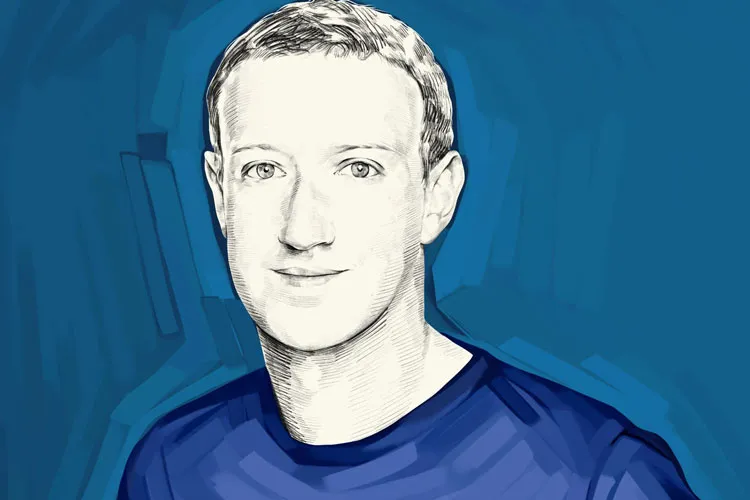
Mark Zuckerberg, CEO of Meta, unlike a number of prominent tech industry leaders, believes AI risks can be managed with conventional engineering methods. This view comes while executives at companies like Anthropic and OpenAI have repeatedly warned about the consequences of rapidly developing advanced AI models.
In an interview with the British newspaper Financial Times, Mark Zuckerberg downplayed concerns about AI potentially getting out of human control and emphasized that the technology can be managed with standard safety and regulatory mechanisms.
Rejecting the notion that AI should be considered a conscious entity with independent will, he said: “I’ve become more convinced that AI is a technology that can be managed through ordinary engineering safeguards.”
These remarks indicate a difference of opinion among leaders of the world’s largest tech companies about the scale of AI risks and the appropriate pace of its development.
Zuckerberg’s disagreement with OpenAI and Anthropic executives
The Meta CEO’s view notably differs from that of Dario Amodei, CEO of Anthropic. Amodei previously warned in a post on his company’s website about the rushed development of advanced AI models and called for greater caution in building and releasing these technologies.
Concerns about potential AI risks are not limited to Anthropic. Sam Altman, CEO of OpenAI, Satya Nadella, CEO of Microsoft, and Elon Musk, CEO of SpaceX and one of the key figures in developing the Grok AI model, have also taken positions stressing the need to pay attention to the hazards of this technology.
These concerns have even been raised at the level of international institutions. Amodei and Altman, in a meeting related to the United Nations Security Council during the recent UN General Assembly in New York, warned about the significant risks stemming from AI advances.
However, Zuckerberg believes AI should not necessarily be likened to an independent entity that might act outside designed frameworks.
Two different views on the future of AI
The divide among Silicon Valley executives shows the AI industry has not reached consensus on how to manage the rapid progress of this technology. On one side, executives like Amodei and Altman emphasize the need to assess risks, develop safety measures, and exercise caution in releasing powerful models.
On the other side, Zuckerberg and Jensen Huang, CEO of NVIDIA, do not agree with approaches that would slow the pace of AI advancement.
Donald Trump, President of the United States, has also opposed restrictions that could slow the development of AI models. From his perspective, such restrictions might benefit Chinese companies striving to compete with America’s technological edge.
According to ITna quoting the Financial Times, Zuckerberg played an important role in the recent White House AI agreement; an agreement that focuses on the basic principles of industry self-regulation.
However, this approach has faced criticism. Critics argue that relying on companies’ self-regulation cannot replace a formal, international framework for managing AI risks.
Meta’s different goal; personal superintelligence instead of focusing on automation
In the interview, Zuckerberg also outlined Meta’s different vision for the future of AI.
While many large tech companies focus on developing general AI, automating tasks, and performing specialized work, Meta intends to provide a technology called “personal superintelligence” to users.
Explaining this difference, Zuckerberg said most companies have concentrated on knowledge-driven activities and automating tasks, whereas Meta places more emphasis on empowering individuals.
He stressed that his goal is to develop products that can be useful for people and the world.
According to the Meta CEO, current AI models, despite having advanced scientific capabilities in some areas, still lack the intuitive understanding necessary to become ideal personal assistants.
From this perspective, AI’s future success will not only depend on the ability to solve scientific problems or perform complex calculations, but also on understanding users’ needs and effectively helping them in daily life.
Competition of new Muse models with OpenAI and Anthropic
As part of this strategy, Meta has developed a new generation of AI models called Muse.
One of these models, named Muse Wander, has been introduced and, according to the company, is designed to perform complex tasks in the real world.
Among the mentioned applications for this model are reviewing and understanding rental contracts, analyzing financial information, and interpreting user-related health data.
Zuckerberg also compared Meta’s new models’ performance with advanced products from OpenAI and Anthropic.
Based on internal technical tests at Meta, the company claims that Muse Wander performs better than competitors’ similar models on some tasks.
Of course, these assessments are based on tests announced by Meta itself and alone do not indicate comprehensive superiority of this model compared to rivals.
Wide adoption of the Muse app
The recently released Muse app has become one of Meta’s successful products in the AI assistant market. According to published reports, at the time of reporting the app was at the top of the most-downloaded lists in Apple’s and Android’s app stores in the United States.
Meta has also introduced a character named “Julie” for this suite and connected a dedicated device to it.
This device is designed to provide users with quick, direct access to the smart assistant so they can more easily make requests and delegate various tasks to it.
Meta’s strategy shift after heavy investments
The release of the new Muse models comes as Meta has made substantial investments in developing data centers and recruiting AI specialists.
The company now intends to take a different approach in releasing its most advanced models.
According to reports, Meta seeks to keep the new models proprietary and closed-source and limit access to their most powerful versions to commercial customers.
Such a decision could signal Meta’s move away from its previous approach of releasing open models and toward the commercial model pursued by companies like OpenAI and Anthropic.
Overall, Zuckerberg’s recent positions indicate that rather than slowing AI development due to concerns about potential risks, he emphasizes continuing the technology’s advancement alongside engineering safety measures.
Nevertheless, disagreement over the degree of autonomy of advanced models, their potential dangers, and the role of governments in overseeing AI development remains one of the most important debates in the tech industry.