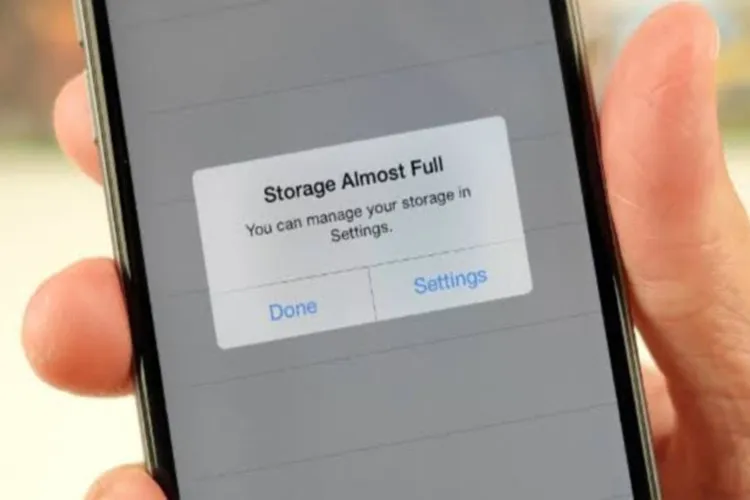
Despite the dramatic increase in smartphone storage capacity in recent years, users still face the problem of running out of space. Larger apps, higher-quality photos and videos, accumulation of temporary data, and shifts in hardware development are among the main reasons that even flagship phones’ storage fills up faster than expected.
The tech industry followed a relatively steady pattern for decades: new products with more features, faster performance, and prices that gradually became more affordable entered the market.
For example, the Apple Macintosh SE in 1987 cost about 9 percent of an American household’s annual income. By contrast, in 2026 a typical worker can buy an iPhone 18 Pro Max with about one week’s household income.
Meanwhile, the 256 GB storage of that phone is about 6,400 times the capacity of the high-end hard drive offered for the Macintosh SE. Still, the dramatic increase in memory capacity has not completely solved the storage shortage problem.
One reason is the changing pace of technological progress. Supply crises caused by rising demand for artificial intelligence have raised the prices of various tech products, from game consoles to storage equipment, and slowed the development and release of more advanced hardware.
At the same time, software needs for storage continue to rise. Video quality has gone from 360p in the years before the iPhone’s launch to 4K, and apps that once were only 10 MB are now several times larger.
Why have apps become so large?
Today's apps are no longer just simple tools to connect to internet services. Many of them contain a bundle of features, local data, temporary files, and various software components.
As explained on Spotify’s research and development blog, an app’s real size is not limited to the initial downloaded file.
After installation, additional data such as cached content, music, news, user information, and update packages are added. Updates may also introduce new user interfaces, more features, and changes in app behavior.
For example, the Android version of Facebook downloads at about 100 MB from Google Play, but in the instance examined by the report’s author, the app itself grew to about 600 MB after logging in.
In addition, about 900 MB of separate data including login information, local copies of uploaded photos and videos, and data related to personalized ads were stored.
The app’s cache can also reach about 1.5 GB with continuous use. Some users have even reported that Facebook’s storage usage on their phone exceeded 10 GB.
Part of apps’ size increase is due to added necessary features. For example, support for online payment verification systems, compliance with new standards and regulations, or adding more graphical details to games can all increase software size.
According to a 2024 study by TRG Datacenters cited by TekRadar, WhatsApp’s download size grew by 167 percent over a decade to 40 MB.
In the same period, Slack’s size increased by 500 percent to 60 MB, and some video games grew from about 50 MB to 2 GB.
High-quality photos and videos take up more space
Improved phone camera quality is another key factor in storage filling up.
In the past, simple digital cameras were sufficient for everyday shots, but now some smartphones are equipped with 200-megapixel sensors.
Increasing photo resolution from 12 to 50 megapixels, despite advances in compression methods, still makes files larger. In such cases, image sizes can on average increase two to three times.
This is even more significant for video recording. Upgrading resolution from 1080p to 4K means many more pixels per frame are recorded, so video files can take up considerable space.
Phones like the Pixel 11 Pro also offer 10-bit HDR video recording. Compared to the usual 8-bit color, this technology allows display of 64 times more color combinations; a capability that helps capture richer images.
Deleting files does not always free up storage
The storage shortage problem is not only about file sizes; how they are stored matters too.
Many phones by default save photos, videos, downloaded files, notes, and other information to internal storage.
Even enabling sync with services like Google Photos or iCloud does not necessarily remove local copies. These services often keep a version of the data in the cloud while the original file remains on the phone.
Also, some operating system default apps keep deleted files in a trash folder for up to 30 days. So a user may think they have deleted a lot of photos or videos, but the storage may not have been freed.
How to free up phone storage?
According to ITNA, although the continuous growth in app and multimedia file sizes means cleanup measures may not have long-term effects, several actions can help users gain more available space.
1. Empty apps’ trash
Check the deleted files section in the gallery and other apps. Files awaiting automatic deletion after 30 days may still occupy space.
2. Clear unnecessary app data
Many phones and tablets have tools to identify and remove old app data. Note that deleting some data may require you to log in again.
3. Change video recording settings
If you don’t always need the highest quality, you can lower the camera’s default resolution to 1080p or even 720p and set the frame rate to 30 or 24 fps.
If the camera supports it, using the HEVC codec can also help reduce video file sizes.
4. Use lighter versions of apps
Bulky apps like Facebook may have options to reduce data usage. In some cases you can use lighter or “lite” versions designed for lower resource consumption.
5. Use web versions of apps instead
Some services can be used directly through a browser without installing an app. The web version generally takes up less space, though some features-especially offline use-may not be available.
Overall, the problem of phones’ storage filling up quickly is not solved solely by increasing storage capacity. As apps become more complex, multimedia quality increases, and more data remains on devices, managing storage space will remain a concern for users.