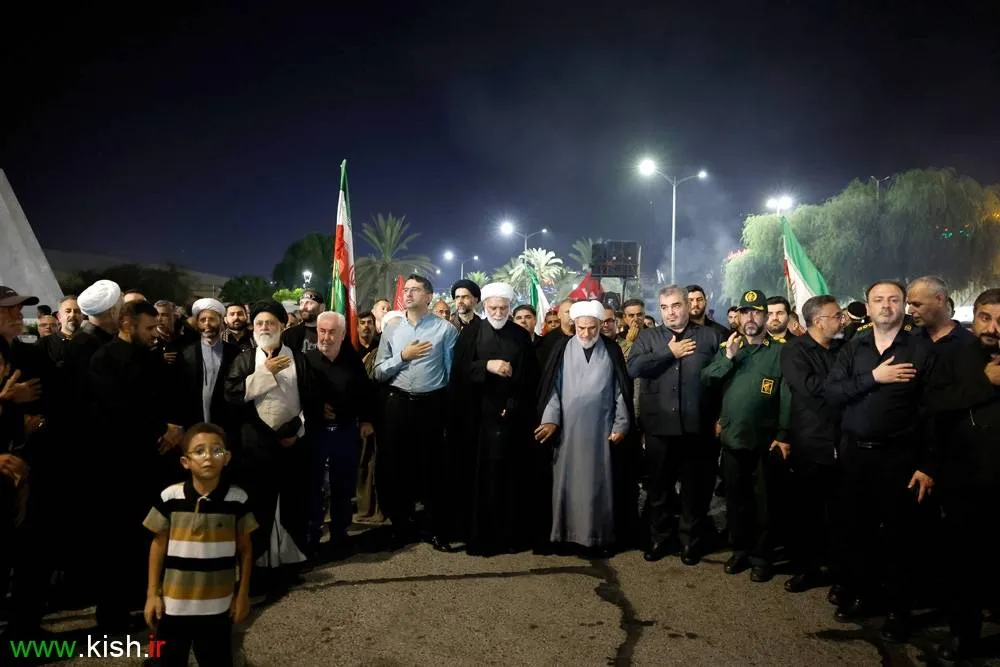
According to the Public Relations and International Affairs of the Kish Free Zone Organization, the walking procession and mourning procession of the Arbaeen Hosseini devotees was held on the evening of Tuesday, 12 Mordad with wide attendance of residents and tourists, Mohammad Kabiri, CEO of the Kish Free Zone Organization, Hojjatoleslam val-moslemin Mohammad Ebadi-zadeh, the Supreme Leader’s representative in Hormozgan province and Friday prayer leader of Bandar Abbas, Hojjatoleslam val-moslemin Alireza Biniyaz, Friday prayer leader of Kish, a number of island managers and officials, and military and law enforcement commanders.
The Hosseini mourners in this ceremony walked the route from Pardis Three-Way to Sahel Square carrying mourning flags and murmuring elegies and Hosseini slogans, expressing their devotion to Hazrat Aba Abdillah al-Hussain (a) and the martyrs of Karbala.
This ceremony included a speech by Hojjatoleslam val-moslemin Mohammad Ebadi-zadeh, the Supreme Leader’s representative in Hormozgan province and Friday prayer leader of Bandar Abbas, and elegy recitation by Saeed Yazdani, an eulogist of Ahl al-Bayt (a).
He, appreciating the enthusiastic presence of the people in religious gatherings, stated: The faithful and revolutionary people of Kish shone brightly and, with their widespread presence, displayed an aspect of spirituality, courage, dignity, and solidarity and presented a valuable image of this island to the Iranian nation.
The Supreme Leader’s representative in Hormozgan province, saying that the culture of Ashura is a school of sacrifice, resistance, loyalty, and selflessness, said: The culture of Arbaeen is the continuation of the message of the Ashura movement; a message that became lasting in history through the struggles of Hazrat Zainab (s), Imam Sajjad (a) and other members of the Ahl al-Bayt (a).
He emphasized that the message of Ashura is dignity, freedom, and standing against oppression, adding: Followers of the Husayni school never choose the path of surrender and compromise before the enemy and always defend their religious and national values.
Ebadi-zadeh regarded introducing the conduct and school of Imam Hussain (a) to the world as an important necessity and asserted: Spreading the culture of Ashura and Arbaeen provides the basis for nations to become familiar with the concepts of justice-seeking, freedom, and sacrifice and will pave the way for the realization of divine and Mahdist ideals.
He also considered the conscious presence of people in religious gatherings a support for national power and noted: This presence strengthens social cohesion and constitutes a valuable support for officials, the armed forces, and the country’s diplomats in defending the interests and dignity of Islamic Iran.
The Supreme Leader’s representative in Hormozgan province, referring to the betrayals of enemies, emphasized the necessity of vigilance and reliance on domestic capacities and said: Officials must, relying on the support and accompaniment of the people, vigorously protect the rights and interests of the Iranian nation.
He continued that the popular nature of religious ceremonies on Kish Island is one of the most important characteristics of these gatherings and added: With a spirit of participation and responsibility, the people play the main role in holding these programs and officials, alongside them, support these cultural and religious movements.
Ebadi-zadeh, finally, appreciating the wide presence of Kish residents, thanked Mohammad Kabiri, CEO of the Kish Free Zone Organization, Hojjatoleslam val-moslemin Alireza Biniyaz, Friday prayer leader of Kish, officials, military and law enforcement personnel, and all those involved in organizing this ceremony and wished the island’s people dignity, pride, and increasing success.
In the final part of the ceremony, Saeed Yazdani, by reciting elegies mourning Hazrat Sayyid al-Shuhada (a) and his loyal companions, imparted a spiritual and heroic atmosphere to the gathering of mourners.