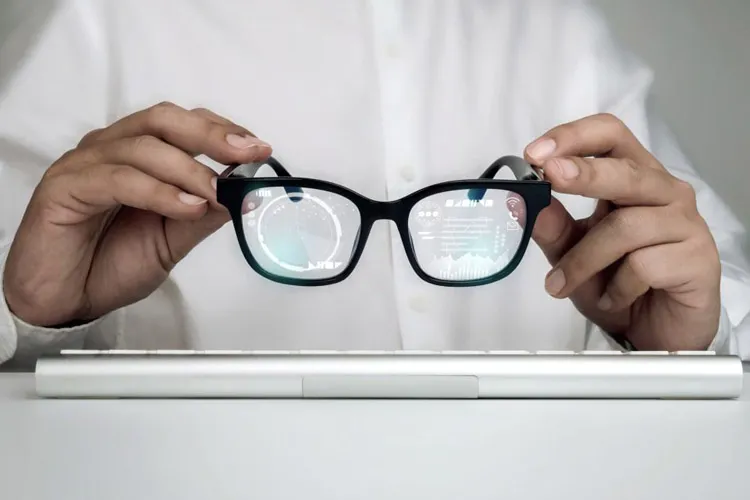
With advances in artificial intelligence technologies and wearable sensors, smart glasses are on the verge of a more serious entry into the healthcare and health domain.
These devices, which were initially offered for photography, making calls, and providing digital services, can now become tools in future generations for monitoring health indicators and supporting people with vision problems or neurological disorders.
This transformation occurs alongside intensified competition among major tech companies in the smart glasses market. Meta has entered the AI-equipped smart glasses market, Google has unveiled its apps and devices in this field, and reports also indicate an acceleration in the development of Apple’s smart glasses.
An ideal location for health monitoring
Compared to many wearables, smart glasses have a unique advantage; they sit directly on the face and close to the head and eyes.
This position could allow sensors embedded in future glasses to examine, in addition to indicators that can be effective in monitoring some neurological diseases, things like eye movement, pupil dilation, heart rate, muscle tension, temperature, and hydration level.
Such capability could enable continuous collection of health data while performing daily activities; without the user needing separate medical devices or frequent interventions.
Supporting people with low vision
Smart glasses can provide practical solutions for people with low vision by reading texts aloud and giving real-time descriptions of the surrounding environment.
These capabilities are particularly important given the widespread prevalence of vision problems worldwide. Lens-based technologies are also being developed for children to help correct vision problems and slow the progression of myopia. Meanwhile, specialized glasses can assist people with severe visual impairment or blindness.
Potential applications for migraine and Alzheimer’s
The use of smart glasses could also expand to support people with dementia or Alzheimer’s. Technologies such as face recognition, displaying people’s names, and providing necessary reminders or guidance can help users perform daily activities and reduce confusion.
On the other hand, glasses and lenses aimed at treating migraine and light sensitivity are under development. These technologies, by filtering specific wavelengths that may trigger symptoms, can help control these problems. With the integration of AI, future lenses may be able to automatically adapt to different lighting conditions.
Smart glasses; a step toward a health platform
The evolution path of smart glasses is very similar to the development of smartwatches; devices that were initially used to display time and track sports activities and gradually became advanced tools for monitoring heart rate and some health indicators.
As components shrink and AI capabilities increase, smart glasses may become part of everyday healthcare systems in the coming years. In such a scenario, these products can go beyond being a technological accessory and become tools for health monitoring, increasing users’ independence, and improving quality of life.