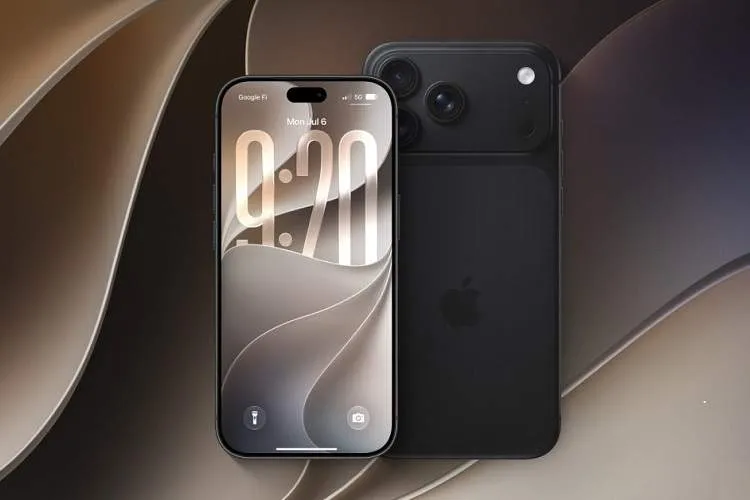
The unveiling of Apple’s M6 chip has provided important clues about possible changes to the iPhone 18 Pro and the A20 Pro chip for enthusiasts. M6 and A20 Pro belong to the same chip family and for that reason, some of M6’s new technologies will likely be used in the iPhone 18 Pro flagship chip as well.
According to ITPna quoting 9to5mac, the most significant change is the use of 2-nanometer process technology. Apple says this technology, by increasing transistor density on the chip, can lead to a significant leap in performance and energy efficiency. Based on the information released about M6, A20 Pro is also expected to benefit from the same technology and, compared to the previous generation, be faster and more power-efficient.
The M6 chip is also equipped with a twelve-core CPU that includes two high-performance cores, four performance cores, and six efficiency cores. Apple has stated this chip delivers the fastest single-core performance and its multi-core performance is up to 1.2 times faster than the M5.
Another important feature of the M6 is the “dual 16-core neural engine,” which can deliver up to twice the peak processing power of previous generations for AI workloads. It is not yet clear whether A20 Pro will use exactly the same architecture. Also, the number of CPU and GPU cores in the iPhone-specific version will likely differ from M6.
However, the 2-nanometer process technology is the most important common point between these two chips. This technology is expected not only to increase processing power in the iPhone 18 Pro but also to improve battery consumption and power management - a factor that could be very important for running advanced on-device AI features.
It is still not possible to state an exact figure for the performance increase of A20 Pro compared to the previous generation, but the signs from the M6 chip indicate that performance and energy efficiency will likely be the two main axes of improvement for the iPhone 18 Pro.