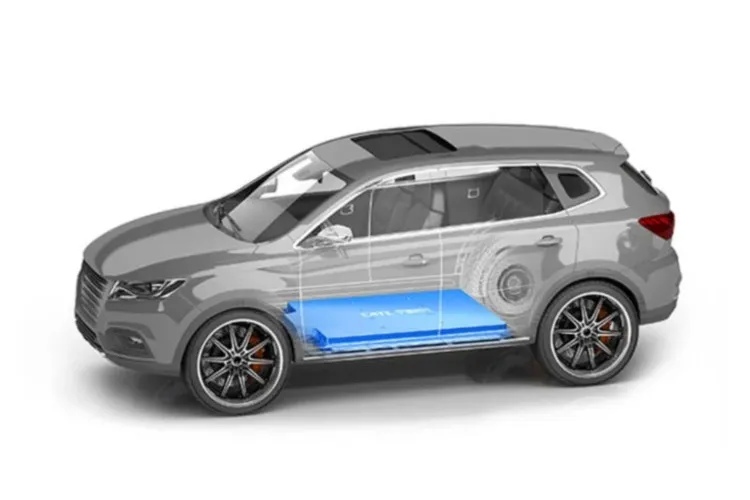
Lithium‑ion batteries are not going to disappear from electric cars anytime soon. Thanks to decades of development, cost reductions, and a mature manufacturing ecosystem, this technology remains the undisputed king of the market.
However, researchers and battery companies are seriously pursuing alternatives that can reduce dependence on lithium and other critical materials, improve safety, or offer much higher energy density.
Some of these technologies are already on the verge of mass production while others remain at the laboratory stage. In this report, we examine five battery technologies that could transform the future of electric cars.
According to ITNA and citing Interesting Engineering, the first and closest alternative to lithium‑ion is sodium‑ion batteries. This technology works on similar principles but replaces lithium with sodium; an abundant and accessible element. Major companies such as CATL and BYD are scaling up production of these batteries and electric vehicles equipped with sodium‑ion batteries have been launched in China.
The weakness of this technology is energy density. The latest sodium‑ion cells reach about 175 watt‑hours per kilogram, while LFP batteries reach up to 205 watt‑hours per kilogram and some NMC batteries offer around 265 watt‑hours per kilogram.
Therefore, sodium‑ion batteries are currently suitable options for smaller city cars and commercial applications where maximum range is not a priority.
The second technology is solid‑state batteries, which replace the flammable liquid electrolyte with a solid material. This technology promises better safety and potentially higher energy density, especially if combined with lithium‑metal anodes.
Such characteristics could lead to greater driving range without significantly increasing battery size or weight.
However, the biggest challenge is mass production. Solid‑state cells remain expensive and difficult to manufacture at large scale. The International Energy Agency assesses progress on this technology as rapid, but full commercialization remains a significant engineering challenge.
It is worth noting that major automakers such as Toyota and Nissan have invested in this technology for years and the first electric cars equipped with solid‑state batteries are expected to enter the market in the late part of this decade.
The third technology is lithium‑sulfur batteries, which can deliver a major leap in energy density and make them especially attractive for long‑range vehicles and heavy transport.
Sulfur is abundant and low‑cost, and this chemistry can store much more energy per unit weight compared with conventional lithium‑ion batteries.
The International Energy Agency has identified lithium‑sulfur as one of the emerging technologies that could be useful for applications requiring ultra‑high energy density such as electric trucks, boats, and aircraft.
However, durability remains a major barrier. Current designs suffer from limited cycle life and other technical issues that have hindered wide commercialization. A recent comparative analysis showed that current lithium‑sulfur designs also face cost and environmental challenges.
The fourth technology is magnesium‑ion batteries, which replace lithium with magnesium. Magnesium is an abundant element that in theory can transfer two electrons per ion; whereas lithium moves only one electron.
This feature could allow magnesium‑based batteries to store significant amounts of energy. Magnesium is also more accessible and could reduce pressure on the lithium supply chain.
The problem is that magnesium ions interact strongly with battery materials, making the development of electrodes and electrolytes that can efficiently charge and discharge over repeated cycles difficult.
At present, magnesium‑ion technology remains largely in the research and development stage and is not yet ready for commercial electric vehicles.
The fifth and final technology is zinc‑based batteries, which have attracted attention because of zinc's abundance, relatively low cost, and the potential for safer designs, particularly aqueous systems that use water‑based electrolytes.
Technologies such as zinc‑ion and zinc‑air batteries are being developed for energy storage and other applications. Their potential advantages include lower material costs and reduced fire risk. The main challenge is energy density and rechargeability.
Zinc‑based systems still require significant improvements to compete with lithium‑ion batteries in passenger cars, where weight and volume are critical.
Some advanced research on zinc batteries has shown remarkable cycle life, but many of these technologies are currently better suited to stationary storage than to vehicles.
According to experts, the future of batteries will likely not have a single winner that replaces lithium‑ion across all vehicle types.
Sodium‑ion batteries can power affordable city cars, solid‑state batteries can target premium long‑range electric vehicles, and lithium‑sulfur could eventually enable heavier transport.
Other chemistries may find their place in specialized applications. For now, lithium‑ion remains the leading technology, but the race to build its successor, or successors, is already intense.
It is worth noting that global investment in next‑generation battery research is rising rapidly and transformative developments in this field are expected in the coming decade that could completely reshape the electric vehicle industry.