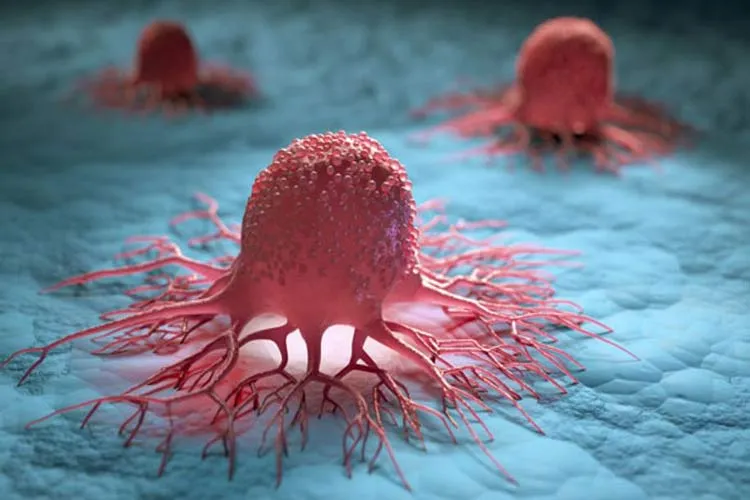
Researchers have discovered a possible mechanism cancer cells use to hide from the immune system and found that they create a thick, sugar-rich coating around themselves, and that excess glucose in a tumor-like environment causes cancer cells to build a thicker protective sugary coat. A protein called heat shock factor 1 (HSF1) also plays a key role in forming this coat. They hypothesize that inhibiting this process could make it easier for the immune system to detect and destroy cancer cells.
According to ScienceDaily, cancer cells sometimes escape the immune system by surrounding themselves with a dense layer of sugar-derived molecules. This coating can create a kind of camouflage and make detection and destruction of cancer cells more difficult for immune cells. Researchers at the Sanford Burnham Prebys Medical Discovery Institute and several other research institutions in North America have now identified the environmental conditions that can help cancer cells build this protective layer.
Their findings, published 7 August 2026 in Science Advances, show that changes in the tumor microenvironment - the surrounding milieu composed of immune cells, connective tissue, blood vessels, proteins and carbohydrates - can affect how successful cancer cells are at hiding themselves.
The researchers identified a potential method to reduce this sugar-rich coating that might make it easier for the immune system to detect and destroy cancer cells.
How does the tumor environment change cancer cells?
Dr. Kevin Tarp, the lead and corresponding author of the study, had previously examined how physical pressure on cells can create unexpected changes in mitochondrial function. He found that tumors are an ideal environment to study these effects because cancer cells are often subjected to significant mechanical forces.
Tarp explained: “Early tumors are usually stiffer than the surrounding tissues. That led me to the hypothesis that biophysical properties of cells influence the altered metabolic programs observed in tumors.”
One metabolic change commonly associated with tumors is reduced use of glucose for energy production in mitochondria. Previous studies showed this change may depend on nutrients available around the cells, and therefore is not necessarily an intrinsic feature of tumor cells themselves.
To investigate further, Tarp and colleagues exposed cells to abundant glucose and cultured them in several different conditions. Some cells were placed in stiff environments designed to simulate the physical conditions around early tumors. Another group grew in softer environments more similar to normal tissue.
The researchers also divided the cells into two groups based on the type of culture medium in which they were grown. One was standard laboratory medium and the other was prepared to more accurately reproduce the nutrient composition found in the human body. Both types of media were tested under normal conditions and under elevated glucose to allow the researchers to simulate high blood sugar.
High glucose can thicken cancer’s sugar coat
These environmental differences produced significant changes in the proteins the cells made, the concentrations of metabolites inside them, and the thickness of the sugar-derived layer covering the cell surface, known as the glycocalyx.
Importantly, excess glucose increased the thickness of the glycocalyx only when the cells had been grown in the physiological culture medium - the medium that more accurately recreates conditions inside the human body.
Tarp said: “We observed that changing the composition of physiological culture medium and altering the metabolites available to tumor cells reveals distinct biological differences between metabolism in normal and tumor cells.”
The researchers then examined how these metabolic changes affect the glycocalyx. To understand why extra glucose was associated with a thicker glycocalyx, they looked at which proteins increased when cells were exposed to high sugar.
Their experiments highlighted heat shock factor 1, or HSF1; a protein best known for helping cells survive high temperatures and other stressful conditions. Previous research has also linked HSF1 to breast cancer progression and metastasis.
The group showed that the presence or absence of HSF1 changes the glyco-conjugates - the sugar-linked proteins or lipids - produced by the cells.
The researchers then explored the relationship among high blood sugar, HSF1, the tumor microenvironment, and the immune system’s ability to attack cancer cells, and found that high blood sugar increased cancer cells’ ability to evade immune detection only when HSF1 was present and the cells had been grown in conditions resembling the tumor microenvironment.
These findings suggest that drugs designed to target HSF1 might reduce the thickness of the glycocalyx and remove part of the protective coating that enables cancer cells to escape the immune system.
With the widespread rise of metabolic syndrome and type 2 diabetes, this research could become particularly important. In both conditions blood sugar rises, and this is the factor that, Tarp says, is gradually becoming a more significant risk factor for people with cancer.
A large body of previous research has also linked high blood sugar to both increased cancer risk and worse outcomes after cancer treatment. However, far fewer studies have examined the potential biological mechanisms explaining this connection. The new findings offer a possible explanation by showing how increased glucose can directly help tumors evade immune attack.
Tarp said: “What we found is a plausible mechanism showing how high blood sugar can directly aid immune escape. This finding could help find a way to prevent the impact of high blood sugar on hiding cancer cells from the immune system; blood sugar that can be raised by metabolic syndrome and modern diets.”