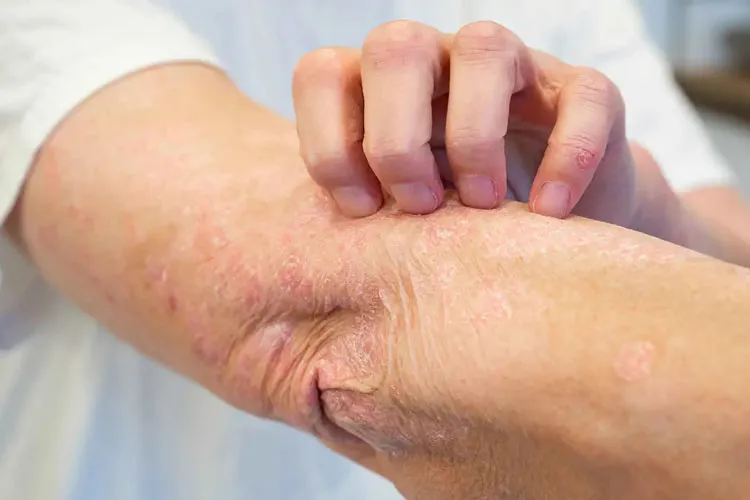
Many people, upon seeing patches and flakes on the skin, consider psoriasis merely a cosmetic and superficial condition; whereas this disorder is actually a chronic autoimmune disease that can affect various parts of the body. Given the widespread misconceptions surrounding this disease, below we examine five key facts about it.
1. Psoriasis is more than a skin condition
Psoriasis occurs when the immune system abnormally attacks healthy tissues; a process that leads to inflammation and accelerated growth and accumulation of skin cells on the body's surface.
The signs of this disease usually appear as red scaly patches or skin plaques, although their form and severity vary depending on each person's skin type. It is worth noting that this disease is not limited to the surface of the body and can also involve the scalp, nails, and other areas of the body.
2. Joint involvement is also possible
One of the most important complications associated with psoriasis is psoriatic arthritis; a condition accompanied by pain, swelling, and stiffness in the joints and tendons.
According to available statistics, one in three patients with psoriasis develops psoriatic arthritis; a condition that can occur at any age and is not necessarily related to the severity of skin symptoms. For this reason, persistent joint pain or stiffness in people with psoriasis makes consulting a specialist doctor necessary.
3. It is a chronic disease with a fluctuating course
So far no definitive cure for psoriasis has been identified, but this disease is controllable and its symptoms can be managed with appropriate treatment methods. This means symptoms may disappear for a while and then return.
Treatment methods vary depending on the type, severity, and site of involvement, and may include topical therapies, phototherapy, oral medications, and biologic treatments.
4. The complications of this disease are not limited to the skin
Psoriasis is associated with an increased risk of developing certain other diseases including cardiovascular problems, metabolic syndrome, depression, and psoriatic arthritis.
This does not mean that all patients with psoriasis will necessarily develop these complications, but it highlights the importance of continuous monitoring of the disease course and avoiding a purely cosmetic view of it.
5. Psoriasis is not contagious
One of the most common misconceptions about this disease is the belief that it can be transmitted from one person to another.
Whereas this condition stems from malfunction of the immune system and has no relation to transmissible infections. However, the social stigma resulting from the skin appearance of these patients sometimes leads to social isolation and significant psychological harm; while scientifically this disease poses no transmission risk to those around them.
According to doctors, understanding psoriasis as a chronic autoimmune disease - and not merely a transient skin rash - plays an important role in early diagnosis of potential complications and better management of it. Recent advances in treatment options have also helped many patients bring their symptoms under control and improve their quality of life.