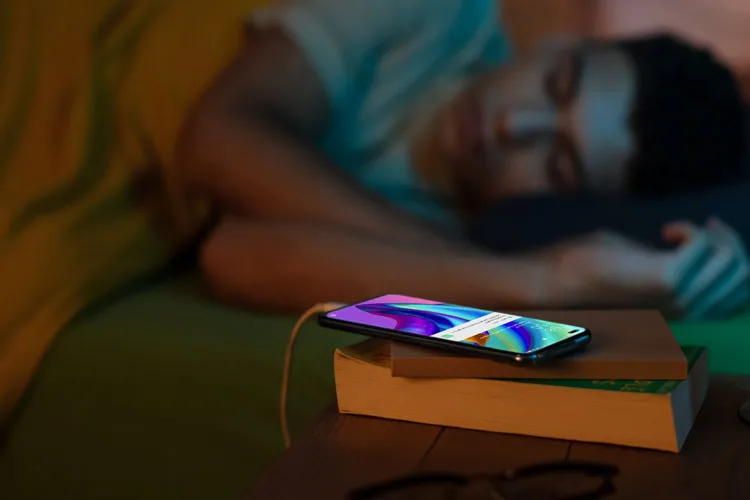
Plugging a smartphone into a charger before sleep and unplugging it in the morning has become a common habit among users; but the question remains whether leaving a phone connected to power for hours can damage the battery or even pose a safety risk?
Fortunately, modern smartphones and standard chargers are equipped with a set of protective mechanisms that manage the charging process after the battery is fully charged. Therefore, under normal conditions, leaving a phone connected to a charger overnight does not pose a danger to the device. However, excessive heat and the use of counterfeit or low-quality chargers remain among the main risk factors.
A smartphone battery is a consumable component and even with proper use its capacity decreases over time. For this reason, how the device is charged can affect the battery's long-term wear.
Can you leave your phone on the charger all night?
The short answer is: yes, if you use a standard charger, it usually does not cause problems.
If you use the phone's original charger, the adapter supplied by the manufacturer, or a reputable and compatible charger, the phone can remain connected to power for several hours.
Modern phones are equipped with various battery management systems and standard chargers typically also have multiple protective circuits. These systems prevent issues such as overvoltage, overcurrent, and drastic temperature increases.
However, experts warn that frequent use of fast charging can negatively affect battery life in the long run. Fast charging typically generates more heat, and heat is one of the important factors in the degradation of lithium-ion batteries.
Today's fast chargers, even in models with output power up to 80 watts, are usually equipped with protection systems to control temperature, overvoltage, undervoltage and overcurrent. For this reason, merely leaving a phone connected to a standard charger for a long time typically does not pose a significant risk.
What does the phone do after it is fully charged?
Smartphones manage the battery charging process after it reaches full capacity to prevent overcharging.
Apple has stated that after an iPhone's battery reaches full charge, the charging process stops; even if the cable remains connected to the adapter.
The company also considers connecting an iPhone to a charger overnight to be safe. In such cases, recharging occurs only when the battery level, due to standby power consumption and background activity, drops below about 95 percent.
Samsung takes a similar approach and, by periodically managing the charging process, prevents the battery from remaining fully charged for extended periods. The company has also emphasized that leaving the phone connected to a charger overnight, when using standard equipment, does not create a risk.
Heat; the real enemy of the phone battery
Although charge management systems prevent overcharging, heat remains one of the most important factors in reducing the life of lithium-ion batteries.
Fast charging can raise the phone's temperature, but this temperature increase is usually controlled by internal sensors and chips. In many cases, the ambient temperature and the conditions in which the phone is placed are more important.
For example, placing the phone under a blanket or pillow while charging can prevent heat from dissipating and increase the device's temperature. Therefore it is better to place the phone on a surface that allows proper heat dissipation while charging.
Samsung has also emphasized that unplugging the phone immediately after the battery reaches 100 percent can technically help increase battery life, but the practical benefit of this is not very significant.
Today's phones, with power management chips and temperature sensors, control the input current after charging is complete, and additional energy is not continuously fed into the battery.
High temperature can permanently reduce battery life
Among various factors, high temperature has special importance. Apple has warned that exposing an iPhone to environments with temperatures above 95 degrees Fahrenheit, equivalent to about 35 degrees Celsius, while charging can permanently reduce battery life.
Therefore, although leaving a phone connected to a charger overnight is not inherently dangerous, it is better to avoid placing the device in hot environments or covering it with blankets and other items while charging.
In the end, charger quality and temperature control matter more than the duration of connection to power. Using the original charger or a reputable and compatible model, along with placing the phone in a cool, well-ventilated environment, can help preserve battery health in the long term.