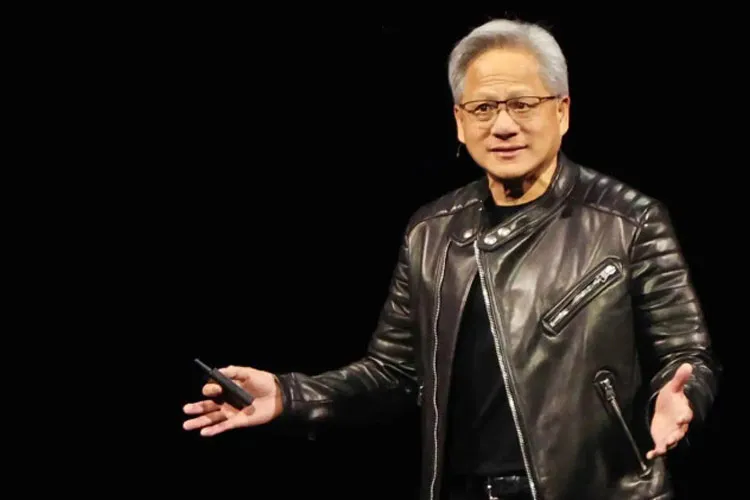
Jensen Huang, CEO and founder of NVIDIA, in his latest remarks about the future of artificial intelligence, has rejected predictions about the end of the world or human extinction as a result of advances in this technology by 2030.
Huang, in an interview with CBS News, responding to concerns about the possibility of a catastrophe caused by AI, said that 2030 will not be the end of the world and described the probability of such a scenario as "zero percent."
These remarks come as discussions about the long-term risks of AI have again become central in the tech industry in recent weeks. Some researchers and executives at companies active in AI have warned about the speed of development of advanced models and the difficulty of controlling systems that are becoming increasingly autonomous.
Despite these concerns, Huang believes the tech industry should not stop or broadly slow AI development. He emphasized in his interview that companies should move "as fast as possible," but that speed should not lead to releasing unsafe products. Huang also said NVIDIA will not release a product before it is ready and will not offer a product that is not safe.
Huang's position on the pace of AI development has also been reiterated in recent days. The NVIDIA CEO had previously said that if a company feels an AI system has gone out of control, it should adjust its development speed; however, in his new conversation with CBS he again emphasized the continued rapid movement of the industry.
One reason for the renewed increase in concerns was the resignation of Jacob Coxon, a former Anthropic researcher, in early September. Coxon, when announcing his departure from the company, warned that people working on AI seriously believe the technology could threaten human survival by the end of the decade. He also criticized companies' race to achieve self-improving AI.
That warning was followed by statements from other researchers as well, and the debate about the possibility of developing systems that can automatically perform parts of their own improvement intensified. Meanwhile, a Reuters report shows that by September 2026 differences of opinion between industry executives and researchers about the appropriate pace of AI development have become more pronounced; some call for more caution and coordination while others, including Huang, do not agree with slowing the overall development process.
Huang also recently witnessed a phone call from Donald Trump, the President of the United States, at one of the tech events in Los Angeles. He put the call on speaker and Trump, in this roughly five-minute conversation, talked about concerns related to the future of AI. Trump downplayed concerns about AI getting out of human control and rejected the scenario of robots taking over the world.
This stance was aligned with Huang's view on continuing rapid AI development. In that conversation, Trump did not support the idea of slowing technological development because of apocalyptic concerns. In contrast, some activists and researchers in the industry in recent weeks have stressed the need to create more mechanisms for monitoring, evaluating, and controlling advanced models.
Huang has ultimately tried to draw a boundary between rapid development and the safety of the technology: on the one hand, he believes competition and AI advancement should not be stopped, and on the other hand, he stresses that a product that is not ready or safe should not be made available to users. This view is expressed while the ability of AI agents to independently perform a set of tasks and access external systems has become one of the main focuses of recent debates about the future of this technology.