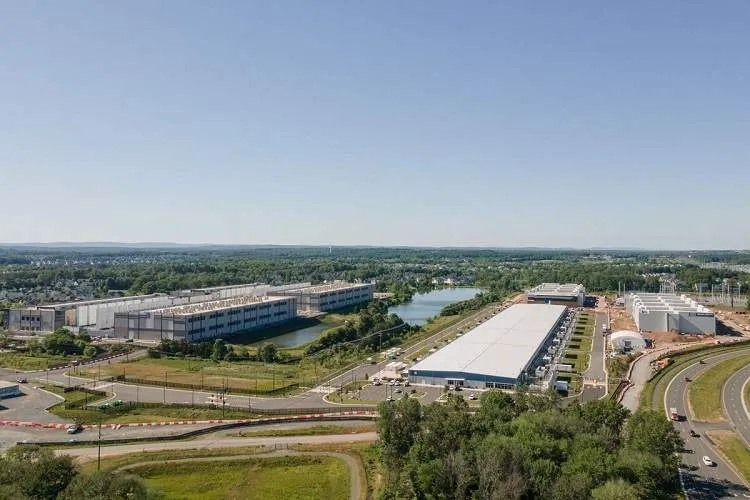
Rapid growth of AI infrastructure in the United States has met increasing resistance from local communities.
According to ITNA quoting Techspot, based on data from Data Center Watch, a research initiative of AI intelligence firm 10a Labs, local oppositions in the second quarter of 2026 caused 45 data center projects worth about $68 billion to be blocked or delayed. These projects make up more than half of the major data center developments the group monitored during this period.
The main reason for the protests goes back to AI data centers' very high demand for electricity, water, and land. Large computing centers require significant energy and cooling systems to run AI workloads, including training and inference of models. Building these centers may also require construction of transmission lines, substations, and new utility infrastructure.
Data Center Watch's data shows that 843 groups opposing data center development are now active in 49 U.S. states, with only Hawaii not listed by the group. Also, in 30 state legislatures, bills about data center siting, electricity consumption, or water use have been introduced or passed.
The level of opposition decreased in the second quarter compared with the first quarter. In the first quarter, 75 projects worth approximately $130 billion faced protests. However, the new figures indicate that opposition to AI data centers is not limited to a few specific projects and has spread across different regions.
Companies such as Amazon, Meta, Microsoft, and Alphabet are developing more data centers to support AI growth. Some developers have turned to dedicated power generation, larger grid connections, and on‑site power systems to meet energy needs; but these measures, especially if they involve natural gas power plants, can spark new protests.
Water consumption has also become another major point of contention. Although operators use low‑consumption cooling technologies and closed‑loop systems, critics argue that deploying these solutions at the scale of vast AI campuses can still strain local water resources.
This trend is not limited to the U.S., with similar protests reported in Europe, Australia, and South Africa; therefore, as AI data centers expand worldwide, energy, water, and land use could become one of the major constraints on developing this infrastructure.