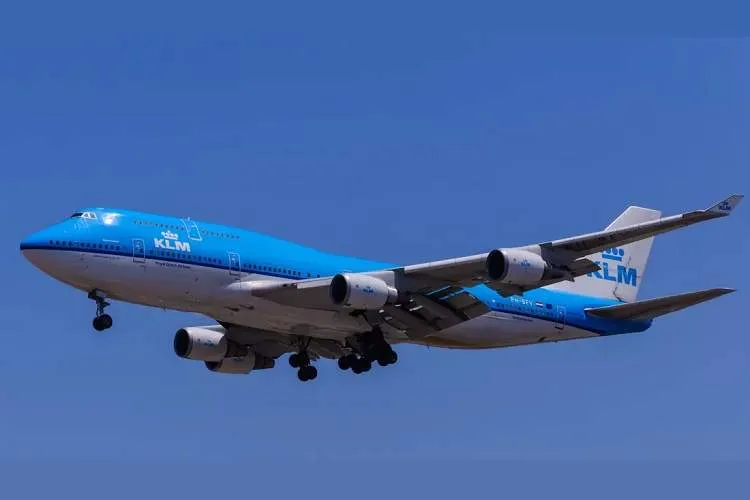
An KLM aircraft flying from Amsterdam to Curaçao, after a power bank caught fire in the business class cabin, was forced to abort its route and return to the Netherlands. The incident occurred almost six hours after takeoff and when the plane was over the Atlantic Ocean.
According to ITNA quoting TechSpot, the notable point was that the power bank belonged to Camiel Eurlings, the former CEO of KLM. The fire damaged his business class seat and the window curtain. The plane's return to the Netherlands caused passengers to retrace a large portion of the route and postpone the continuation of the journey to the next day. Passengers were booked on another flight and ultimately reached their destination without further incident.
The event highlights why airlines are very sensitive about the use of power banks and other battery-powered devices. Power banks use lithium-ion cells that can store a significant amount of energy. If they overheat or have a battery defect, they can produce heat, smoke, and flames; a situation that can be difficult to manage in the confined space of an aircraft cabin.
This issue becomes more important on long-haul flights, because the aircraft may be hours away from its destination. For this reason, many airlines have tightened regulations regarding power banks and charging cables in recent years. Passengers are also generally advised to stop using a power bank immediately if it becomes excessively hot or starts to smoke.
The recent incident drew more attention due to Eurlings' history managing KLM. He previously led the same airline and now, as a passenger on a KLM flight, encountered an incident related to a power bank. Some passengers also criticized this and linked it to regulations that were previously implemented at the company under his management.
With the increasing use of portable chargers while traveling, airlines face a dual challenge: keeping these devices in the cabin allows for the quick identification of defective batteries, but at the same time places a potential source of fire in the confined and crowded space of the aircraft.