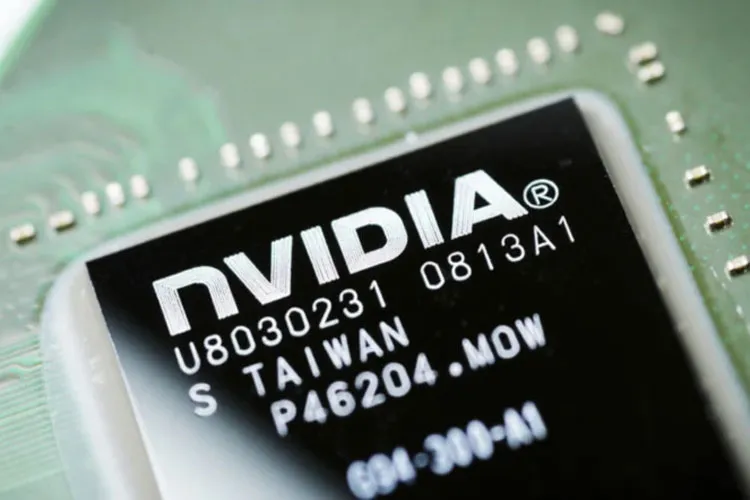
When the name graphics card comes up, the first name that probably comes to mind is NVIDIA. In recent years this company has taken a large share of the GPU market and has a strong presence in areas such as gaming, artificial intelligence, and data-center processing. AMD and the Radeon family come next; but contrary to common belief, the list of companies active in GPU design is not limited to these two names.
Of course, first one must distinguish between a GPU designer, a chip manufacturer, and a graphics-card maker. Companies like NVIDIA, AMD and Intel design the graphics architecture and chips, but the physical manufacturing of the chips is usually entrusted to foundries like TSMC. On the other hand, companies such as ASRock, Gigabyte and Sparkle produce and sell graphics cards using NVIDIA or AMD chips and are therefore considered board partners, not the primary GPU designers.
Intel; the most serious competitor outside the NVIDIA–AMD duo
Intel is the most important name outside those two companies in the discrete graphics-card market. The company’s Arc family, after a not-easy entry into the market in 2022, has now reached its second generation, Battlemage.
The Arc B580 and B570 models with Xe2 architecture were introduced in late 2024 and have 12 and 10 gigabytes of GDDR6 memory respectively. Intel has also developed the Arc Pro family for workstations and professional applications.
Intel faced issues in the first generation of Arc such as delays, insufficient driver maturity, and less-than-ideal compatibility with some games. Nevertheless, the company has continued its discrete GPU product line and introduced new models to the market. In fact, Intel’s current product list still includes several discrete GPUs from the Arc and Arc Pro families.
Even the new Intel–NVIDIA collaboration does not mean abandoning Arc GPUs. NVIDIA announced in September 2025 that it will invest $5 billion in Intel and the two companies will collaborate on new chips for PCs and data centers. As part of this collaboration, Intel’s x86 chips will be combined with NVIDIA’s RTX graphics chiplets.
Moore Threads; China’s effort to build an independent GPU
Moore Threads is another company that actually produces discrete graphics cards. This Chinese company was founded in 2020 and released its first graphics products in 2022.
One of the company’s best-known products is the MTT S80, which primarily targets the domestic Chinese market. However, software limitations and game compatibility have left Moore Threads’ products still significantly behind mainstream market GPUs. The company’s software support has also gradually developed.
Apple, Qualcomm and MediaTek also design GPUs
If we broaden the definition of GPU beyond “an installable graphics card for a computer,” the list of manufacturers becomes much longer.
Apple designs its own proprietary GPUs, but these units are integrated into the A‑series and M‑series chips and are not sold as standalone graphics cards. For this reason, a Mac user cannot buy an Apple GPU like a separate GeForce or Radeon card and install it in a computer.
Qualcomm also uses Adreno graphics processors in its Snapdragon chips and MediaTek integrates GPUs in its Dimensity family and other system-on-chip products. Arm is on another level, designing architectures such as Mali and Immortalis and licensing them for use in other companies’ chips.
Samsung has also used AMD’s RDNA graphics architecture in some Exynos chips. Therefore, a significant part of the GPU industry exists in products that do not at all resemble desktop graphics cards.
Why don’t more companies enter the graphics-card market?
One of the main reasons is not just hardware power; software and drivers are also extremely important. NVIDIA introduced the CUDA architecture in 2006 to make its GPUs usable for general-purpose computing beyond graphics. Over time this platform has been used in scientific research, artificial intelligence, and a wide range of computational applications.
AMD also introduced the open-source ROCm platform for accelerated GPU computing in 2016, and that ecosystem has continued to develop.
Therefore, a company that intends to enter the graphics-card market must not only build a powerful chip; it must invest years in drivers, game compatibility, developer tools, software libraries, and support for various applications.
Why is NVIDIA’s share so large?
Data from Jon Peddie Research shows the discrete desktop graphics-card market remains highly concentrated. In the fourth quarter of 2025, shipments of discrete graphics cards were about 11.5 million units and NVIDIA’s share increased, while Intel’s share remained roughly steady.
At this point NVIDIA’s software advantage becomes even more important. CUDA, developed since 2006, is now part of a broad ecosystem for GPU computing, and that long history makes entry for competitors more difficult.
According to BGR, alongside NVIDIA and AMD, Intel and Moore Threads are the only companies producing consumer‑purchasable discrete graphics cards; in contrast, Apple, Qualcomm, MediaTek and Arm are more active in integrated GPUs or architectures intended for use in other companies’ chips.
As a result, if by “GPU maker” one means a company that produces discrete graphics cards for personal computers, the options are much more limited than they might first appear. But if one considers the design of any kind of graphics processor, names like Apple, Qualcomm, MediaTek and Arm also enter the list and show that the GPU industry is much broader than the market for GeForce and Radeon cards.