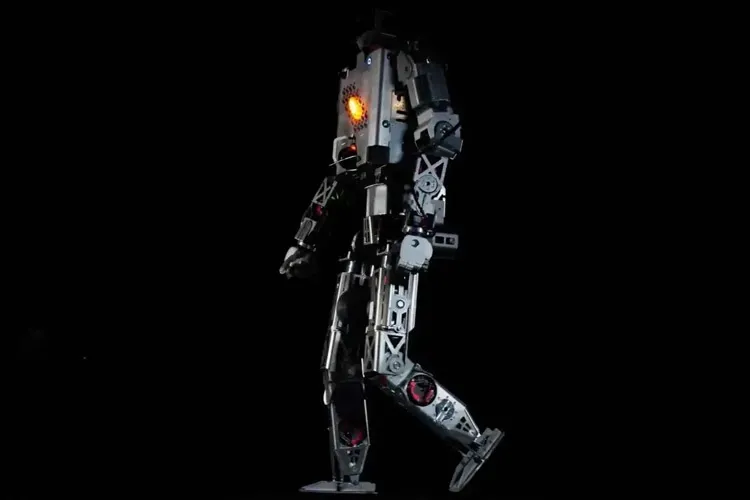
A startup based in San Francisco built a humanoid robot in just five months that can walk and operate remotely in highly hazardous environments. "Roger," the product of Minerva Humanoids, is designed to keep specialists away from explosive materials and high-risk energy equipment. Its intended applications include explosive ordnance disposal, hazardous materials incident response, work on offshore oil and gas facilities, and high-voltage power sites.
Roger is a combination of direct human control and onboard software. An operator puts on a virtual reality headset, sees the environment through the robot’s cameras, and transfers their movements to the robot, including tasks that require both hands. According to the company, low-latency control loops make the operator’s movements translate into the robot’s responses almost instantaneously.
Parts of the work whose continuous control is difficult for a human are handled by the "Minerva Intelligence" system: maintaining balance, steering movement, and recovering after a fall. This way, the operator can focus on the task itself.
Minerva emphasizes that its goal is not to fully replace humans. Final decision-making remains with a trained specialist, and the robot only performs tasks in the danger zone. The company says operators can learn full-body control of Roger within minutes.
Minerva views this approach as a response to the limitations of current bomb-disposal robots. Many of them are tracked vehicles with a single robotic arm and are not suitable for tasks that require two hands or high manual dexterity.
On Tuesday the company announced it had raised about $10 million in seed funding led by General Catalyst with participation from Long Journey Ventures and KERDO Ventures. These funds will be used to develop Roger’s programs and pave the way for the first paid trials this fall.
Sandor Felber, Minerva’s co-founder and CEO, previously worked on Tesla’s humanoid robot "Optimus" and helped launch the humanoid robotics research line at MIT’s CSAIL lab. According to PitchBook data, the company was founded in 2025 and is headquartered in San Francisco.
According to Interesting Engineering, Dominic Squit, a former British special forces soldier and Minerva’s head of dangerous operations, says the robot allows the operator to use their skill and hands while their body stays away from the danger zone.
However, precise information about Roger’s payload capacity, battery life, operational speed, and motion accuracy has not yet been released. Answers to these questions will become clearer in the paid trials this fall.