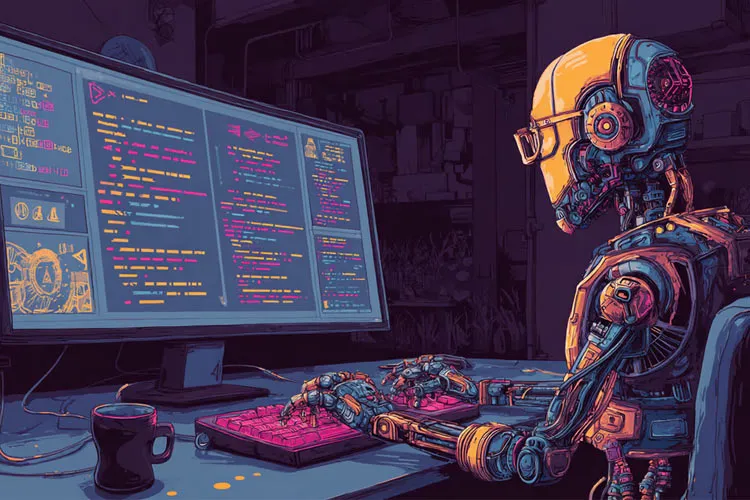
Prominent figures in the artificial intelligence industry, including executives of OpenAI and Anthropic, are examining possible scenarios of a major incident related to the technology and its public and political consequences. One of the main concerns is the possibility of widespread cyberattacks that could disrupt financial services, internet connectivity and even critical infrastructure such as the power grid and water supply.
The importance of these scenarios is not limited to technical damages. The occurrence of a serious incident could reduce public trust in AI, increase criticism of companies active in the field, and intensify pressure to impose stricter regulations.
In such circumstances, executives of companies like OpenAI and Anthropic may face difficult questions about their responsibility for developing and releasing this technology. Donald Trump, the President of the United States, is also part of discussions about AI policymaking; especially from critics who consider his administration’s approach to regulatory limits on the industry insufficient.
Why have catastrophic AI scenarios become more serious?
Preparing for potential crises is not a new subject for companies and security agencies. Military and national security organizations have for years simulated various scenarios of war, cyberattacks and infrastructure disruptions to assess their ability to cope with emergencies.
However, the rapid development of AI and the expansion of its applications have added new dimensions to this planning. Now the concern is not only about using intelligent tools for everyday activities; rather, this technology may play a role in more complex cyberattacks, identifying vulnerabilities, or carrying out some stages of malicious operations.
According to a report published by Axios, some researchers and senior AI industry executives consider the likelihood of a serious incident something for which preparation is necessary. This preparedness does not necessarily mean being certain such an incident will occur, but is part of risk management planning for potential threats.
OpenAI says it conducts crisis preparedness drills
An OpenAI spokesperson has stated that the company conducts drills to assess and manage risk. These exercises include practical reviews of various scenarios and discussions about how to respond to potential conditions.
According to the company, the goal of these drills is not to predict with certainty the occurrence of a specific incident, but to increase readiness to face a diverse range of conditions and potential consequences. Anthropic, according to Axios, declined to comment on the matter.
One important issue in such programs is how companies and governments would react after a crisis occurs. In the event of a widespread incident, in addition to examining its technical origin, questions may arise about the responsibility of developer companies, the adequacy of safety measures, and the necessity of limiting certain AI capabilities.
AI-based cyberattacks have increased concerns
One worrying scenario is an attack in which a malicious actor uses AI tools to identify vulnerabilities, facilitate intrusion into systems, or manage various stages of a cyber operation.
Such an attack could occur in two general ways: in one case, an AI system during testing or task execution goes beyond anticipated constraints; in the other, a human attacker uses available models and tools to carry out malicious activities. These two scenarios differ in origin and in how to counter the threat.
A recent report by cybersecurity company CrowdStrike about attacks on South Korean financial institutions provides a real example of concerns about criminal use of AI tools.
According to the report, an anonymous attacker, believed to be Chinese-speaking and motivated by financial gain, used the open-source tool ARTEX alongside AI models to target South Korean financial institutions. Investigations indicate these activities continued from late September to early October 2026 (late Shahrivar to early Mehr 1405) and resulted in data theft.
According to CrowdStrike’s findings, the attacker used tools such as DeepSeek and other models alongside Claude Code. Session records of these tools also show the attacker researched markets and groups to sell the stolen information. However, the attacker’s identity and all details of these attacks have not yet been definitively established.
This case demonstrates that AI can enhance attackers’ ability to perform some stages of cyber operations; even if the AI model itself is not directly the intrusion agent. In such conditions, intelligent tools may take on parts of the process of identifying targets, analyzing information, and facilitating malicious activities.
Could a major incident change the future of the AI industry?
One of the main concerns of industry executives is public and political reaction to a widespread incident. If an attack aided by AI tools causes serious disruption to essential services or widespread data breaches, there is a likelihood of increased pressure to limit the capabilities of the technology and to tighten oversight of developer companies.
In such circumstances, companies may be forced, in addition to accounting for technical shortcomings, to explain what measures they took to prevent the incident and whether their risk management mechanisms were sufficient.
However, preparedness for a catastrophic scenario does not mean such an event is certain to occur. The purpose of simulating crises is to identify weaknesses and enable faster response in case of an emergency.
Ultimately, the main challenge for the AI industry is that as new capabilities are developed, cybersecurity, oversight, and accountability mechanisms must be strengthened in proportion to potential risks. The more intelligent tools play roles in critical infrastructure and public services, the more important it will be for companies and governments to be prepared to counter their misuse.