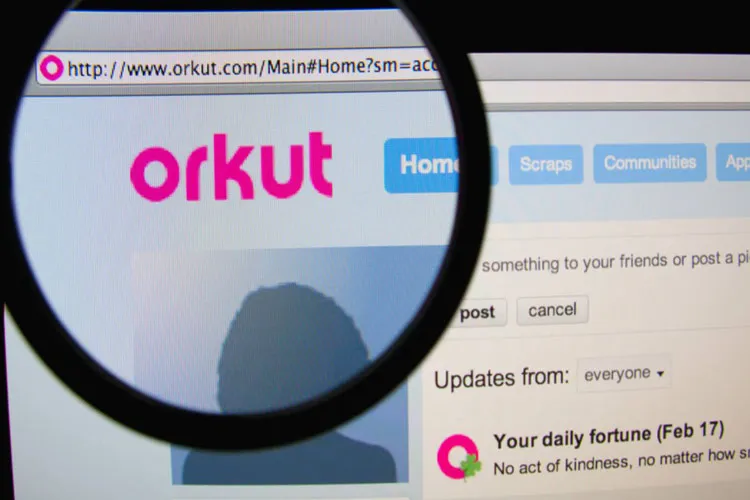
Orkut (Orkut), the popular social network that was shut down more than a decade ago, may return to the scene. Orkut founder Orkut Büyükkökten has asked users to help the effort to revive it by registering their support on Orkut's official website; although it is still unclear whether a new version of the social network will actually be launched.
Büyükkökten on Thursday posted on the social network X asking enthusiasts to visit Orkut.com, register their name to support the platform's return, and invite others to participate in the effort.
The request comes as social networks in recent years have been increasingly affected by content-recommendation algorithms, competition for users' attention, and AI-generated content. The founder of Orkut believes the internet needs more authentic human connections; connections that focus on friendship and a sense of belonging to a community rather than superficial interactions.
How did Orkut become one of the world’s popular social networks?
Orkut was launched in 2004 as a side project by Büyükkökten, then a software engineer at Google. The platform quickly became popular in countries such as Brazil and India and became one of the well-known names of the first generation of social networks.
Orkut users could create personal profiles, add friends to their network, participate in topic-based communities, and connect with others through shared interests. These features made the service part of the early social networking experience for millions of people.
Despite considerable popularity, Orkut gradually lost its position in competition with platforms like Facebook. Google eventually shut down the social network in September 2014 and focused on other services, including YouTube.
With Orkut's closure, one of the flagship platforms of the first generation of social networks became inaccessible; but its memory, especially among Brazilian and Indian users, has remained alive.
The founder of Orkut’s criticism of today’s social networks
In a letter published on Orkut.com, Büyükkökten criticized the path social networks have taken over the past two decades. He expressed particular concern about the increasing role of algorithms and AI-generated content and believes this trend can weaken the human nature of online interactions.
In part of that letter he wrote: “AI is an amazing technology, but it is destroying the one thing that made social networks special and valuable: that there is a person on the other side of the interaction.”
The founder of Orkut went on to emphasize the need to rebuild an internet where real people, authentic connections, and a sense of belonging to online communities are prioritized.
This view is also a critique of one of the major trends in the digital space: the increase in content volume and the role of automated systems in selecting what users see. In such an environment, the idea of returning to social networks based on personal connections and smaller communities could be attractive to some users.
Previous efforts to return to the world of social networks
This is not the first time Büyükkökten has tried to create a new social networking experience. In 2016, two years after Orkut's shutdown, he launched another platform called “Hello.”
The aim of that service was to connect people based on shared interests and topics. However, Hello failed to reach the popularity of Orkut and was shut down in 2020. Before its closure, the platform had been downloaded more than 2 million times worldwide; a figure not comparable to the roughly 300 million reported active users for Orkut.
In 2022 Büyükkökten also said in a post on Orkut.com that he was working on a new idea, but he did not provide specific details.
Two years later he told WIRED magazine that he was developing a social network that would use AI and machine learning to bring people together and form communities. However, that platform had not been launched publicly by the time the report was published.
Will a new version of Orkut really be launched?
Büyükkökten's recent call for users to register their support has once again raised the possibility of Orkut's return; but this action alone does not mean the official start of development or release of a new version.
So far he has not provided clear details about the possible features of the platform, launch timing, or how the registered supports would be used. It is also unclear whether the goal is to directly revive the Orkut brand or to create a new network inspired by its original philosophy.
The founder's request is above all focused on rallying user support and reviving the idea of human connections in the online space.
If this project leads to the launch of a new service, its main challenge will not only be attracting former users; it will also need to carve out a distinct place in a competitive market and demonstrate how real connections can be preserved alongside new technologies.
At present, Orkut's return remains a possibility, and the fate of the project will depend on further details announced by its founder.