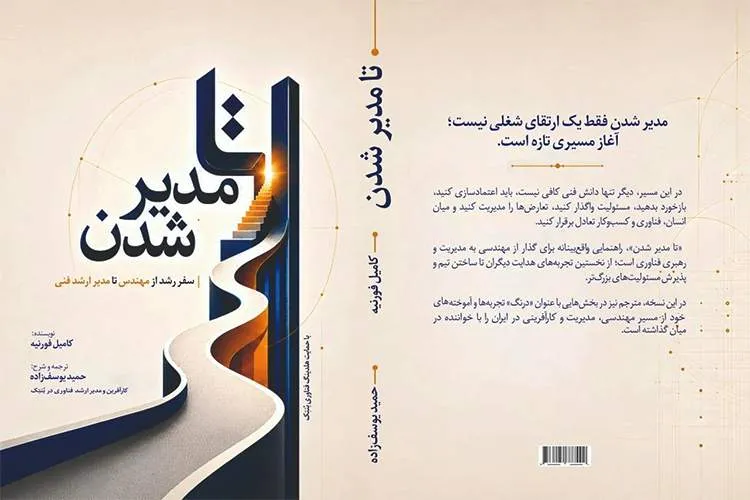
In many companies, the path to becoming a manager begins with a technical success: a programmer who solves difficult problems, an engineer whom others consult for technical decisions, or a specialist who responsibly delivers an important project.
But leading others requires skills beyond technical expertise. The book "To Becoming a Manager," by Camille Fournier, is a guide for traversing this path. In the Persian edition, alongside the translation of the original text, notes titled "Reflection" by Hamid Yousefzadeh are included, which, relying on his experiences in management and entrepreneurship in Iran, link the book’s teachings to the Iranian workplace environment.
The book, originally titled The Manager’s Path, examines the various leadership responsibilities in the technology domain; from mentoring colleagues and technical leadership to managing individuals, teams, managers, and senior organizational responsibilities. In this view, management is a learnable skill that at each stage requires practice, review, and a deeper understanding of people and organizations.
When the definition of success changes
For a specialist, success is often measured by the quality of work they personally do. They analyze a problem, build a solution, and deliver a tangible result. By taking on managerial responsibility, the scope of this success widens: now they must create conditions so that a group of people can work effectively, make decisions, and grow.
This shift can be difficult. A new manager may still want to do the most complex tasks themselves, approve all decisions, or oversee others’ work details to maintain quality. Such behavior can sometimes move work forward in the short term, but it may make the team dependent and deprive its members of learning opportunities.
The path that begins before the managerial title
One feature of the book is its attention to responsibilities that form before receiving the official managerial title. Mentoring a new colleague, helping a less-experienced person learn, and guiding technical decisions are all situations to practice leadership.
The book also addresses choosing between continuing a technical path and entering management. Sometimes management is presented as the natural next step in career advancement, while an interest in solving technical problems is not necessarily the same as an interest in leading people. One person may derive the most satisfaction from system design and deepening technical knowledge; another from growing colleagues and building a capable team. Recognizing this difference helps individuals and organizations make more informed decisions about professional futures.
Management is shaped in everyday conversations
A significant part of management happens in ordinary situations: a conversation about a delay, explaining expectations to a new colleague, feedback about performance, or listening to the concerns of someone who feels unseen. The quality of these interactions can affect team trust and collaboration.
One-on-ones, continuous feedback, delegation, performance evaluation, and helping individuals’ career growth are topics examined in the book. These discussions draw the reader’s attention to aspects of management that are easily set aside amid project pressures and urgent tasks.
From individual ability to team performance
The presence of capable individuals alone does not guarantee a good outcome. Priorities may be unclear, dependencies between tasks may be unseen, decisions may be delayed, or conflicts may remain unaddressed. In such conditions, increased individual effort does not necessarily solve the problem.
These questions are especially important for research, development, and innovation teams. The activities of such teams involve ambiguity and experimentation. A manager who enables conversation, learning, and course correction helps the team use its experiences and spend less energy on misunderstanding and internal friction.
Technology management in the era of digital transformation
In technology companies, managerial and technical decisions are interdependent. A delivery date promised to a customer, product priority choices, and resource allocation can affect system quality and the team’s future capacity. Technical constraints also impact cost, speed of product delivery, and business commitments.
Leading such organizations requires the ability to bridge the language of technology and the language of business. A manager must be able to explain technical opportunities and constraints, clarify customer requests for the team, and balance immediate needs with long-term capabilities.
In the era of digital transformation, this responsibility applies to more organizations. Competition depends on the ability to learn, collaborate, and turn ideas into products and services. "To Becoming a Manager" can help cultivate managers who prepare their teams to meet these needs.
Global experience alongside management experience in Iran
The "Reflection" notes in the Persian edition provide space to contemplate the book’s topics from the perspective of management experiences in Iran.
Hamid Yousefzadeh, the translator of the book, has worked for more than 25 years as a chief technology officer at Bontech and, alongside that, has launched and developed businesses in various fields. His experiences in managing technology teams and entrepreneurship underpin the notes added to this book.
These notes link the book’s concepts with tangible domestic experiences and help the reader adapt its teachings to their organization’s conditions. The combination of the author’s international experience with the translator’s experiences in Iran enriches the book and increases its applicability for Iranian readers.
A book to read and return to
"To Becoming a Manager" is useful for specialists considering their professional future, technical leaders, new managers, and experienced managers who want to review their work methods. Founders can also read it from the perspective of team growth and developing managers.
Each new responsibility offers an opportunity to return to the book’s topics. The value of study increases when the reader connects the material to their real situations. Becoming a manager continues with continuous learning and improving conditions for others’ success.
Buy the book
To view details and purchase "To Becoming a Manager," visit the book purchase page.
Purchase link: www.infourtech.com/ta-modir-shodan