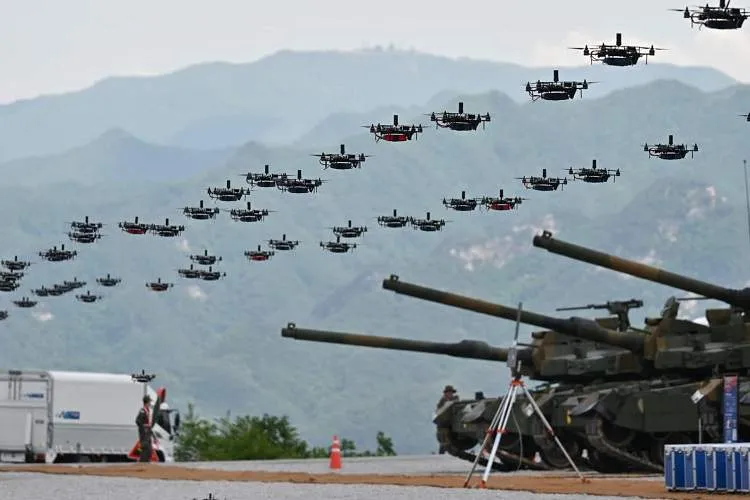
David Petraeus, a retired American general and former director of the Central Intelligence Agency (CIA), has predicted that artificial intelligence could help guide networks of sensors and weapons on the battlefield by 2030; a shift that expands the role of this technology from intelligence analysis to more direct participation in military decision-making.
Petraeus said in an interview on the Forecast2050 podcast that over the next four years, autonomous systems and networks composed of multiple independent systems will take shape. In this structure, AI agents could act like staff officers and use information received from various machines and equipment to coordinate operations.
According to his explanation, autonomous sensors collect battlefield information and transmit it to a central command system. This system can analyze the data and issue operational commands to weapons or equipment connected to the network; with limited or even no direct human intervention in some stages. Such an approach goes beyond controlling a single drone and enables coordination of groups of machines.
Petraeus also believes that the war in Ukraine will see expanded use of autonomous unmanned systems by the end of 2026. In the domain of drones, this development could reduce the need for human pilots and allow the deployment of a greater number of aircraft without a proportional increase in personnel.
However, the stated approach of the US military still emphasizes maintaining a human role in decisions about the use of weapons. Admiral Brad Cooper, commander of US Central Command, has said that AI is used to review large volumes of data, but the final decision about firing and target selection must still be made by a human.
According to ITNA citing Techspot, alongside technical advances, Petraeus has emphasized the necessity of reforming militaries' organizational structures. He believes that deploying autonomous warfare requires creating coordinating networks, changing command methods, and defining the limits of machines' authority. Therefore, the future of AI-based warfare depends not only on technological development but also on strategic decisions about human oversight and accountability.