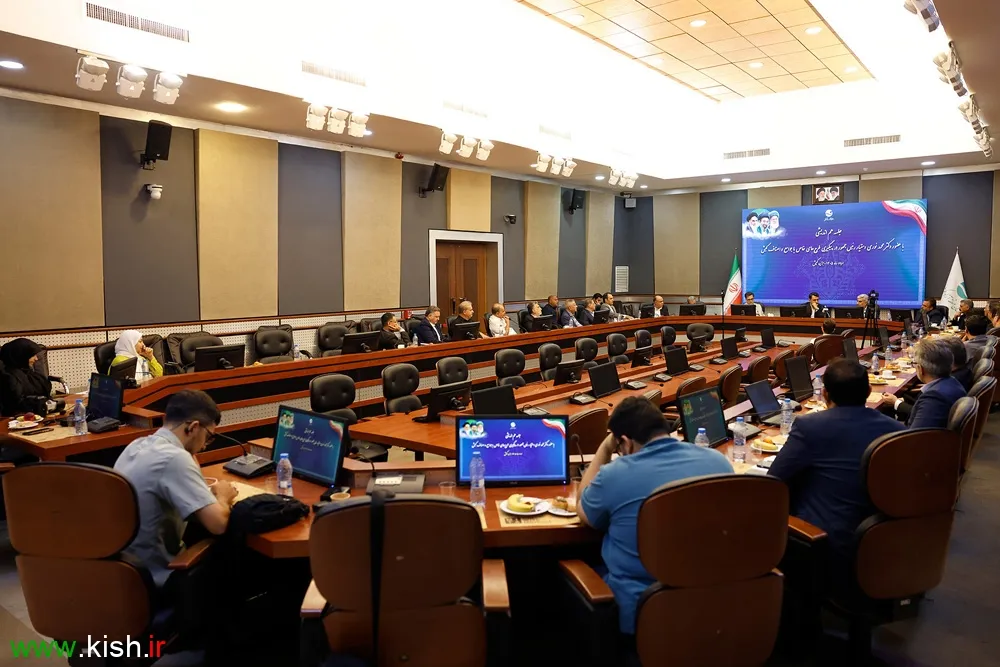
According to the Public Relations and International Affairs of the Kish Free Zone Organization, at the consultative meeting held with the presence of Dr. Mohammad Nouri, Presidential Assistant for Follow-up of Special Projects, Mohammad Kabiri, CEO of the Kish Free Zone Organization, several deputies of the organization, CEOs of subsidiary companies and representatives of the island's communities and guilds, which took place in the Razi Hall of the Kish International Convention Center, private sector activists presented their views, demands and proposals to strengthen the business environment and develop the island's economic capacities.
Sadat Najafi: The legal capacities of free zones should serve the national economy
Rahman Sadat Najafi, CEO of the Kish Merchants and Traders Association, while appreciating the organization's management follow-ups to resolve economic activists' issues, said: Many of the actions and follow-ups that started from Kish have had effects and results beyond the island and have also been effective in solving issues in other free zones.
Referring to the history of the formation of free zones in the country and Kish's pioneering role, he added: The private sector over past decades, without relying on government budget lines, through continuous investment has had an important share in creating infrastructure, employment and public revenues, and it is expected that in line with this role, the legal capacities of free zones be placed at the service of the country's economic development more than before.
Sadat Najafi, referring to recent months' conditions, considered facilitating businesses' access to financial resources one of the main demands of private sector activists and said: The proposed credit schemes can be more effective when their guarantee and credit assessment conditions are facilitated in accordance with the island's business situation.
He also appreciated the cooperation made in the tax domain and called for continuation of support in social security, installment of obligations and other tools that can help preserve employment and the continuation of businesses' activities.
The CEO and Vice-Chairman of the Board of the Kish Merchants and Traders Association cited the capacity to send postal consignments and other legal commercial procedures as effective tools for developing the island's economy and added: Free zones should be able, in line with their founding philosophy, to benefit from the capacities foreseen in the fields of trade, re-export and new economic activities.
Sadat Najafi, noting the large volume of re-exports of goods from neighboring countries to Iran, said: Part of this trade flow can be directed through the country's free zones; an action that can, while creating added value and employment, strengthen the position of Iran's free zones in the regional trade network.
He considered the activation of the seaman's goods procedure originating from Kish a positive step in this path and added: Developing this capacity can help increase traders' presence, strengthen commercial activities and create new routes for the legal transfer of goods from Kish to the country's southern ports.
Sadat Najafi also, referring to paragraph "a" of Article 65 of the Law of Permanent Provisions of the Country's Development Plans, demanded the full implementation of the legal powers of free zone management and emphasized: The private sector's demand is not to have a privilege outside the law, but to fully use the capacities that the legislator has envisaged to achieve the objectives of the free zones.
He added: Kish's economic activists do not raise their demands merely from the perspective of guild interests and believe that reviving the main functions of the free zones can serve the national economy, trade development and increased investment.
Abolhasani: Flight stability is the foundation of Kish's economic prosperity
Homayoun Abolhasani, Chairman of the Board of the Kish Merchants and Traders Association, referring to more than three decades of economic activity on the island, considered air transport one of the most fundamental infrastructures of Kish's economy and said: Kish's island position has made air access decisive in residents' lives, business activities and tourist inflow.
Referring to the experience of communication restrictions during the war period, he added: Increasing flight stability and allocating more capacity to Kish routes can resolve a significant portion of economic and tourism activists' concerns and provide greater trust for travelers to plan trips to the island.
Abolhasani stated that as various tourist destinations have developed domestically and abroad in recent years, Kish needs to develop air access, sustain events and create new incentives for travel to strengthen its competitive position, and a considerable portion of the island's economic dynamism will be achieved by increasing flights.
He also called for continuing tax and insurance supports appropriate to recent months' conditions and said: Creating more opportunities to fulfill obligations can help the sustainability of businesses and gradual compensation for the created conditions.
The Chairman of the Board emphasized the necessity of facilitating guarantee and credit assessment processes in the field of bank facilities and added: Legal entities and long-standing economic activists must be able to benefit from supportive facilities corresponding to their history and assets.
He also considered using social security legal capacities for installment of obligations effective in maintaining employees' and their families' insurance coverage and emphasized: Supporting businesses at this juncture will help sustain employment and preserve human resources.
Ghaffari: Strengthening the region management's powers accelerates problem solving
Hamid Ghaffari, CEO of the Kish Hospitality Centers Association, referring to nearly 500 hospitality units on the island, said: Hospitality centers are one of the pillars of Kish's tourism chain and despite differences in operating costs on the island compared to the mainland, they have tried to maintain service quality and price competitiveness.
He added: Examining service rates in various cities shows that Kish's hospitality complexes have tried to keep prices competitive so that tourists, along with service quality, also enjoy suitable conditions.
Ghaffari, referring to the cohesive structure of trade communities on the island, stated: Kish's private sector organizations have appropriate capacity to convey demands, consult with the region management and implement joint programs, and this structure can be a model for more effective use of the private sector's capacity.
The CEO of the Kish Hospitality Centers Association also emphasized implementing the free zone management's legal powers and said: A considerable portion of economic activists' issues can be addressed and resolved at the island level, and strengthening the region management's decision-making authority can make the problem-solving process faster and more effective.
He appreciated the efforts of the Kish Free Zone Organization management and the private sector's cooperation in recent conditions and added: Continuing this synergy will strengthen tourism, preserve services and provide more prosperity for economic activities.
Dezhdar: Flight stability and easing tax obligations help businesses
Hossein Dezhdar, CEO of the Kish Renters Association, referring to the long-standing presence of many investors and economic activists on the island, said: Kish's private sector has operated over the decades with belonging and trust in the region's capacities and remains ready to play a role alongside the island management to strengthen economic prosperity.
In the tax field, in addition to payment deadlines, he requested reviewing deadlines for companies' tax obligations and added: Providing appropriate opportunities to fulfill legal obligations can help companies that have faced different conditions in recent months to organize their affairs and prevent imposing additional costs.
Dezhdar considered air transport one of the main pillars of Kish's tourism economy and said: Stability and increase of flights can strengthen tourists' and investors' trust and provide grounds for increased activity in tourism, services and the market.
He also emphasized implementing free zones' legal powers and added: Economic activists expect that the ability to decide on matters the law has given to region management be strengthened so that responses to businesses' needs are provided more quickly.
The CEO of the Kish Renters Association named continued support for investors and creating a clear outlook for tourism development among the factors effective in strengthening investment and economic activity on the island.
Shirazi-Mansh: Implementing legal powers increases Kish's decision-making capacity
Hossein Shirazi-Mansh, representative of the Kish Industries Syndicate, referring to about four decades of presence and activity on the island, said: Kish's development from the beginning has been the result of private investors' cooperation and free zone managers, and a considerable part of today's island capacities has been formed relying on that participation.
He reviewed past experiences in solving infrastructural and economic issues and added: The Free Zones Law was drafted to enable faster decision-making and use of special powers for developing these areas, and experience has shown that whenever these capacities have been properly used, positive effects on the island's development have occurred.
Shirazi-Mansh, appreciating actions taken in recent months to manage special conditions and maintain activity stability on the island, said: The private sector, despite created conditions, has maintained its presence and continued to operate with hope for Kish's future.
He requested that the Presidential Assistant pay attention to the full implementation of the CEO of the Kish Free Zone Organization's legal powers at the government level and added: Just as increasing provinces' powers can speed up decision-making, using free zones' legal capacity also makes it possible for many issues to be addressed and resolved within the region.
The Industries Syndicate representative also proposed arranging a meeting between representatives of associations, investors and the island's economic activists with the President so that, while directly conveying private sector views and capacities, their proposals for Kish's development could also be presented.
Alireza Nouri: Use successful experiences to increase supply and economic activity
Alireza Nouri, veteran investor of the Maryam commercial, recreational and hotel complexes, reviewing part of Kish's development experience in past decades, evaluated the role of government support and private sector investment as important in forming the island's current capacities.
Referring to some economic policies implemented in the years after the imposed war, he said: Past experiences have shown that targeted facilitation of goods entry and increasing supply can be effective in market regulation and, in line with today's circumstances, successful experiences can be used to design new mechanisms.
Nouri suggested that the capacity of free zones in supplying and distributing goods and creating new trade routes be more than before considered by economic policymakers and added: Utilizing free zones' capabilities can, alongside other government programs, help increase supply and greater economic activity.
The veteran investor also, while appreciating the President's approach and the efforts of the Kish Free Zone Organization management, emphasized investors' and economic activists' readiness to cooperate with government programs and participate in the island's development path.
The economic activists present at this meeting collectively named increasing and stabilizing flights, continuation of tax and insurance supports, facilitating access to bank facilities, developing commercial and customs capacities and full implementation of free zones' legal powers as the most important areas for strengthening Kish's economy.
They also emphasized the private sector's readiness to participate in prosperity programs, preserve employment, develop tourism services and use new commercial capacities, and considered the continuation of direct dialogue among the government, Kish Free Zone management and economic associations as a basis for turning proposals and demands into executable solutions.