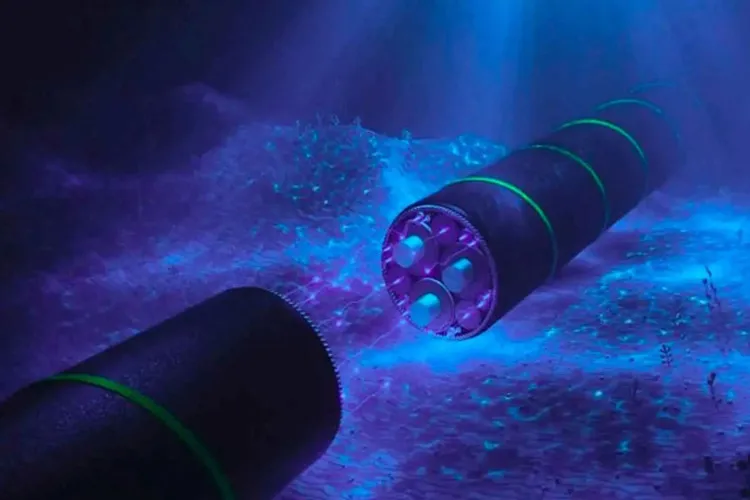
Imagine waiting only a few seconds to open a website, send a message, or make a video call. Behind that simple experience lies a vast network of communication infrastructure that stretches thousands of kilometers beneath the oceans. A significant portion of the world's internet traffic is carried between continents via submarine cables and the optical fibers within them.
Submarine cables are one of the less visible but vital parts of the global internet infrastructure. These cables connect data centers, telecommunications networks, and communication infrastructure of different countries and enable the transmission of vast amounts of data.
However, damage to or cutting of one of these cables does not necessarily mean a complete internet outage in a country. The network is structured so that in many cases data traffic can travel via other routes. Of course, in regions that depend on a limited number of submarine cables, the consequences of a cut can be more noticeable.
A vast network beneath the oceans
Submarine cables are composed of optical fibers and transmit data as light signals at very high speeds. These fibers are placed inside several protective layers so the cable can withstand the harsh conditions of the seabed.
These cables do not operate separately and independently; they are part of a wide and interconnected network. The presence of multiple routes means that if a problem occurs on one route, the network can reroute part of the traffic to alternative paths.
For this reason, in many cases users may not even notice a cable being cut; their communications continue uninterrupted via another route.
What happens when a cable is cut?
Failure of a submarine cable can cause communication networks to change their data transmission routes. If the affected region has access to many alternative routes, this rerouting may not have a significant impact on users' experience.
But the situation is different for countries or islands that depend on a limited number of submarine cables. In such cases, more traffic is shifted to the remaining routes and this can put greater strain on the existing infrastructure.
As a result, users may experience reduced internet speeds or increased latency, and some digital services may be affected for a period of time.
This issue is not limited to ordinary users. Companies that rely on stable international connections, cloud services, data centers, and inter-organizational communications for their daily operations may also face problems if communication routes are disrupted.
What causes damage to submarine cables?
Although cables on the ocean floor have protective layers, they are still exposed to various factors. Human activities are one of the important causes of damage to these infrastructures.
Ships and fishing operations, particularly anchors and fishing nets, can pose a significant risk to submarine cables in some areas.
Natural factors are also among the threats to these infrastructures. Underwater earthquakes and landslides can damage parts of the cables. In addition, some failures may be due to technical defects in cable components or associated equipment.
The very long length of these cables also makes detection and repair operations difficult. When a cable stretches thousands of kilometers on the seafloor, finding the exact location of damage and accessing it can be a complex process.
How are cables repaired?
After locating the fault, specialized companies and repair and maintenance ships are dispatched to address the problem. These ships are equipped with special gear that allows access to the cable on the seabed and bringing it to the surface.
After reaching the damaged section, the defective part is identified and repaired or replaced, and then the cable is put back in place.
The duration of these operations depends on various factors, including the location of the fault, water depth, sea conditions, and availability of specialized repair ships.
For this reason, restoring a submarine route to normal is not always an immediate process and may require varying amounts of time depending on the circumstances.
The internet is not dependent on a single cable
The global internet structure is not dependent on a single cable or even a specific communication route. A combination of submarine cables, terrestrial routes, data centers, and communication networks together enable the transmission and distribution of data traffic.
The existence of this extensive network means that failure of one cable often does not lead to a complete communications outage. However, any cut can put pressure on the capacity of alternative routes and have a greater impact in areas with fewer options.
In fact, every message, video call, search, or access to an online service may traverse infrastructure that lies deep beneath the oceans for part of its route.
Therefore, cutting a submarine cable does not necessarily stop the internet, but it can challenge the network's ability to route traffic via alternatives and maintain intercontinental connectivity.