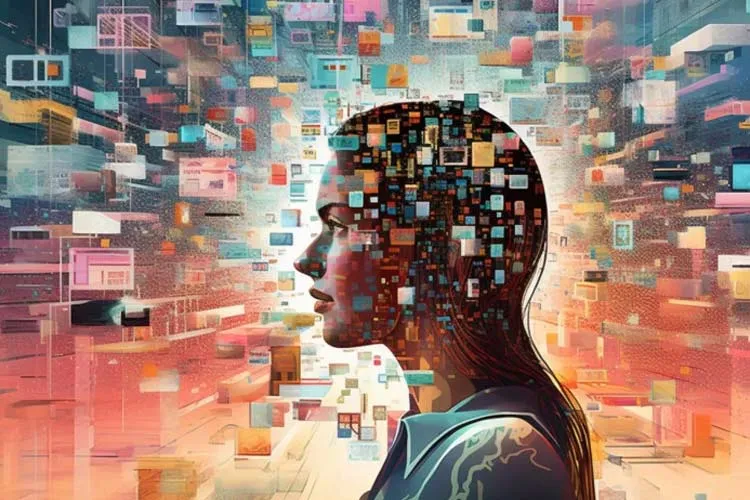
Imagine waking up one morning to find a digital version of you has, before you even acted, replied to messages, spoken to others on your behalf, published content and even made some decisions for you. This is no longer a cinematic hypothesis; with the rapid progress of artificial intelligence, digital versions that can represent real people, interact with others and produce content have become close to reality.
From a profile picture to a digital doppelgänger
For years a person's “digital presence” was little more than photos, posts, messages and social media accounts; a simple, static trace of real life. But generative AI has completely changed that equation. Today's tools can analyze a person's writing style, tone of voice, interests and even behavioral patterns from the data they have shared over time and produce text, images or even a voice that bears a notable resemblance to their original owner.
More importantly, this technology no longer confines itself to mere imitation. With the emergence of assistants and intelligent agents capable of performing real tasks, a person's digital version can independently carry out some of the work they used to do themselves; from replying to emails to managing appointments.
A version that never sleeps
One of the interesting paradoxes of this phenomenon is that the real human needs sleep, rest and pauses, but their digital version can remain active continuously, around the clock. This can make a person's digital presence appear stronger in intensity and frequency than their physical presence.
A digital persona can continuously publish content, answer audience questions, coordinate meetings and follow up on emails, without the real person even being behind the screen. Over time, as online communication takes a larger share of everyday life, others may become more familiar with a person's “digital style” than with the person themself.
When data becomes a person's portrait
This transformation is not limited to voice or face. AI development is moving toward models that heavily rely on memory and context. Emails, conversations, photos, files, search history and even personal settings and preferences together can form a vast and precise archive of a person's life.
When this volume of information is collected in an intelligent system, the digital version can build an extraordinarily accurate picture of its owner; a picture that can even predict their behavior or reactions in specific situations. This raises a philosophical and complex question: if a machine can predict a human's behavior and represent it to others, where exactly is the boundary between their “real personality” and their “digital version personality”?
Between convenience and loss of control
There is no doubt this technology has clear practical benefits; digital versions can help manage businesses, save time, facilitate audience engagement and even preserve a person's expertise for future generations. But alongside these benefits, a set of sensitive questions about privacy, identity and informed consent arises: who owns the digital version? Who controls the data with which that version was trained? And after a person's death, do others have the right to use their voice, image or style?
Concerns about digital identity theft and the production of content that is hard to distinguish from real content also appear more serious than ever; especially with the rapid advancement of synthetic voice, image and video technologies (deepfakes) that make it increasingly difficult for ordinary users to tell authentic content from fake.
A future with multiple versions of “self”
Although a person's real identity does not necessarily fade behind their digital version, the boundaries between the two are becoming increasingly blurred. As AI's ability to remember, represent and even speak in a human's voice grows, digital presence becomes an inseparable part of people's identity in today's world.
Experts in technology and digital ethics warn that in the coming years the main question will no longer simply be “who are you,” but rather the more important question of “which version of you are others actually interacting with?” Answering this question could shape a new legal, ethical and social framework for the post-AI era; a framework for which laws and social norms are not yet fully prepared.