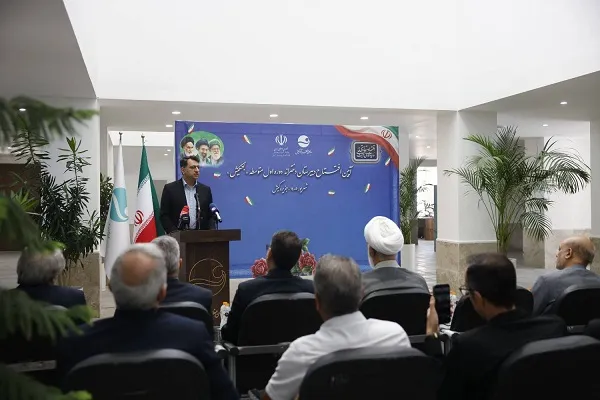
According to the Public Relations and International Affairs of the Kish Free Zone Organization, Mohammad Kabiri at the opening ceremony of Behkish School, stating that education is one of the main pillars of balanced and sustainable development of any region, said: significant steps for the development of education in Kish have begun, and this path will continue vigorously with the cooperation of the Education Department, the private sector and committed investors.
He, expressing appreciation for the presence of Alireza Monadi Sefidan, Chairman of the Education, Research and Technology Commission of the Islamic Consultative Assembly at this ceremony, thanked the Behkish group for participating in the construction of this school and said: a committed investor is someone who knows that alongside their investment they must also pursue the balanced regional development of the area in which they operate; an approach that in the short term benefits the surrounding community and in the long term returns to the investment itself.
He continued: if we can provide satisfactory per-capita education and health services, the grounds for greater presence on the island will be provided and the added value of investments will increase in the medium and long term.
Targeting a four percent share for education in Kish
Kabiri, referring to the share of education in the GDP of different countries, said: our effort is that after calculating Kish’s GDP in cooperation with the Statistics Center, we can reach a four percent share for education on the island, and the Kish Free Zone Organization’s budgeting targets for the current and next year have also been on this path.
He added: if we want quality education, we must create an optimal and motivating system for teachers, ensure their minimum welfare, and alongside that benefit from up-to-date trainings and maintain the dynamism of the education system at the national and regional level.
The CEO of the Kish Free Zone Organization, referring to reports presented at the Education Council, said: Kish schools are among the top-tier schools in the province and with the continuation of development programs we must further elevate this position.
He emphasized the necessity of continuously evaluating the results of investments in the field of education and added: we must be able to measure the effectiveness of actions and investments made in education with valid and up-to-date methods and determine how close we have come to the set goals.
Supporting teachers and pursuing provision of housing for educators
Kabiri, referring to actions taken to improve educators’ conditions, stated: a 100 percent increase in teacher recruitment allowance and strengthening occasion-based supports are among the actions taken, and the issue of providing housing for teachers is also being pursued seriously.
He added: so far more than 70 units have been allocated in this area and with the permission obtained from the Secretariat of the Supreme Council of Free Zones and the provision foreseen in this year’s budget, the Kish Free Zone Organization will assist with teacher housing deposits up to 500 million tomans. The Education Department must also participate to the extent of the amount that this organization provides for teachers.
Kabiri, emphasizing the need to strengthen livelihood supports for educators, said: given the living conditions on the island, providing housing and improving welfare supports for teachers are seriously on the agenda, and the Kish Free Zone Organization has so far taken actions in this area and will continue these supports; alongside these actions, it is necessary for the Education Department to also consider capacities and incentives appropriate to the service conditions of teachers on Kish Island.
He, referring to pursuing this matter at the national level, said: in a meeting with the Minister of Education and the deputies of this ministry, the issue of supporting educators and providing their housing was raised and the Kish Free Zone Organization has also announced its readiness to cooperate and advance this program.
The CEO of the Kish Free Zone Organization also announced pursuing the provision of a complex of about 250 units for educators and said: one of the implementing banks that has invested on Kish Island has constructed a complex of about 250 residential units and we are trying, by coordinating between this complex and the Education Department, to make this capacity available for educators by next Mehr.
Opening two new schools next year
Mohammad Kabiri, referring to upcoming programs, said: the set of actions pursued to create a quality education system aligned with modern models and to provide teachers’ minimum livelihood can further strengthen Kish’s position in education; Kish already holds a suitable position in this field and must move closer to what it deserves.
He added: the opening of two more schools is planned for next year and appropriate interaction with committed private sector can accelerate the development of the island’s educational spaces.
Kabiri, thanking Mehdi Bavaghar Za’imi, Director General of Renovation, Development and Equipment of Schools of Hormozgan Province, for supporting Kish schools, added: in the past year and with follow-ups, in three stages supports and equipment from the Provincial School Renovation Organization have been allocated to Kish and we hope this trend continues.
He emphasized: Kish should not be viewed merely as a privileged area; because there are also people on this island who need support in education and treatment and both the national government and the Kish Free Zone Organization have a duty to make more efforts in this area.
The CEO of the Kish Free Zone Organization concluded with hope that with the continued cooperation of the Education Department, the private sector, the School Renovation Organization and other related bodies, the process of developing education and supporting educators in Kish will continue more strongly.
It is worth noting that Behkish School has been built with private sector participation within the framework of corporate social responsibility and in the new academic year will begin its educational activities with 15 classes for girls at the first secondary level and more than 450 students.