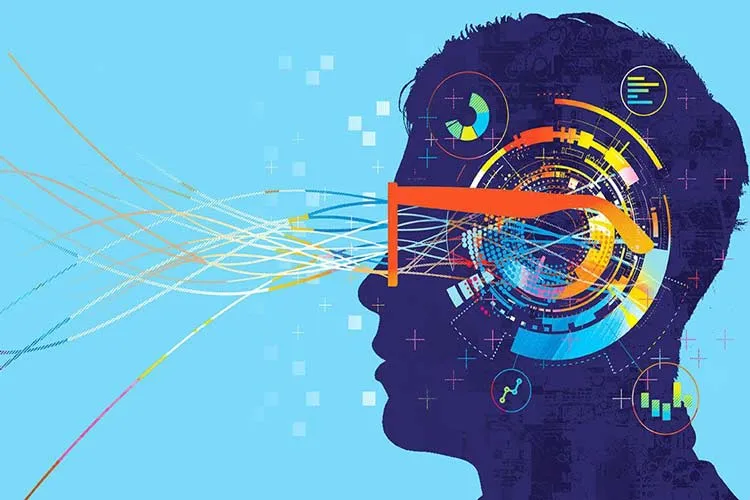
For many years, using technology was tied to touching a screen or working with a mouse and keyboard. Now the emergence of devices that understand a user's voice, movement, gaze, and surrounding conditions has changed that pattern. With advances in artificial intelligence and the spread of wearable devices, the tech industry is approaching a stage where the screen is no longer the primary interaction tool and is only one of the ways to communicate with devices.
Natural commands
The transition from keyboard to touchscreen was a major change in how devices were used. The next stage revolves around technology understanding people better, rather than the user having to learn specific commands.
Voice commands have become more widespread today, and pointer recognition, motion tracking, and eye tracking technologies have also advanced. Generative AI has helped devices better understand natural language, allowing users to converse with them in a simpler, more everyday manner.
In such conditions, a phone or computer does not need to wait for the user to tap a particular icon to perform a task. The device can understand the request and execute it through a set of apps and services.
Wearable devices
Smartwatches, in-ear headphones, and smart glasses play an important role in this transformation because they bring technology closer to the user's body. Instead of taking the phone out of a pocket, glasses can display information in front of the user's eyes, or the phone can receive voice commands and respond.
The sensors in these devices also collect information about movement, location, and the surrounding environment, giving intelligent systems more context to understand the user's intent. In the future, these devices will rely increasingly on AI to act as personal assistants that perform tasks rather than merely displaying information.
Control by movement and brain signals
The future of interaction is not limited to voice. Cameras and sensors can detect hand, body, and eye movements and turn them into commands. This method is particularly useful in cars, smart homes, and augmented reality, especially in situations where touching a screen is impractical.
Tech companies are also working on neural interfaces - technologies that record signals related to brain activity and enable control of certain devices without the need for movement or voice. Examples of these can be seen today in projects by companies such as Neuralink and in control bracelets based on muscle signals that some tech giants are working on.
The biggest challenge: privacy
The more skilled devices become at recognizing people, the more user data they collect. A camera that recognizes movements can monitor the environment, a microphone that listens for commands is always listening, and sensors record movement and location data.
For this reason, the success of the post-screen era does not depend solely on technological progress; companies' ability to strike a balance between ease of use, privacy, and security will also play a decisive role.
Will the screen disappear entirely?
Despite all these advances, it is unlikely that screens will disappear anytime soon. These tools remain suitable for reading, working, watching content, and activities that require visual precision.
However, their place in the tech ecosystem will change. The screen may shift from being the sole point of interaction to part of a broader system that combines voice, vision, motion, neural signals, and AI.
Thus the future of technology may not be about creating a better screen, but about reaching a stage where the user does not even have to think about how to use the device.