17 August 2026
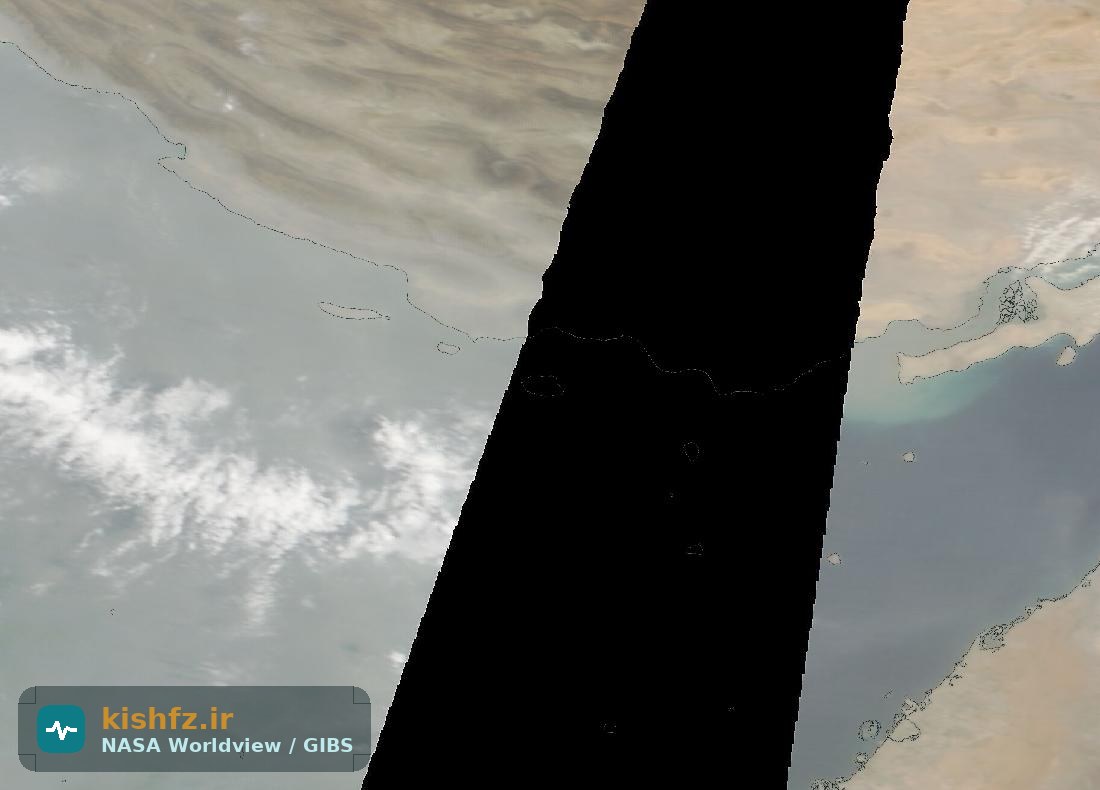
Kish from orbit
True colour, from the MODIS instrument on NASA’s Terra satellite.
NASA Worldview / GIBS
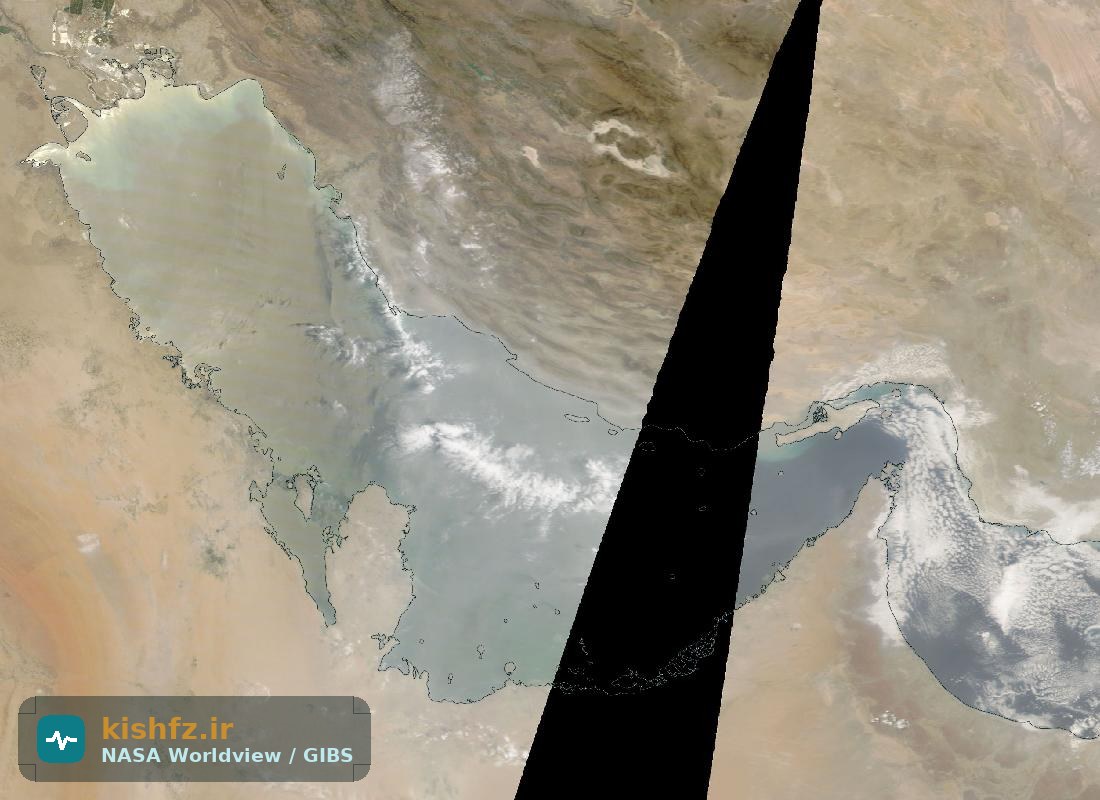
The Persian Gulf by day
The whole Persian Gulf in one pass, with the coastlines drawn on.
NASA Worldview / GIBS

The Persian Gulf at night
VIIRS is sensitive enough to image city light: this is the region drawn by where people are.
NASA Worldview / GIBS
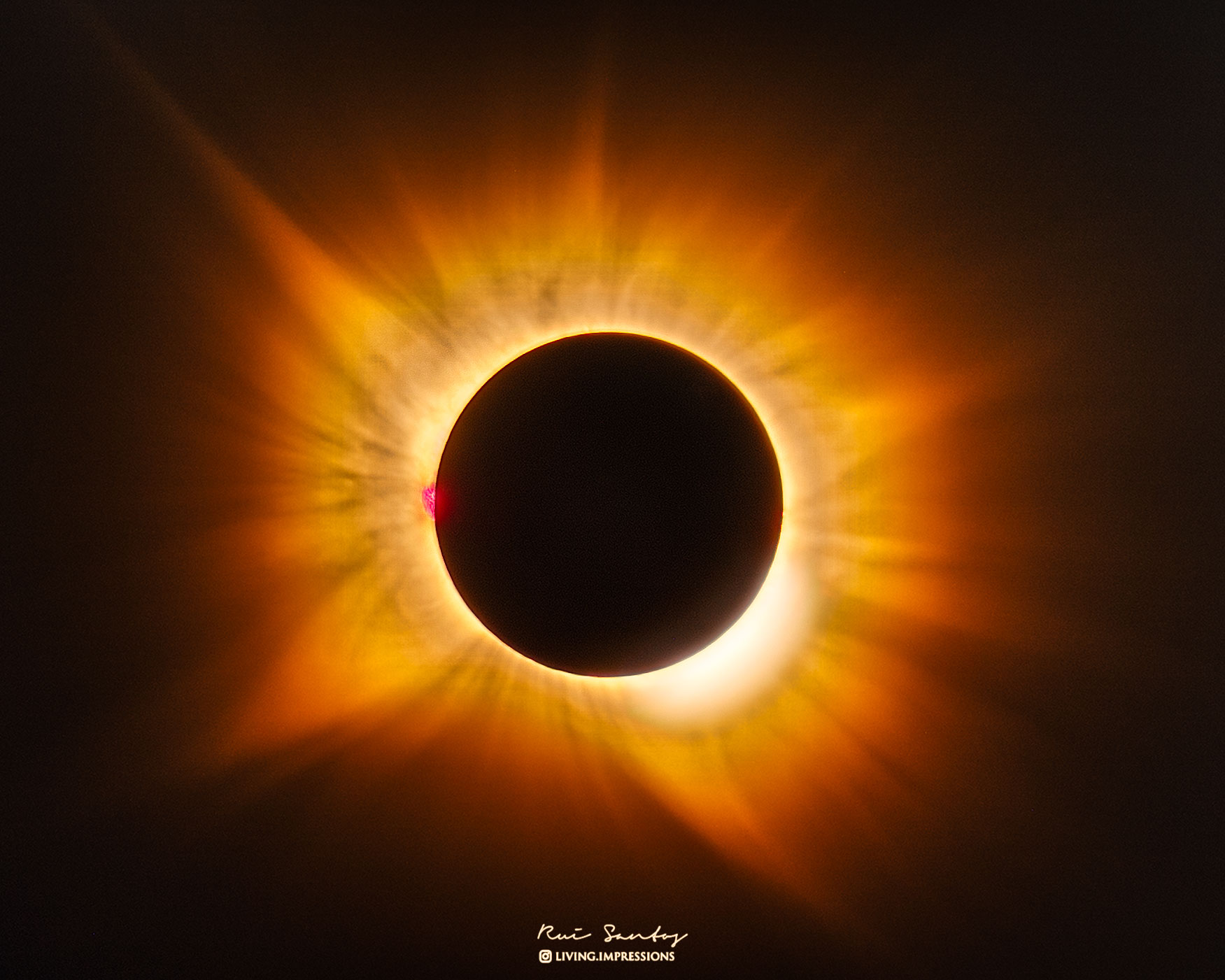
A Golden Corona Eclipse
NASA’s Astronomy Picture of the Day.
This total solar eclipse appeared not only poetically beautiful but scientifically interesting. Usually the solar corona appears white, and to some observers the corona of last week's total solar eclipse did appear this pearly color. But this time, totality observers in Spain saw a corona that appeared unusually golden. For one reason, from Spain, the totality occurred when the setting Sun was near the horizon. That low, sunlight travels through a large amount of air which scatters out blue light. An unusual amount of smoke in the air from nearby forest fires acted as a second filter, further scattering the remaining blue tones and deepening the already gold-dominated light. The HDR-processed, multiple-exposure featured image was captured from Benavente, Spain last week. One thing that did not appear golden was a hydrogen-glowing prominence that hovered over the Sun's left edge -- its original bright pink color survived. Gallery: Solar Eclipse of 2026 August 12
This explanation is in English; it has not been translated.
Rui Santos (Living Impressions)