22 August 2026
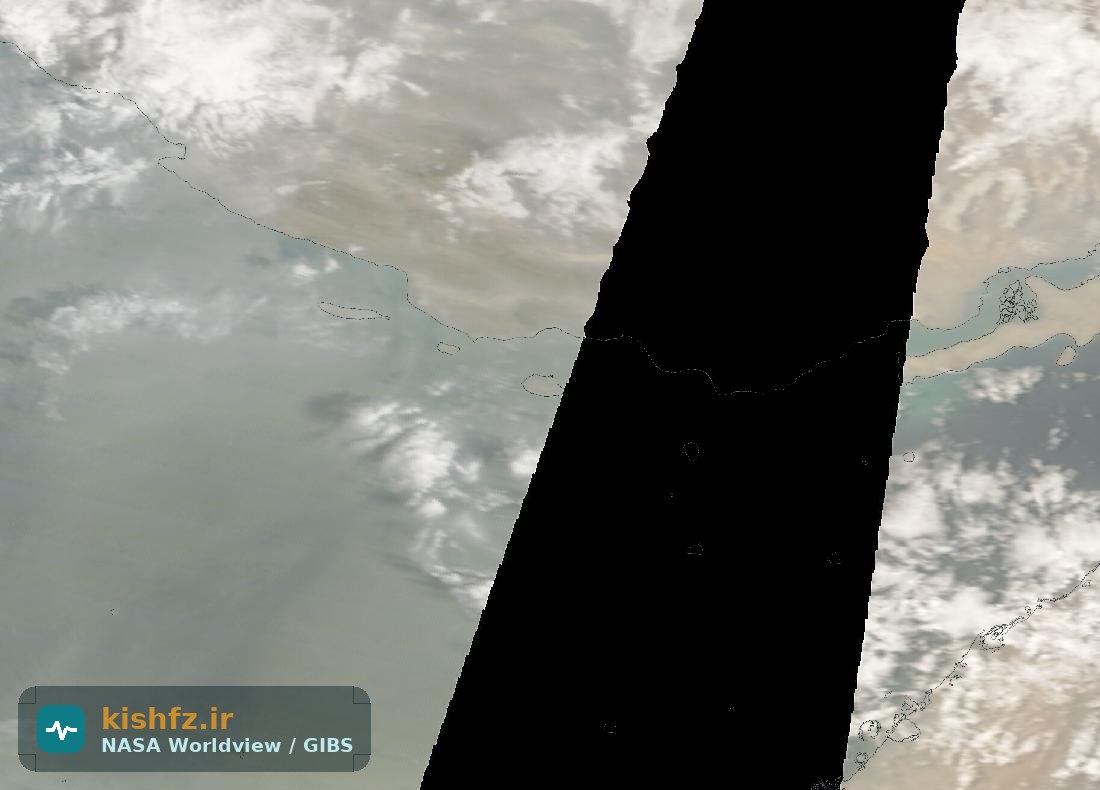
Kish from orbit
True colour, from the MODIS instrument on NASA’s Terra satellite.
NASA Worldview / GIBS
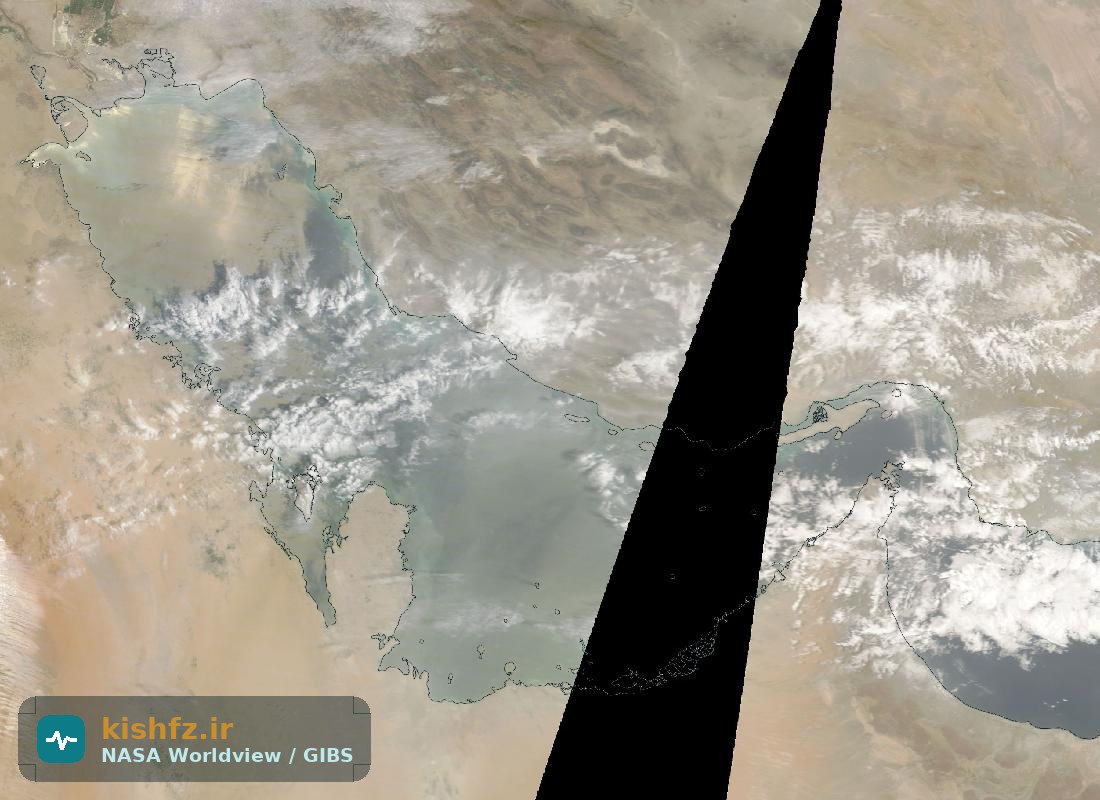
The Persian Gulf by day
The whole Persian Gulf in one pass, with the coastlines drawn on.
NASA Worldview / GIBS
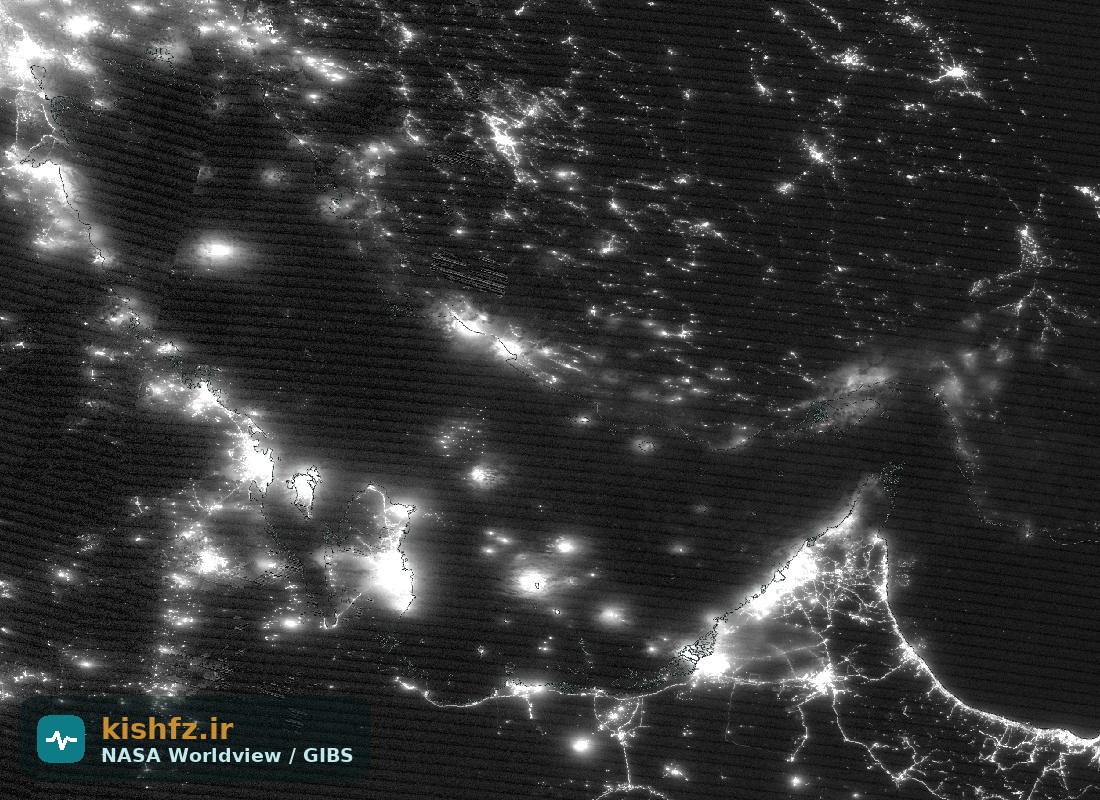
The Persian Gulf at night
VIIRS is sensitive enough to image city light: this is the region drawn by where people are.
NASA Worldview / GIBS
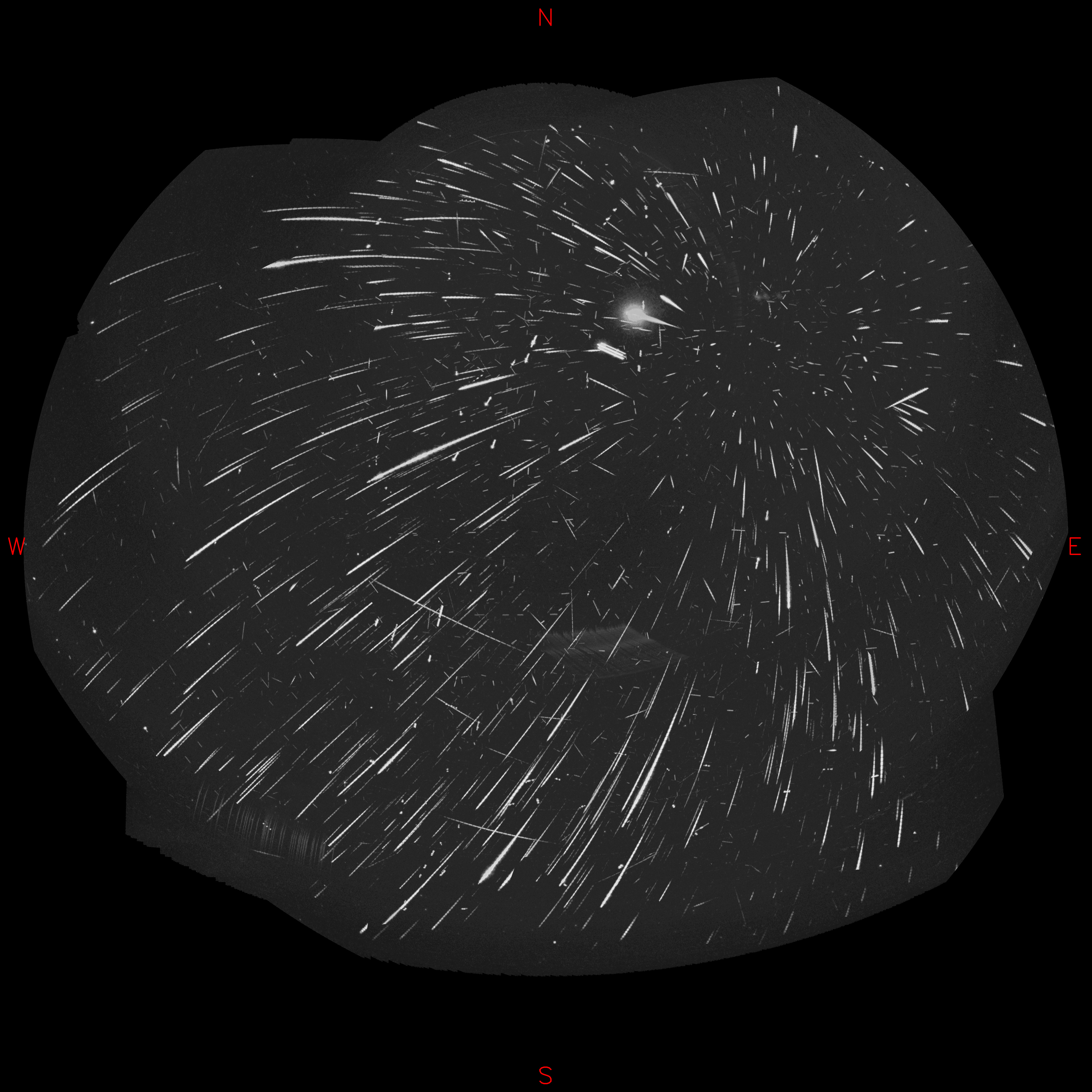
Mostly Perseids
NASA’s Astronomy Picture of the Day.
Recorded the night of August 12-13, images from four dedicated meteor-monitoring cameras at an astronomical observatory in Czechia were aligned and combined to create this all-night, all-sky view. On that night, the total count came to 1,706 meteors. And since that coincided with the peak activity of the 2026 Perseid Meteor Shower, most are perseids. Their overwhelming numbers make them easy to spot. Quite convincingly, perseid trails all trace back to a single radiant on the sky at the upper right, a region in the annual shower's eponymous constellation Perseus. But meteors belonging to other much less active showers can also revealed by finding their radiants too. For example, seen crossing the perseid trails are meteors from a shower whose radiant lies in Cygnus, known as Kappa Cygnids. The antihelion complex, a general region near Aquarius and opposite the Sun in the sky, is also identifiable as a weak source for meteors.
This explanation is in English; it has not been translated.
Valašské Meziříčí Observatory