24 August 2026
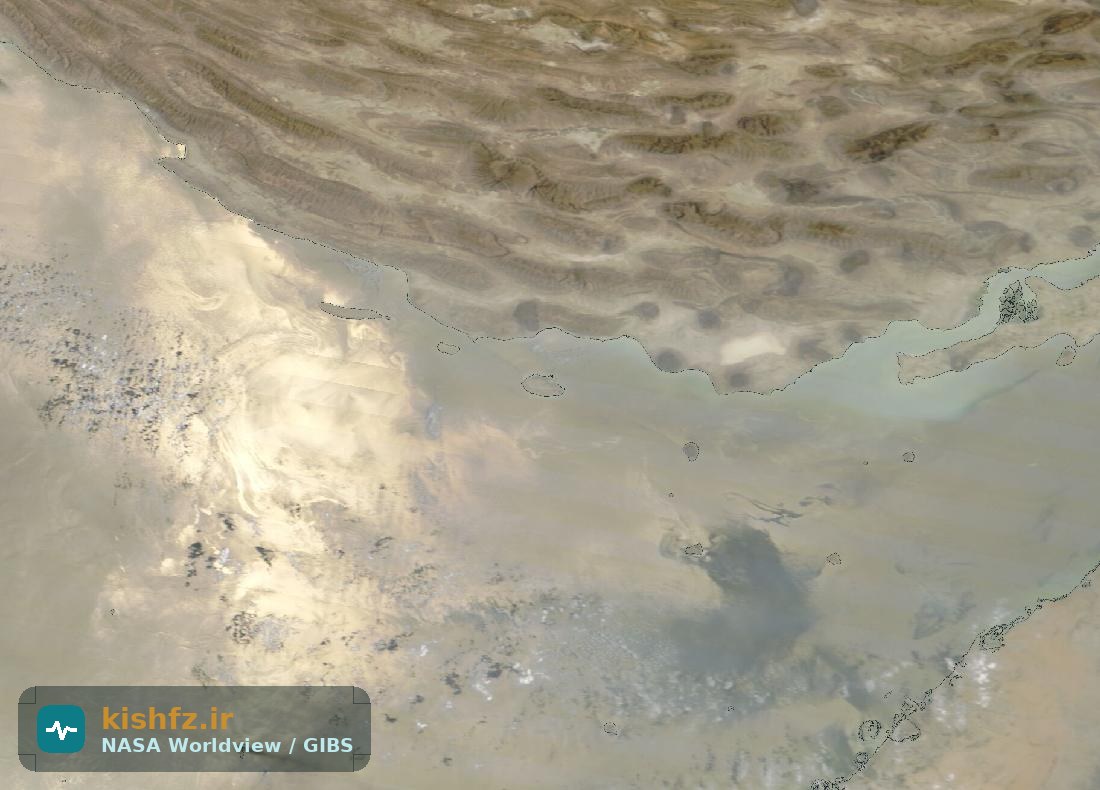
Kish from orbit
True colour, from the MODIS instrument on NASA’s Terra satellite.
NASA Worldview / GIBS
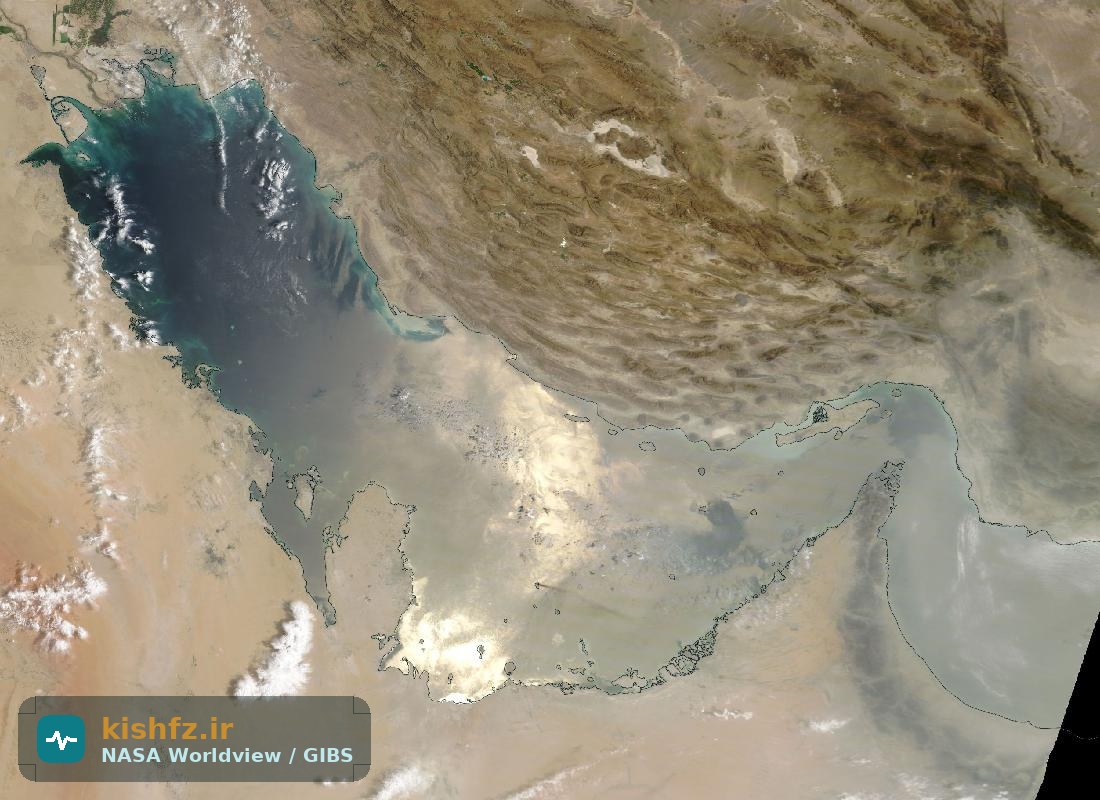
The Persian Gulf by day
The whole Persian Gulf in one pass, with the coastlines drawn on.
NASA Worldview / GIBS
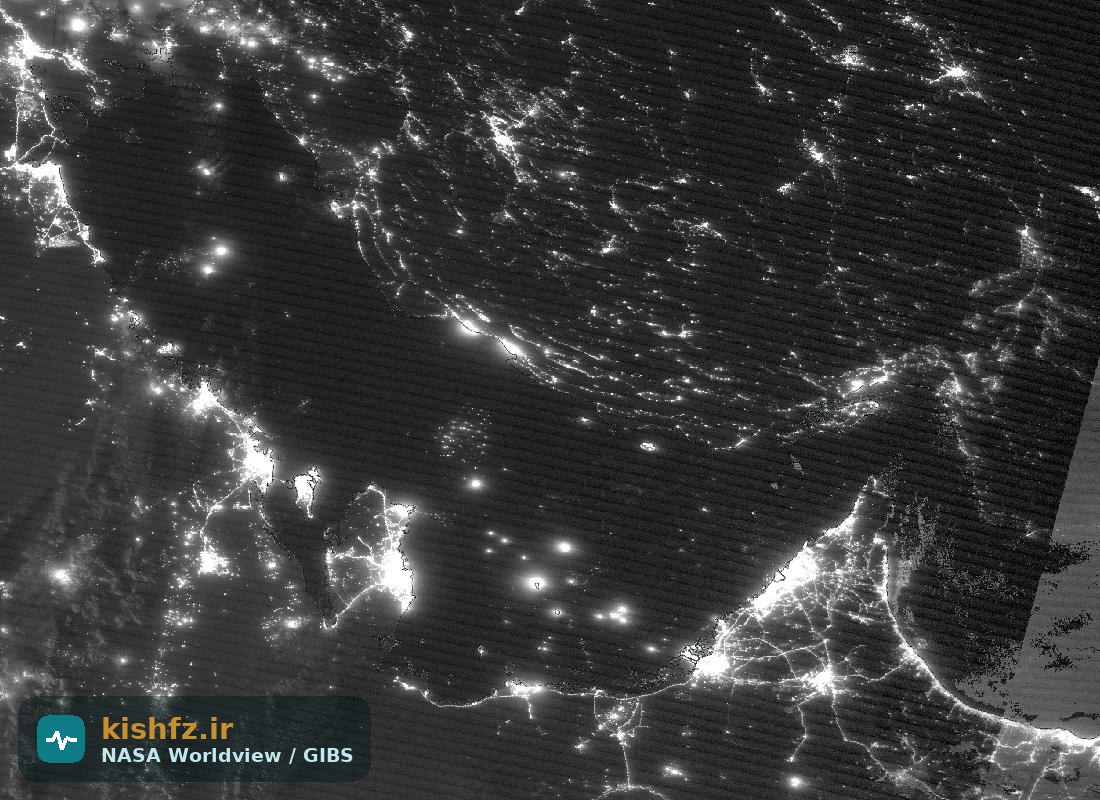
The Persian Gulf at night
VIIRS is sensitive enough to image city light: this is the region drawn by where people are.
NASA Worldview / GIBS
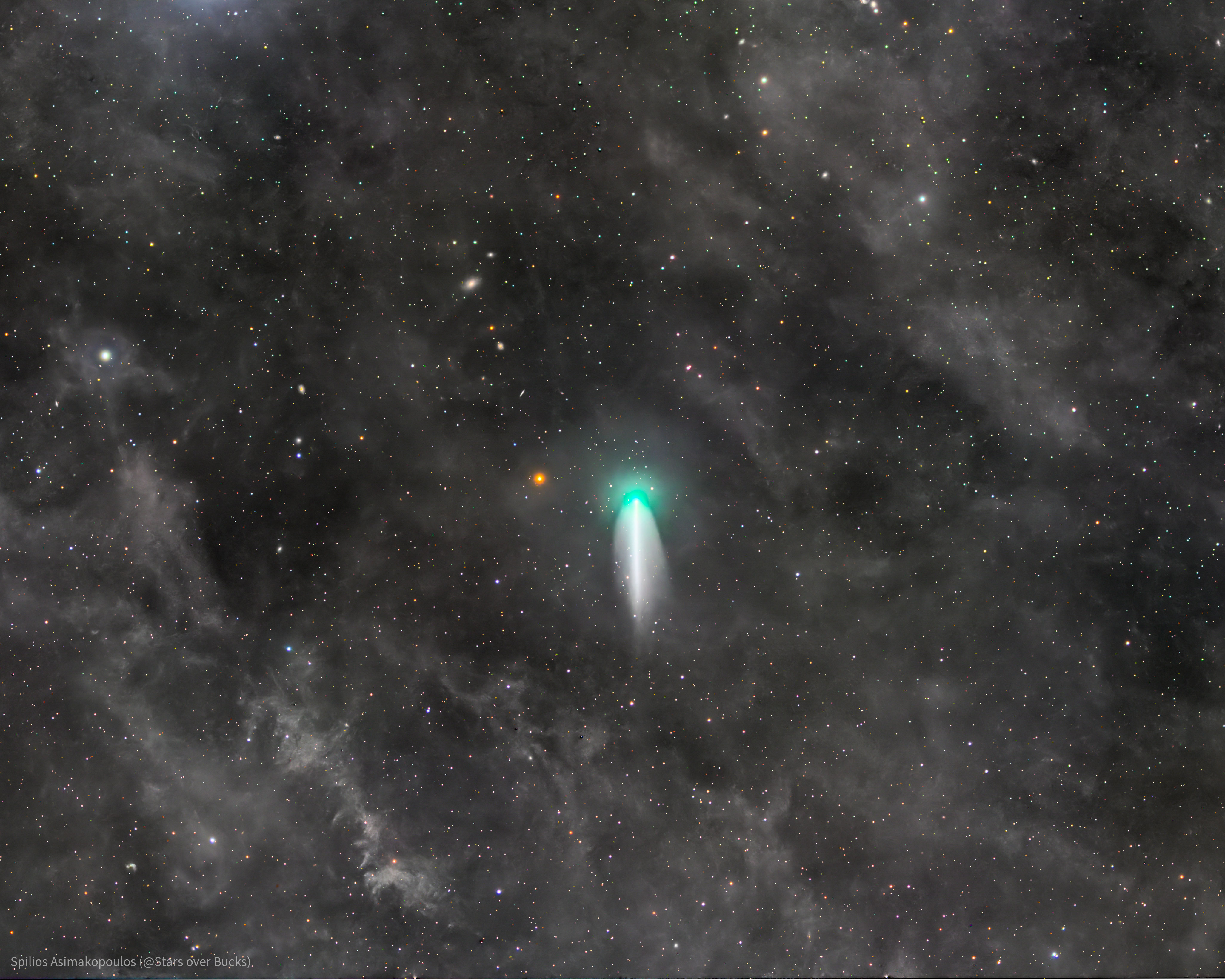
Comet 220P in Outburst
NASA’s Astronomy Picture of the Day.
Comet 220P is unexpectedly bright. Normally, periodic Comet 220P/McNaught is so dim that to see it requires a telescope. Two surprising outbursts this year, however, have made it about 20,000 times brighter than usual, so that it is now visible with binoculars and long-duration camera exposures. As expected, Comet 220P continues to orbit the Sun between Mars and Jupiter with a period of over 5 years. The featured long duration exposure, taken 10 days ago from South Africa, shows the comet's bright green head and short dust tail. Reasons for Comet 220P's impressive outbursts are unknown but could be caused by the release of built-up subsurface gas or comet quakes. Comet 220P will pass about one Earth-Sun distance from the Earth in October, after which it is expected to fade quickly as it begins its return to the far part of its orbit. APOD's main NASA site is moving : From apod.nasa.gov to science.nasa.gov/apod
This explanation is in English; it has not been translated.
Spilios Asimakopoulos