22 September 2026
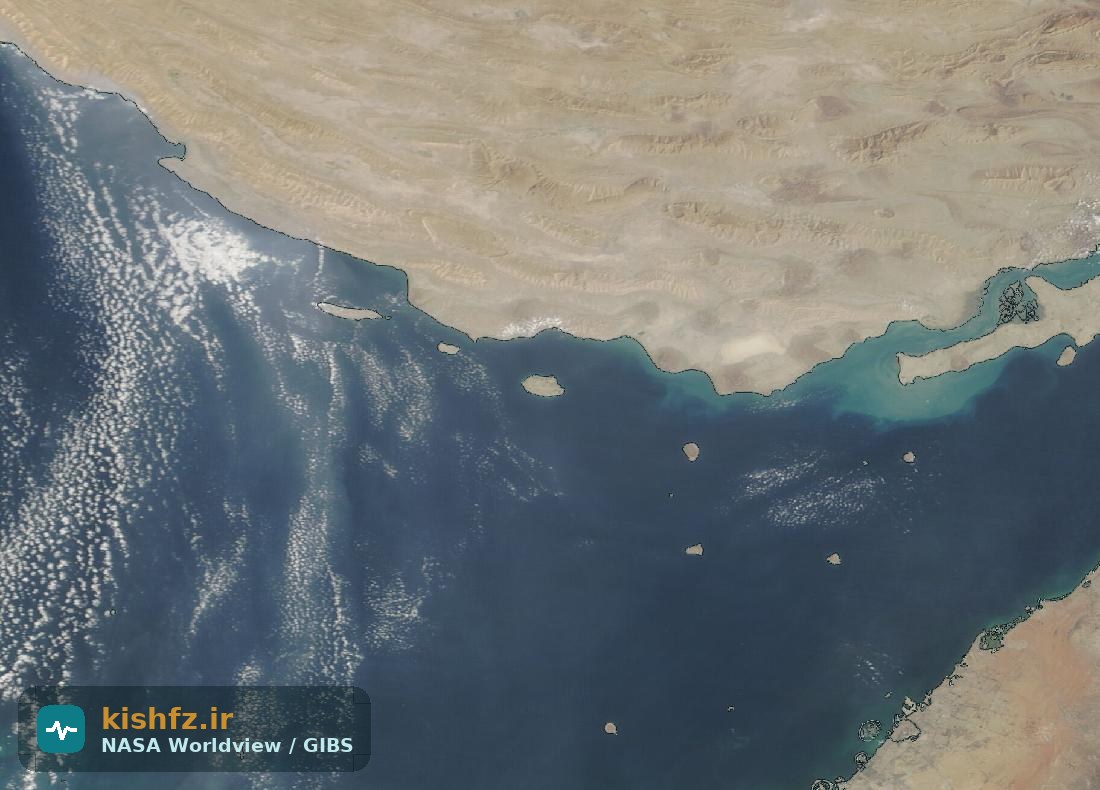
Kish from orbit
True colour, from the MODIS instrument on NASA’s Terra satellite.
NASA Worldview / GIBS
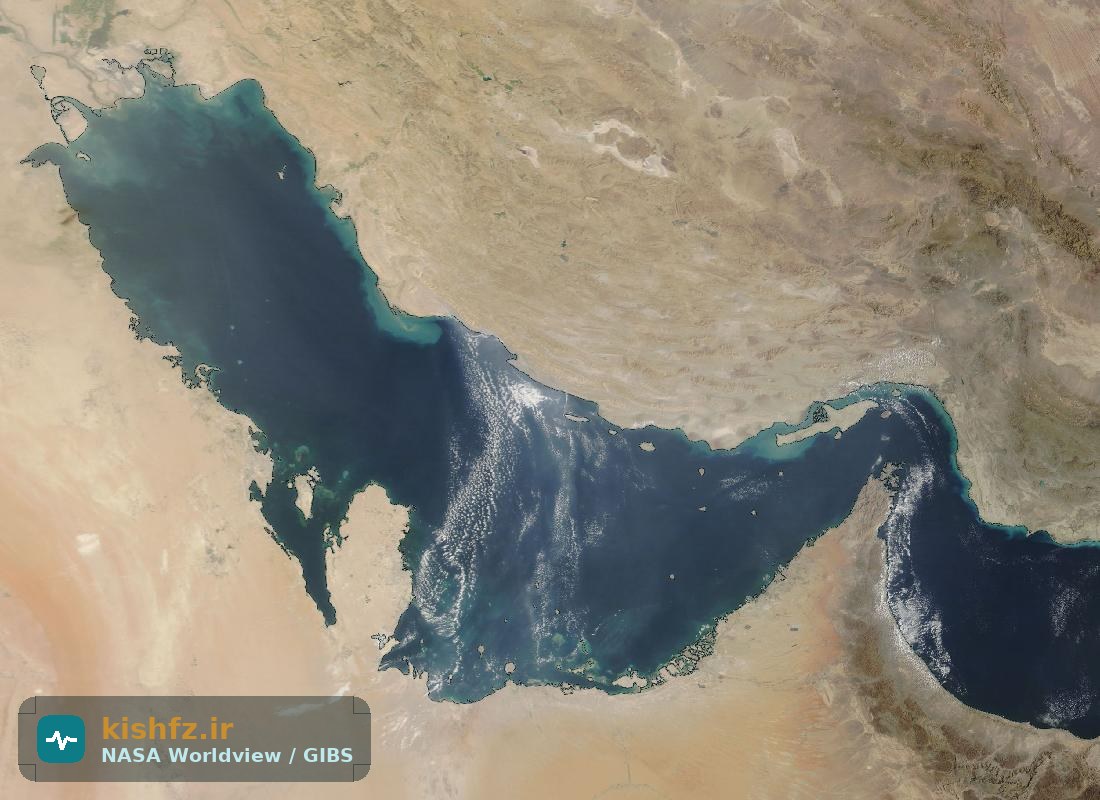
The Persian Gulf by day
The whole Persian Gulf in one pass, with the coastlines drawn on.
NASA Worldview / GIBS
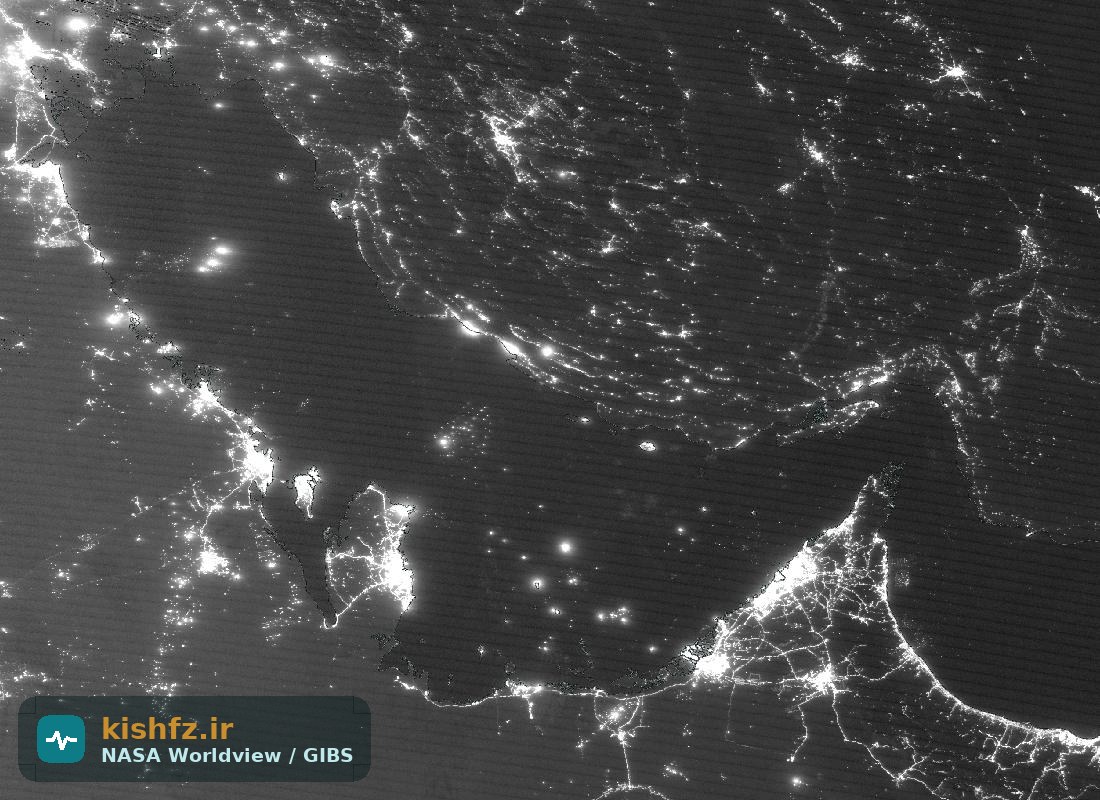
The Persian Gulf at night
VIIRS is sensitive enough to image city light: this is the region drawn by where people are.
NASA Worldview / GIBS
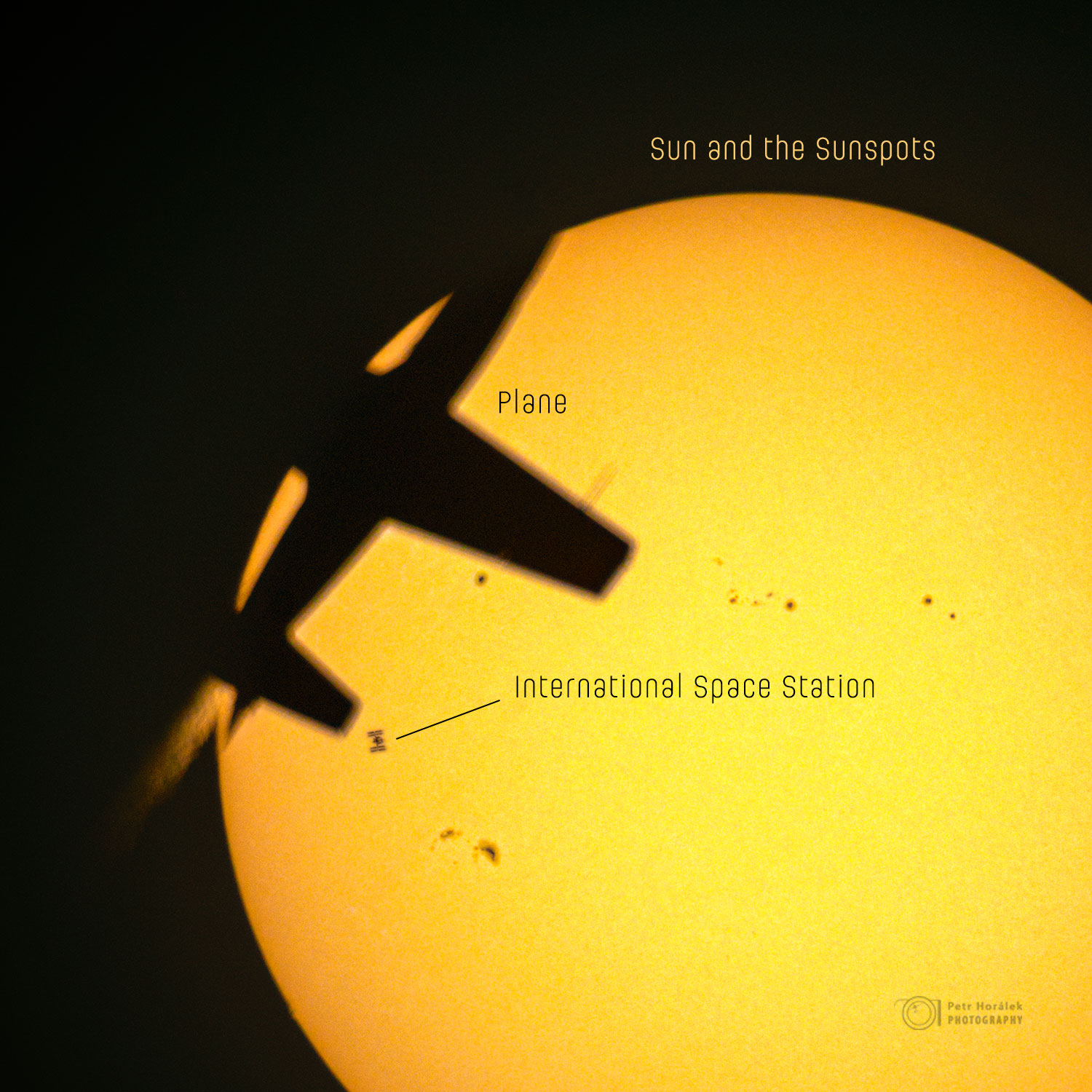
Chance Triple Alignment: Plane, Space Station, Sun
NASA’s Astronomy Picture of the Day.
This shot captured an unexpected silhouette. Which is it? It isn't the sunspots, the small dark regions caused by concentrated magnetic fields visible around the Sun's bright disk. Sunspots typically last for weeks and were expected, since these spots were seen previously. It isn’t the International Space Station (ISS), the small dark structure on the middle left. This is because the featured picture was planned with sub-second timing to record the iconic structure passing before the Sun. It is the airplane. Just as this exposure was taking place in June, from Prasek in the Czech Republic, an airplane began its own miniature partial eclipse. The result is this triply aligned image of our Sun. The photographer estimates that the chance of any random Sun image containing silhouettes of both a space station and an airplane, from that location, is about 30 million to one. APOD's main NASA site is moving: From apod.nasa.gov to science.nasa.gov/apod
This explanation is in English; it has not been translated.
Petr Horalek / Inst. Physics Opava