24 September 2026
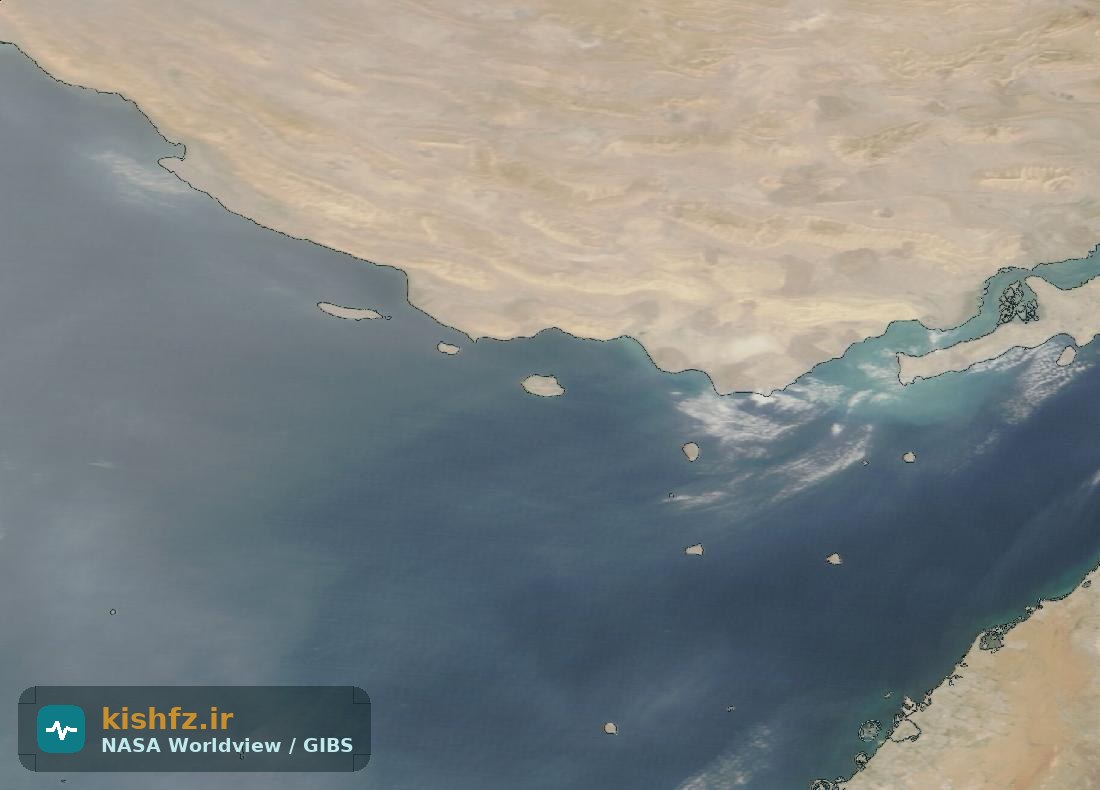
Kish from orbit
True colour, from the MODIS instrument on NASA’s Terra satellite.
NASA Worldview / GIBS
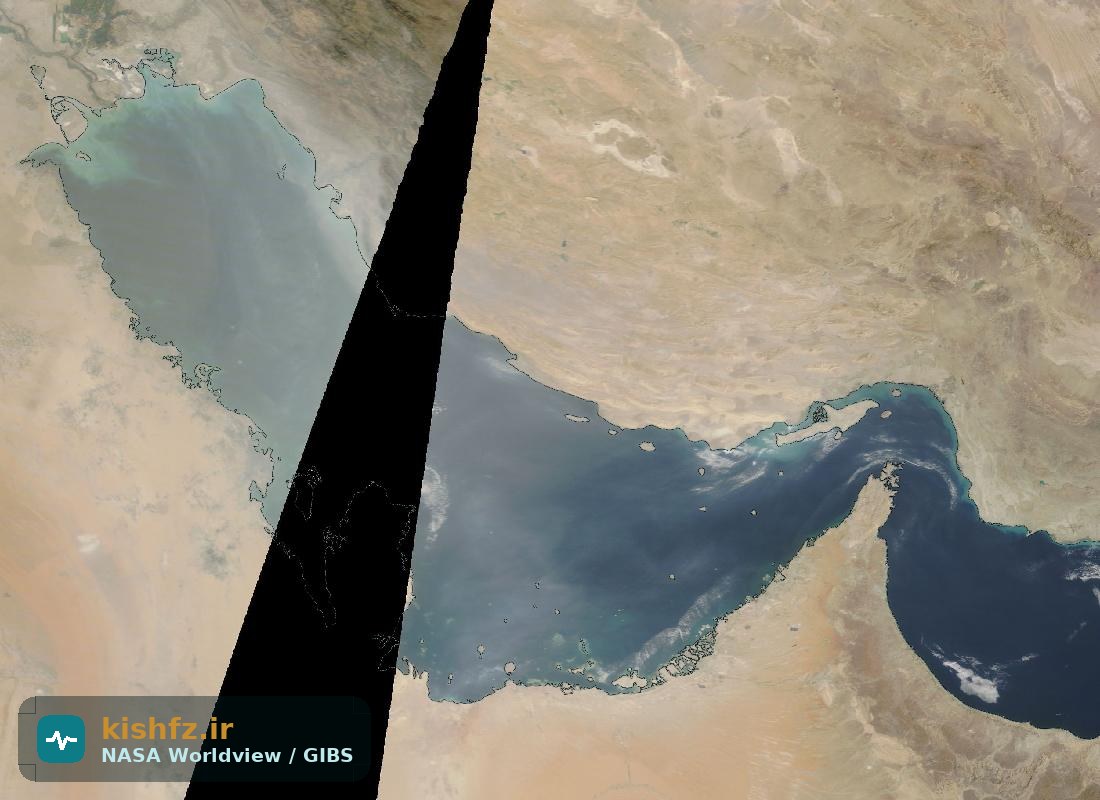
The Persian Gulf by day
The whole Persian Gulf in one pass, with the coastlines drawn on.
NASA Worldview / GIBS
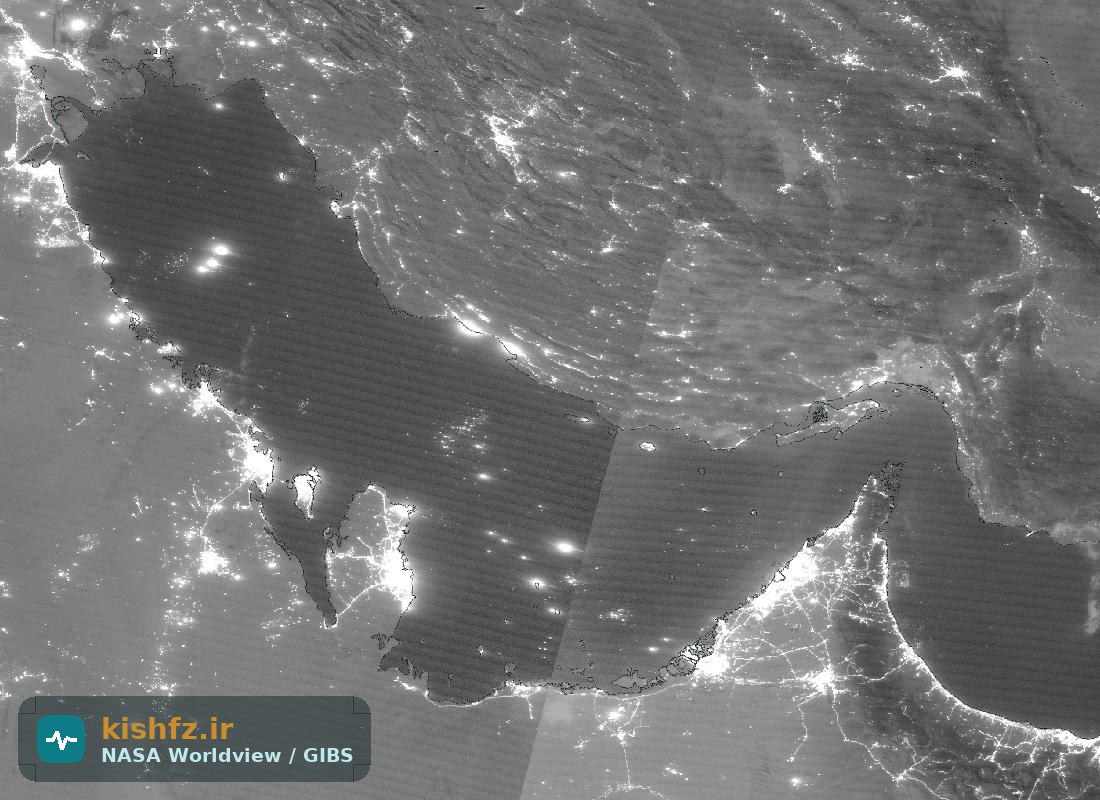
The Persian Gulf at night
VIIRS is sensitive enough to image city light: this is the region drawn by where people are.
NASA Worldview / GIBS
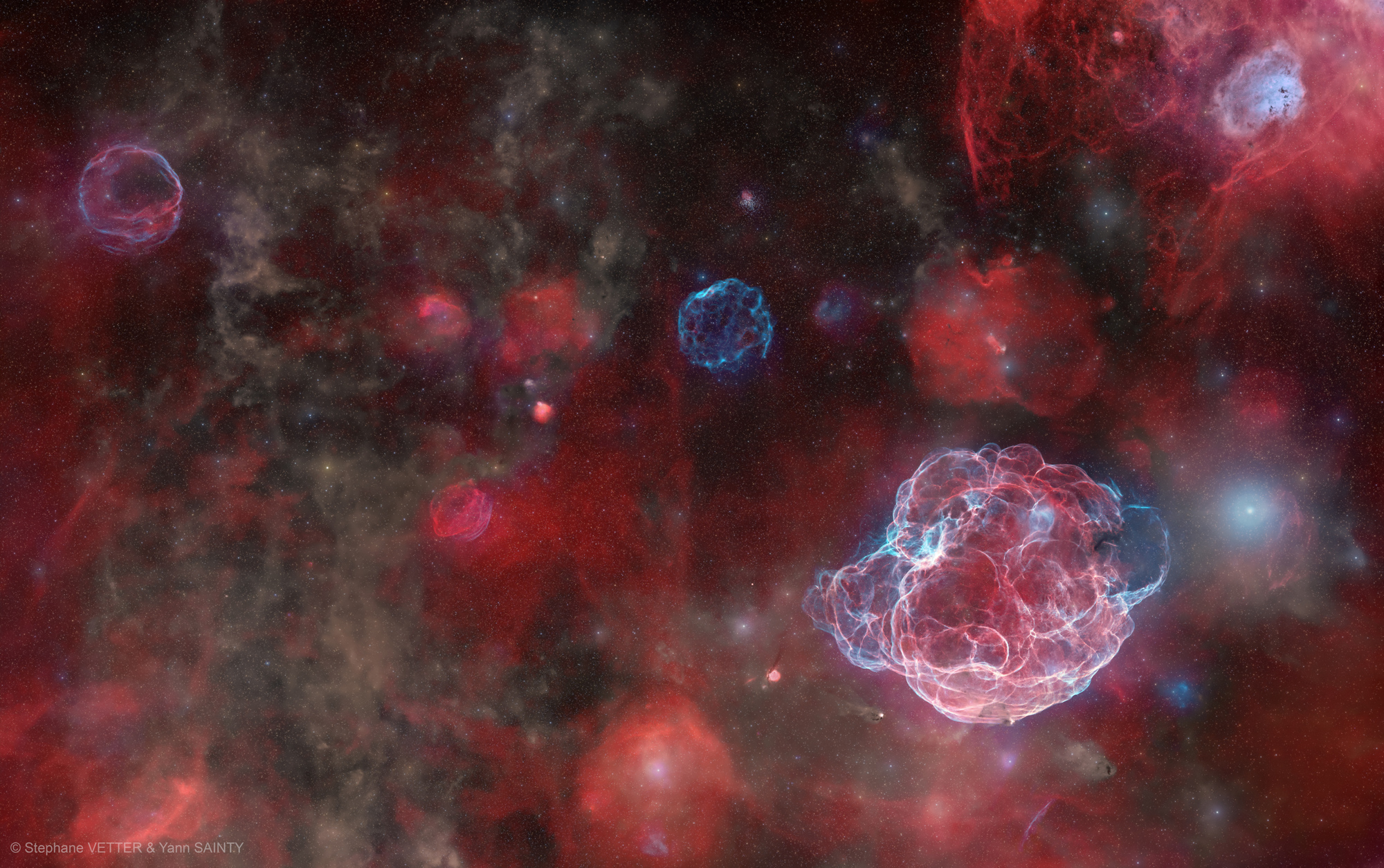
The Ghosts of Five Supernovas
NASA’s Astronomy Picture of the Day.
The ghosts of five supernovas haunt this extraordinary image. It was acquired at Oukaïmeden Observatory in Morocco with approximately 200 hours of observations and shows a large patch of the sky, equivalent to the area of one thousand full moons tiled together, in the constellation of Auriga (the Charioteer). From left to right, the five supernova remnants visible across the field are G181.1+9.5, G182.4+4.3, G179.0+2.6, G180.0−1.7 (Sh2-240, the Spaghetti Nebula), and G178.2−4.2. They are highlighted in the annotated image, together with open cluster M37 and the Tadpole Nebula. As each explosion expanded into space, it created a growing shell of shocked gas and delicate filamentary structures shown in red (hydrogen) and blue (oxygen), respectively. These ancient stellar explosions happened independently; they are at various distances up to about several thousands of light-years away from Earth and have estimated ages up to tens of thousands of years old. Early humans may have witnessed them as bright new stars, fading over weeks or months. APOD's email for image submissions has changed. Please see: APOD Submissions. APOD's main NASA site is moving : From apod.nasa.gov to science.nasa.gov/apod
This explanation is in English; it has not been translated.
Stephane Vetter, Yann Sainty Text: Cecilia Chirenti (NASA GSFC, UMCP, CRESST II)