2 October 2026
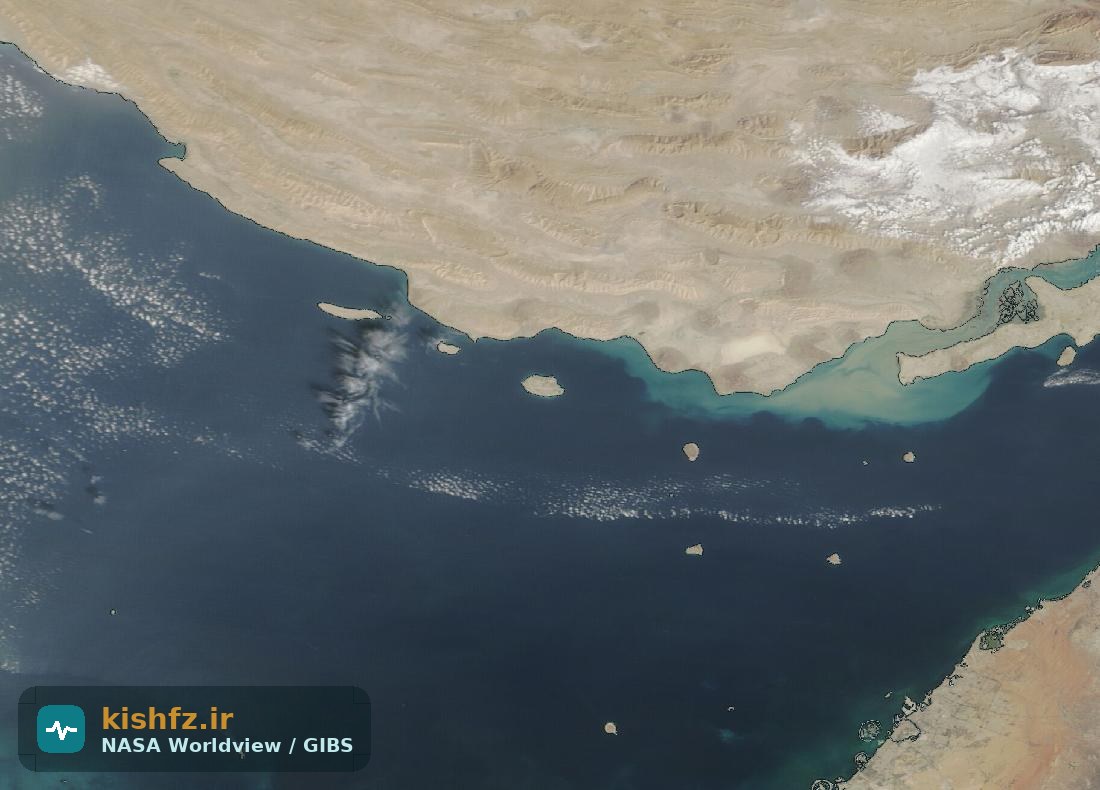
Kish from orbit
True colour, from the MODIS instrument on NASA’s Terra satellite.
NASA Worldview / GIBS
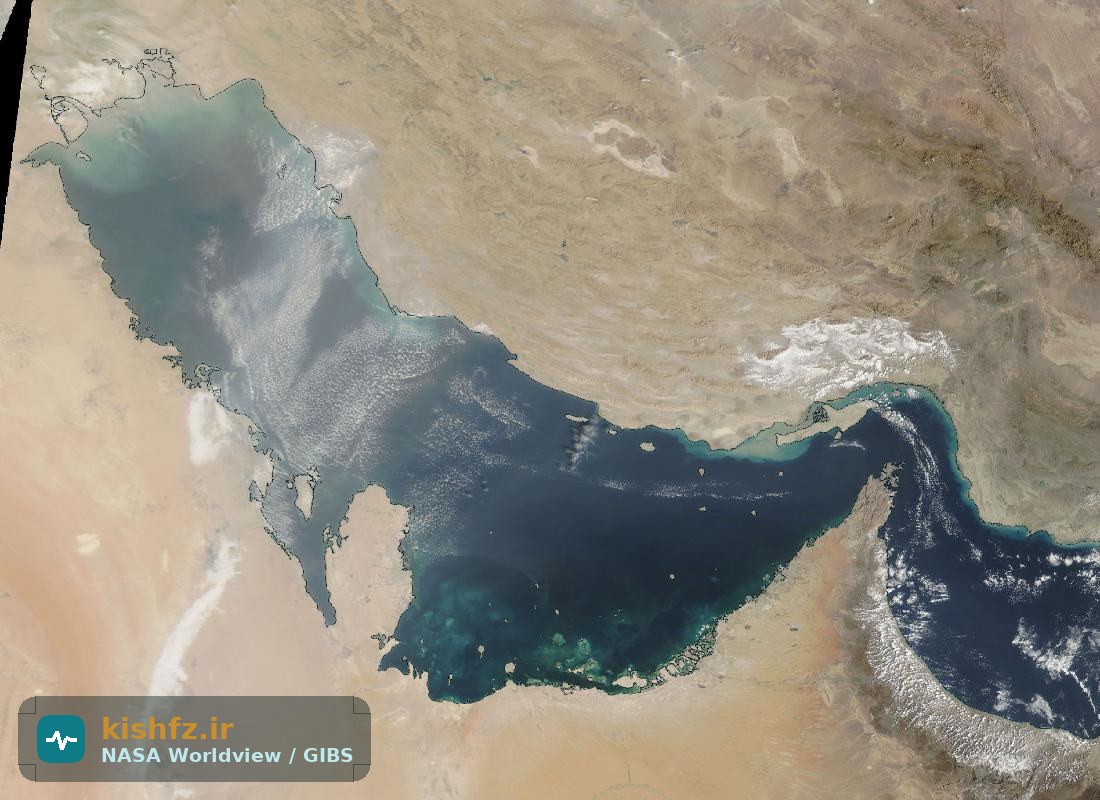
The Persian Gulf by day
The whole Persian Gulf in one pass, with the coastlines drawn on.
NASA Worldview / GIBS
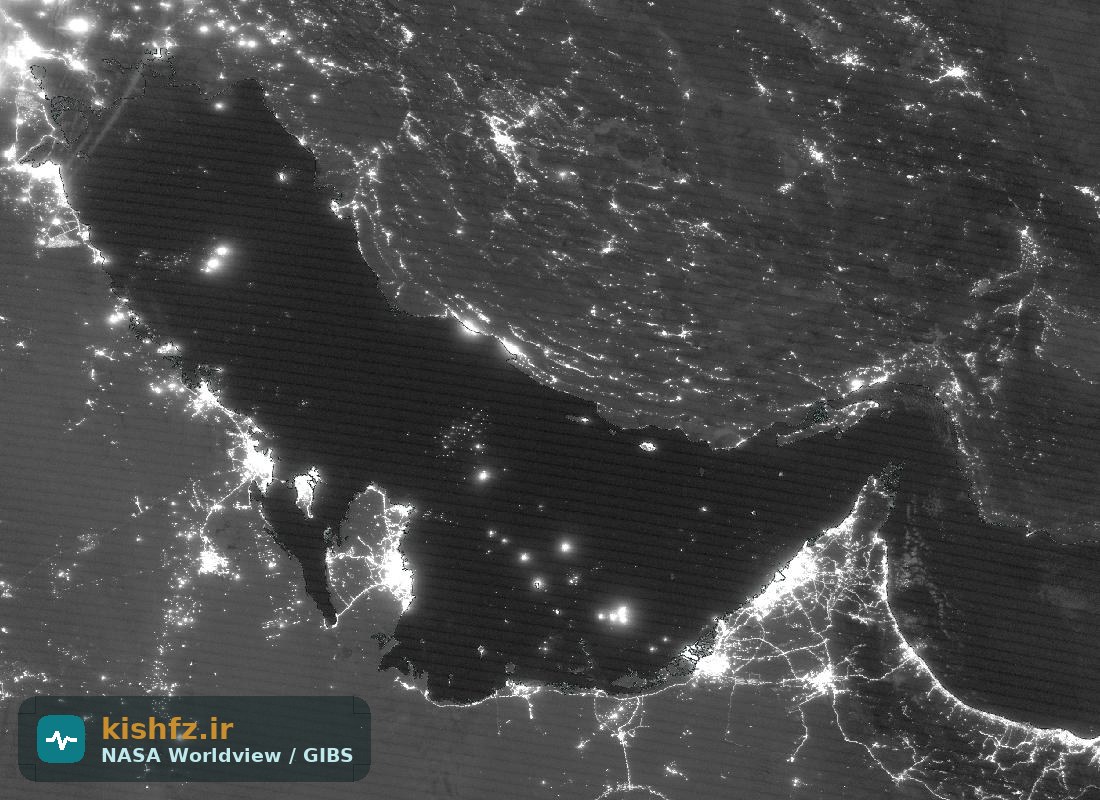
The Persian Gulf at night
VIIRS is sensitive enough to image city light: this is the region drawn by where people are.
NASA Worldview / GIBS

NASA Science
NASA’s Astronomy Picture of the Day.
What does it take to image hundreds of nebulas? Today’s image contains the entire Sharpless Catalog of H II Regions, totaling 313 objects. Zoom in and explore! You may spot fan favorites like the Eagle (Sh2-49), Heart (Sh2-190), and Orion (Sh2-281) Nebulas. Despite its name, this catalog contains more than the glow of ionized hydrogen that makes up H II regions. There are planetary nebulas (the Medusa Nebula, Sh2-274) and supernova remnants (the Spaghetti Nebula, Sh2-240) as well. Astrophotographer Bing Xin traversed the dark skies of Eastern China and Inner Mongolia to catch them all. Narrowband filters that primarily capture light from ionized hydrogen and oxygen as well as red-green-blue filters were used. Each object took 2 to 6 hours to capture, with the entire catalog taking around 800 hours to complete! Which object is your favorite?APOD's email for image submissions has changed. Please see: APOD SubmissionsTomorrow's picture: just Curiosity
This explanation is in English; it has not been translated.
NASA APOD