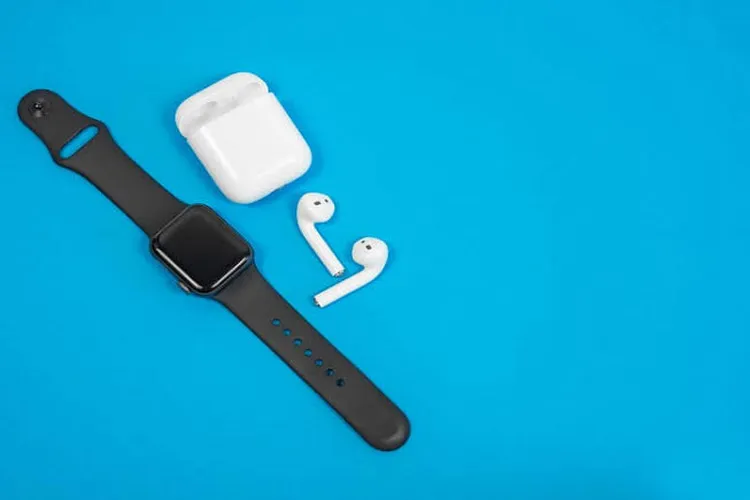
Imagine a smartwatch sits on your wrist all day and earphones are constantly in your ear. These devices, without you necessarily thinking about it, can collect a significant amount of information about your daily life; from heart rate and location to body movements, the content you listen to and the commands you give to the smart assistant.
With Apple's gradual move toward integrating artificial intelligence into its products, a more important question arises: when Apple’s watch and headphones can better understand the user's surroundings, where is the line between a smart assistant and a surveillance tool?
The Apple Watch is no longer just a watch
The Apple Watch long ago moved beyond a small display on the wrist for showing notifications and tracking workouts. New generations of the watch collect a wide range of data related to the user's health, movement, location, and daily activities, and for that reason have become one of the most personal devices connected to a user.
With the expansion of artificial intelligence, this data can be transformed from a collection of separate numbers and facts into more usable context. In such conditions, the system can better understand the user's behavioral patterns and provide more relevant alerts or suggestions.
It is precisely this point that increases the sensitivity of the issue. A device that knows its owner's routine better can provide more useful services; but in return, it will also possess more information about their life.
When a smartwatch summarizes your day
One notable capability in this area is Siri Recap, which uses AI and the Apple Watch microphone to provide a summary of information and content the watch interacted with during the day.
In this mode, the Apple Watch is not merely a tool for tracking activity, health status, or showing notifications; it can understand the context of daily events and provide a smarter summary of what happened.
This feature raises new questions about privacy; especially as wearable devices gradually gain greater ability to understand the user's surroundings.
The more accurately a device can present a picture of the user's day, the more important it becomes to know exactly which data that summary relies on, how the information is processed, and where it is stored.
Apple introduces these capabilities as part of its personal AI experience; but Siri Recap could be a sign of a larger shift in the role of smartwatches. In this model, the watch not only measures the user's daily activities but can also help them remember and understand the day's events.
This same issue brings up a more important question about privacy: who owns this information and how long are these data retained?
Apple gives users control over this feature
Despite the sensitivity of the matter, Siri Recap is not a feature that automatically activates simply because someone has an Apple Watch. Apple allows users to enable or disable this feature; therefore the watch does not turn it on without the user's consent.
Users can disable Siri Recap via the Apple Watch Control Center and also manage when it is active. This control can include setting specific times or places for the feature to be enabled.
Apple has stated that generated summaries are automatically deleted after 7 days, unless the user chooses to keep them.
These options give the user more control; an issue that becomes more important given the nature of Siri Recap and the volume of information that can be used to produce a daily summary.
AI is changing the role of wearables
Apple and other technology companies are trying to move AI beyond a standalone app or feature and make it a part of users' everyday lives.
In such an approach, wearable devices can become tools for receiving information and performing tasks in a more natural way; tools that use voice, motion, and context to interact with the user.
At this stage, the value of a device is no longer only dependent on the number of its sensors, but also on its ability to understand the user.
However, the more a device can understand its owner's life, the more data it will need. This issue is one of the most important challenges facing technology companies.
Apple's big privacy test
Apple has always positioned privacy as one of the main pillars of its marketing message. For this reason, the expansion of AI in wearable devices could present the company with a major test.
Success on this path does not depend solely on making the Apple Watch smarter; Apple must also be able to convince users that increased smart capabilities do not come at the cost of their privacy.
If wearable devices in the future can understand users' sounds, images, location, and behavior on a broader scale, users will need clearer information about how these systems work; from what data are collected and when collection occurs, to where data are processed and how a user can disable these features.
The thin line between help and surveillance
Of course, using the word "spying" to describe data-collecting technologies is not necessarily precise. Many of these features are designed to improve the user experience, and their being active does not in itself mean covert surveillance.
However, concern about the possibility of smart devices becoming surveillance tools highlights a real issue. The more personal devices gain the ability to understand users' daily lives, the thinner the line between helping and monitoring can become.
From the smartwatch to headphones that can accompany a user all day, it seems Apple is moving toward a future where wearables will have a more prominent presence in daily life.
In such a future, the issue is not only how smart our devices become; the more important question is to what extent we allow them to have information about our lives.