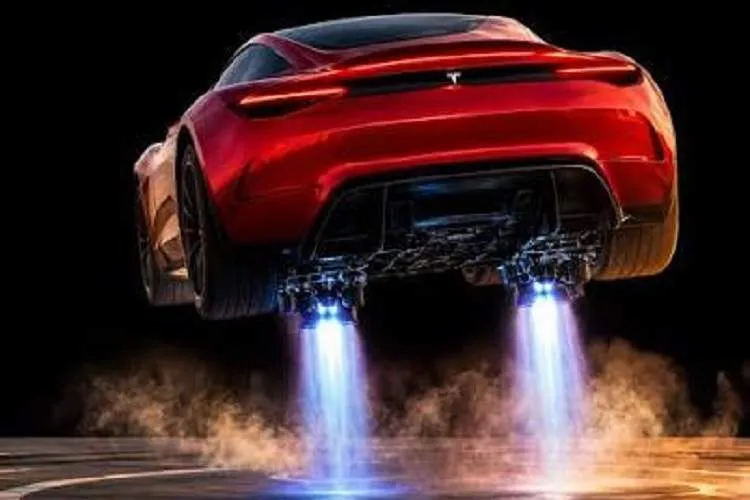
After nearly a decade of delays, and missed schedules and promises, Tesla now genuinely intends to fulfill its pledge to produce the Roadster; a car thousands of customers have been waiting for since 2017 and have placed deposits up to $250,000 on, which now has a confirmed production site, planned factory layout and a reveal reportedly scheduled for August in Texas.
According to The Informant, Franz von Holzhausen, chief designer, and Lars Moravy, vice president of vehicle engineering, have both confirmed Gigafactory Texas as its place of manufacture.
Franz says the scale of the Austin facility allows Tesla to set aside space for a completely new Roadster production line without disrupting existing operations. Tesla rarely allocates factory space to projects that have not reached engineering maturity.
The most extraordinary technical element of the new-generation Roadster is a system long speculated about but until recently never publicly demonstrated; a system known inside the company as “System A71.”
The Cold Gas Thruster propulsion package is a joint project between Tesla and SpaceX, according to two sources cited by The Informant. Tesla and SpaceX engineers gave Elon Musk a private demonstration of A71 in late April. These thrusters use high-pressure compressed air stored in a composite pressure tank that occupies the rear seat area.
The engineering goal is to build a car capable of accelerating from zero to 100 km/h (zero to 60 mph) in under one second while also improving its cornering and braking posture via lateral and longitudinal thrust vectors.
The performance specifications Tesla has attributed to the Roadster have not changed since the 2017 reveal and remain almost impossible to compare with any car on the road today. The car is expected to have a three-motor electric powertrain, all-wheel-drive, a top speed above 250 mph, and zero-to-60 mph acceleration under one second when equipped with the SpaceX package.
Tesla has also claimed a 200 kWh battery with about 620 miles of range. Apparently two versions are planned: a limited SpaceX version equipped with the A71 propulsion system and a more conventional performance version without it. The SpaceX Edition is speculated to cost around $250,000 and serves as a halo technological car; a deliberate statement that electric cars can not only compete with gasoline hypercars but render them irrelevant.
Competitive landscape
The competitive field the Roadster will enter in 2026 is fundamentally different from 2017, when Tesla first unveiled the second-generation Roadster. Back then there were no credible electric hypercars to compete with. Today, the Rimac Nevera holds several world records, the Xiaomi SU7 Ultra has delivered real, verified performance figures that cannot be ignored, and the Yangwang U9 from BYD shows Chinese manufacturers are no longer lagging in the high-performance EV segment.
The Roadster no longer competes against its own past promises; it competes against production cars that are being driven today. That reality is precisely why the August reveal carries more weight than any previous Roadster milestone. Tesla cannot rely on future specs; it must show a real car with real performance against a field that spent eight years building alternatives.
Wider Tesla picture
While the Roadster grabs short-term headlines, the broader Tesla picture in mid-2026 is something that was hard to predict a year ago. In May 2026, Tesla recorded about 86,000 vehicle deliveries from Gigafactory Shanghai; the strongest monthly China performance this year achieved in the most competitive EV market in the world. Gigafactory Shanghai now accounts for roughly 60 percent of Tesla’s global vehicle sales and at peak production capacity produces almost one complete vehicle every 40 seconds.
New financial programs with lower upfront costs, amid current economic pressure, have improved accessibility, and the rollout of Tesla’s China advanced driver-assistance system (ADAS) has begun; a feature some domestic rivals still cannot fully reproduce. Tesla’s geographic sales reach extends far beyond China. In Australia, Tesla recently recorded its highest monthly sales on record and the Model Y became the country’s best-selling vehicle, outpacing every internal-combustion alternative on the market.
In Europe, the region that held negative Tesla headlines in 2024 and 2025, registrations have steadily increased; from France and Germany to Spain and Norway, with year-on-year growth in some markets of several hundred percent. Tesla also received regulatory approval from Danish authorities for supervised FSD, making Denmark the fourth European country to approve the technology; after the Netherlands, Lithuania and Estonia.
A demonstration of vehicle capability
On the autonomy front, a gold Cybertruck with Texas plates was observed around Seattle, Washington, driving autonomously on Interstate 5, crossing the floating SR 520 bridge and continuing east.
Dashcam footage shows the driverless vehicle changing lanes in moderate traffic, merging with surrounding traffic and maintaining a steady speed. This sighting is one of the first documented appearances of a Cybertruck in Washington state and indicates Tesla’s real-world testing program is expanding beyond established corridors in Texas and California; aligned with the seven-city rollout timeline previously announced for the unattended robotaxi service.
The pattern linking these developments
The pattern linking all these developments - Roadster factory confirmation, the China surge, the Europe rebound, Danish FSD approval and the Cybertruck sighting in Seattle - is a company running multiple product lines simultaneously; exactly what critics a year ago called “unattainable.”
The dominant narrative then was that Tesla had lost its competitive edge and entered an irreversible decline. But May 2026 data and the signs of Roadster production tell a different story. A more precise framing might be that Tesla is emerging from one of the cycles of doubt that have previously preceded its most significant advances. Whether the August Roadster reveal can satisfy a decade-long expectation attached to it will determine how the industry rates Tesla at the highest level of performance.