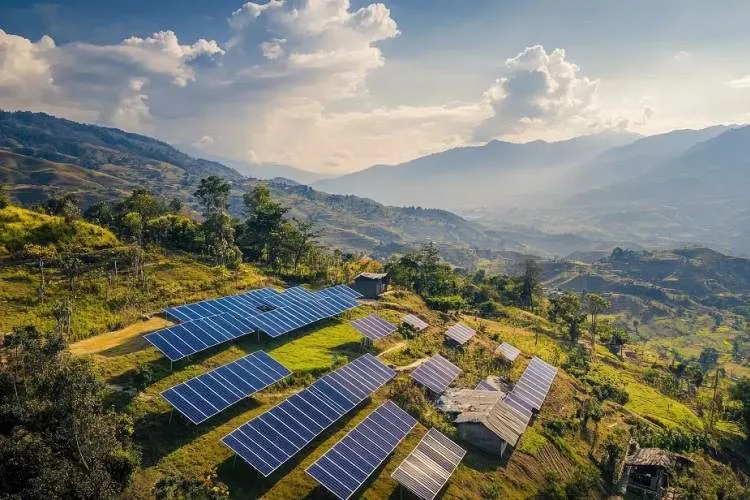
The steep drop in solar panel prices over the past two decades has turned solar energy from a relatively expensive technology into one of the accessible options for electricity generation.
According to ITNA citing Techspot, based on the data presented in that report, panel prices that were about $5 to $6 per watt around 2000 have now fallen to about $0.12. Expanded manufacturing capacity in China is one of the main factors behind this price decline.
The lower panel costs have led companies and households in countries with expensive electricity or unstable grids to adopt rooftop and local solar systems. By the end of 2025, installed capacity of small-scale solar systems worldwide had reached nearly 1.2 terawatts; a capacity roughly three times the global nuclear fleet, although unlike nuclear plants, solar energy is not produced around the clock.
Businesses have been among the fastest adopters of the technology, because a significant share of their electricity use occurs during daytime hours and coincides with sunlight. In India, a national subsidy program has equipped millions of homes with solar panels since 2024, and in the Philippines rooftop solar capacity is also growing rapidly.
However, the expansion of household generation creates an economic problem for utilities. Households and businesses that can afford panels and batteries buy less electricity from the grid, but remain dependent on it at night, during cloudy weather, or when batteries are discharged. As a result, utilities’ revenues decline and there is concern that part of the grid maintenance cost will be shifted onto consumers who cannot install solar systems.
Another challenge relates to the grid’s technical performance. Rapid changes in irradiance and passing clouds can suddenly reduce production from millions of small solar systems. Also, in areas with high solar penetration, excess mid-day generation can reverse power flows and make voltage management and conventional power plant operation more difficult.
To cope, utilities have turned to storage batteries, new pricing models, production forecasting systems, and machine learning tools. Thus, cheap solar has not only changed the pattern of electricity generation and consumption, but has transformed the traditional grid into a more complex system with two-way power flows.