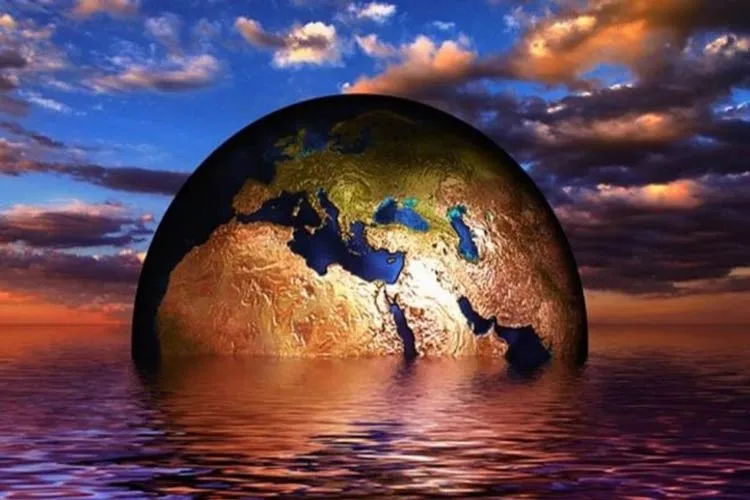
Global temperature rise has become one of the world's most important scientific and political issues. The Paris Agreement, adopted in 2015, set a goal to limit the increase in Earth's average temperature relative to pre‑industrial times to 1.5 degrees Celsius as far as possible; but recent assessments indicate current national policies may steer the world toward greater warming.
The United Nations Environment Programme (UNEP) has warned that if current policies continue, the world may face a temperature increase of around 1.8 degrees Celsius or more by the end of the century; a figure that exceeds the target set in the Paris Agreement. (unep.org)
What does crossing 1.5 degrees mean?
Michael Mann, a climate scientist and professor at the University of Pennsylvania, compares Earth's temperature rise to a fever in the human body. Just as a one- or two-degree rise in body temperature can indicate significant changes in health, a few tenths of a degree increase in Earth's temperature may also produce meaningful consequences in the climate system.
He emphasizes that crossing the 1.5-degree threshold does not mean a sudden, irreversible change will occur across all parts of the climate system, but it increases the likelihood and severity of many known impacts.
According to scientists, the world has already experienced severe heat waves, large wildfires, heavy precipitation, floods, and more intense droughts even before a sustained crossing of this threshold. Reports from the Intergovernmental Panel on Climate Change (IPCC) also show that many extreme weather events have increased as a result of global warming. (ipcc.ch)
Which impacts may intensify?
Scientific studies indicate that with increasing global temperature, the probability and intensity of some climate phenomena increase. Among these impacts are:
• Increased and longer-lasting severe heat waves
• Intensified heavy rainfall and flooding in some regions
• Increased risk of drought in susceptible areas
• Faster melting of glaciers and ice sheets
• Gradual rise in sea level
• Increased likelihood of large-scale forest fires
The IPCC Sixth Assessment Report shows that the greater the global temperature increase, the greater the climate-related risks, and some natural and human systems will face larger challenges. (ipcc.ch)
Why does every tenth of a degree matter?
Scientists stress that the difference between 1.5, 1.8, or 2 degrees Celsius is not just a small numerical difference. Each additional increase in temperature can put millions of people at risk from heat waves, water shortages, floods, or sea level rise.
Michael Mann believes that 1.8 degrees of warming would create tougher conditions than the current situation, but would still be better than 2-degree or higher scenarios. For this reason, reducing greenhouse gas emissions remains very important even if the 1.5-degree target is not fully achieved.
Will stopping carbon emissions lower Earth's temperature?
Research shows that if net carbon dioxide emissions reach zero, further increases in surface temperature will largely stop. However, temperatures will not rapidly return to pre‑industrial levels, because a large portion of carbon dioxide remains in the atmosphere for a long time.
Consequently, reducing greenhouse gas concentrations and developing carbon removal technologies can help gradually reduce warming in the long term. Scientists believe the future of Earth's climate does not depend solely on crossing or not crossing a specific number; rather, the magnitude of greenhouse gas emissions reductions in the coming decades will play a decisive role in the severity of climate impacts.