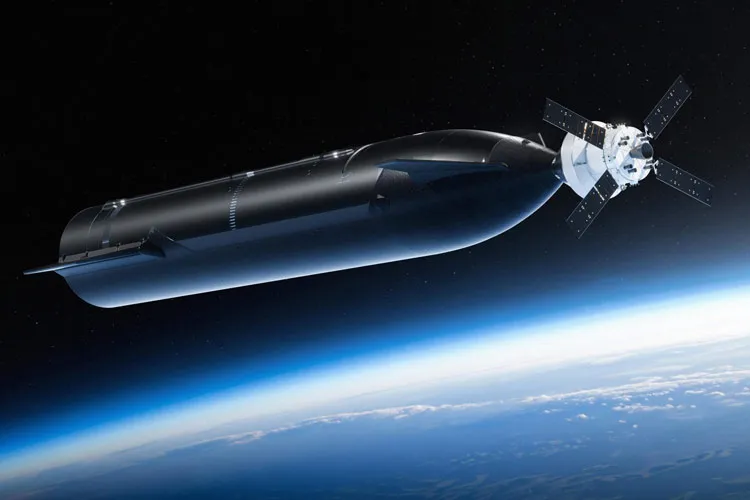
NASA has planned a major orbital rehearsal in 2027 for future astronaut landings on the Moon.
In the Artemis III demonstration mission, space and ground teams will practice rendezvous and docking operations between the Orion spacecraft and commercially developed lunar landers.
Data collected on Artemis III, along with data from future uncrewed demonstrations near the Moon, will help NASA improve astronaut safety and reduce risks before beginning crewed landings in 2028.
According to NASA, the agency has partnered with SpaceX and Blue Origin to develop human landing systems. For Artemis III, both companies will launch test versions of their landers. Artemis III astronauts will travel separately to low Earth orbit aboard Orion.
Steve Krich, director of NASA's Human Landing System program, says: “Each human landing system provider has taken a different approach for the Artemis III mission. Ultimately, SpaceX and Blue Origin have presented a list of bold objectives so that both understanding and confidence in the spacecraft and launchers are achieved prior to a crewed landing.”
It is noted that Blue Origin’s test lander will be built on the company’s current crewed lander Mark 2 architecture and will include the primary avionics, flight software, and necessary control systems. Up to two Artemis III astronauts in Orion’s orange suits will open the hatch and enter Blue Origin’s test lander.
SpaceX’s test lander will be based on Starship version 3 and a docking system will be installed in the nose of the 52-meter spacecraft. This configuration allows NASA and SpaceX to assess how Orion and the Starship test lander behave as a single connected spacecraft.
Accordingly, NASA, SpaceX, and Blue Origin intend to launch three of the world’s most powerful rockets within a relatively short time frame. Orion will complete two separate rendezvous and docking sequences, and after the tests conclude, the Artemis III astronauts will return to Earth aboard Orion.
Jeremy Parsons, Artemis program director, says: “Artemis III will be a highly choreographed dance with difficult launch sequencing across multiple launch pads and mission operations that are equally challenging for ground and flight teams, making it one of the most complex and ambitious missions NASA has ever undertaken.”
In subsequent crewed missions, NASA and one of its commercial partners will use a “dual-launch campaign,” in which the lunar lander is placed in orbit first and awaits the astronauts arriving on Orion. Blue Origin’s test lander is expected to launch first and be able to remain in orbit for up to 30 days.
According to ITNA and citing SciTechDaily, Blue Origin’s spacecraft will follow a planned trajectory to a designated parking orbit so its systems can be checked. After that, SpaceX will send its Starship test version to orbit to rendezvous with Orion for the second phase of testing.
During each docking and separation sequence, the test lander acts as the target and Orion as the chaser spacecraft. NASA intends to use the same arrangement in future missions that will take astronauts to the lunar surface.
SpaceX and Blue Origin have conducted ground tests of their docking systems. SpaceX confirmed its docking capability in 2023, and Blue Origin this year conducted developmental ground tests of its pressurized docking system.
NASA and its commercial partners are said to use both docking phases to test hardware and software interoperability of the spacecraft.
Also, through the Artemis program, NASA intends to send astronauts to the Moon for scientific exploration and economic benefit and to provide the experience and technology needed for the first crewed missions to Mars.