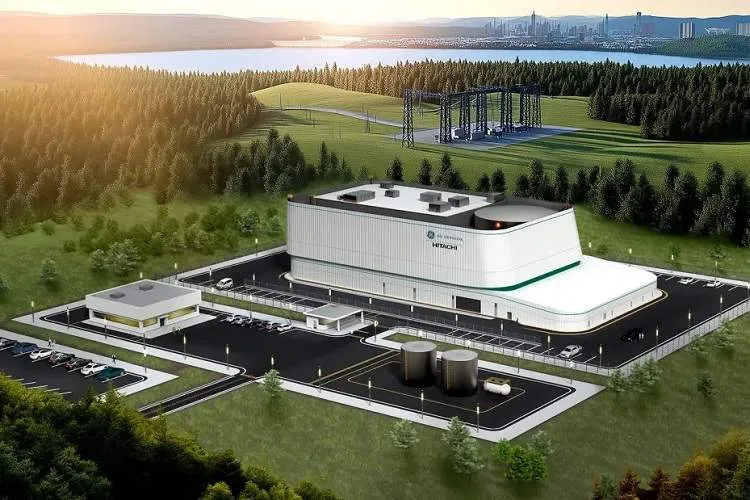
The United States has taken an important step toward using nuclear energy to supply the power needs of artificial intelligence. The U.S. Nuclear Regulatory Commission has issued a construction permit for a small modular reactor called the BWRX-300 for the Tennessee Valley Authority (TVA).
According to ITNA citing TechSpot, this reactor will be built at the Clinch River site near Oak Ridge, Tennessee, and has a generation capacity of 300 megawatts of electricity.
This license is the first approval for the construction of a reactor of a design by GE Vernova Hitachi by an American utility. The NRC reviewed the application in 14 months-four months faster than the planned schedule. However, the current permit only allows construction, and TVA will need a separate operating license before fuel loading and the start of electricity production.
The BWRX-300 reactor is based on Boiling-Water Reactor technology, which has decades of use in commercial nuclear power plants. Its 300-megawatt capacity is about one-quarter of the capacity of the newest Vogtle plant reactors in Georgia. The design of this reactor is simplified compared to large plants and uses water as the coolant. Natural circulation of water and passive safety systems also allow it in some conditions to rely on gravity, pressure, and stored water to operate without full dependence on electrical equipment.
The primary goal of this design is to enable reactor construction with fewer components, a smaller footprint, and greater use of factory-made parts. Producing multiple similar reactors can also help share supply chains, construction processes, and operational experience. However, this economic model has not yet been proven at scale in the United States.
TVA is considering building four BWRX-300 reactors at Clinch River, but the construction start date and the project's final cost have not yet been announced. In Canada, Ontario Power Generation is also preparing to build a series of the same reactors and has installed the base of the first unit. Blue Energy in Texas is likewise pursuing use of the BWRX-300 to power data centers.
The importance of this project has increased with the sharp rise in electricity consumption of AI data centers. These facilities need stable, round-the-clock power, and nuclear energy is one of the few low-carbon sources that can provide continuous electricity without dependence on weather conditions.
However, cost remains the main challenge. The two new Vogtle reactors cost about $35 billion and came online after multi-year delays. Now the Clinch River project must show whether small modular reactors can truly reduce nuclear plant construction time and cost through standardized design and factory production.