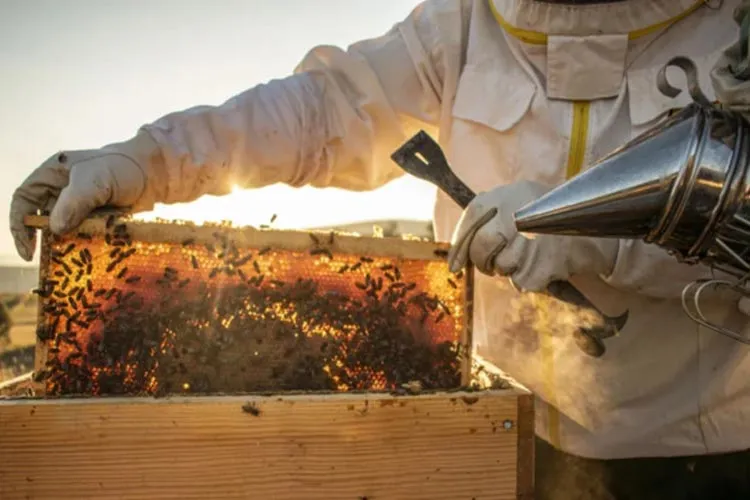
A solar farm in Ohio, USA, has unexpectedly become a habitat for about 3 million honey bees; an action that shows solar energy facilities can, beyond producing electricity, play an important role in supporting local ecosystems and increasing biodiversity.
Despite the rapid expansion of solar farms around the world, complete information about the environmental impacts of these facilities is still lacking. However, various examples have shown that use of the land around solar panels can have unexpected results for wildlife and the environment.
According to ETNA, for example, solar farms in Minnesota have helped increase populations of some local insects. In Tibet, some solar facilities have created suitable conditions for grazing livestock. Now a project in Ohio has highlighted the role of solar farms in supporting pollinators.
More than 50 hives at a solar farm
The Big Plain Solar facility in Madison County, Ohio, is a solar farm of about 1,500 hectares operated by renewable energy company LRE.
Because a significant portion of the land under and around the solar panels can be used for other activities, LRE, in collaboration with Frontline Hives and Wind & Sky Apiaries, decided to place more than 50 honey bee hives on the site.
Although 50 hives may not seem many compared to the size of the farm, the total population of these hives reaches about 3 million honey bees. Thus, a large solar energy production facility has simultaneously become an important habitat for one of nature’s most vital pollinators.
How do bees help the environment?
Honey bees play an important role in pollinating flowering plants and many agricultural crops. The decline in pollinator populations in recent years has become a major environmental concern, and creating suitable habitats can help preserve these insect populations.
At the Big Plain Solar project, the presence of bees is not limited to maintaining a single large colony. The plants pollinated by these bees can help preserve the area’s vegetation cover, reduce soil erosion, and improve the environmental conditions around the facility.
On the other hand, creating vegetation on the lands around the panels can enable more effective use of a solar farm’s land; land that otherwise might remain unused for much of the year.
Do the bees cause trouble for solar farm staff?
According to BGR, the presence of millions of bees at a solar farm may raise concerns that panel maintenance technicians could face danger while working. However, hive management is handled by specialized teams, and regular solar farm staff do not directly deal with the hives or colonies.
LRE continues to support its collaboration with Frontline Hives, and that organization works with trained personnel, including some veterans and rescuers, to care for the hives located at the facility. As a result, solar farm employees can enjoy the greener environment and vegetation created around the facility without needing direct interaction with the hives.
Solar farms can be multifunctional
The Big Plain Solar farm is not the only example of multifunctional uses of solar energy. In some projects, panels simultaneously serve agriculture, livestock, or wildlife conservation while producing electricity.
For example, installing solar panels above agricultural land in Arizona can provide shade needed for workers and crops and reduce the risk of exposure to extreme heat.
These examples show that the development of solar energy does not necessarily mean the elimination of other land uses. Combining energy production with agriculture, creating habitats for pollinators, and supporting wildlife can become a model for smarter use of lands used in renewable energy projects.