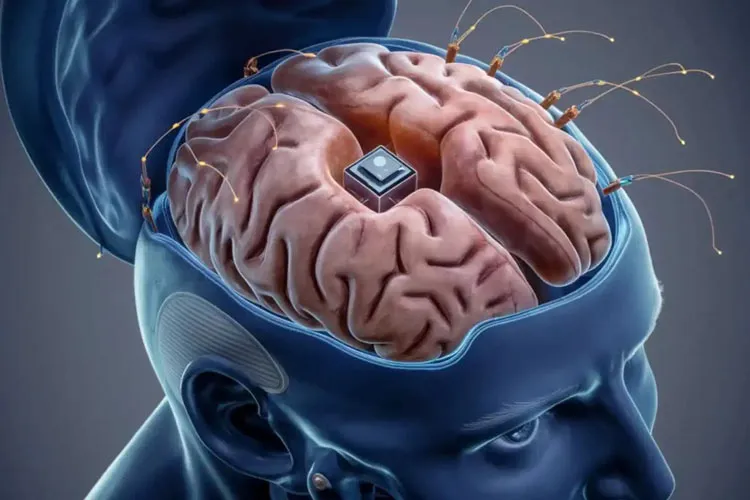
Researchers at the University of Pennsylvania in the United States have succeeded in developing an intelligent neural system that, using artificial intelligence, analyzes brain activity and, by sending personalized electrical pulses, helps improve memory performance. This technology could create a new path for treating memory disorders caused by traumatic brain injuries.
This technology, called the Smart Neural Stimulation (SNS) system, was developed by the university company Nea Therapeutics. The U.S. Food and Drug Administration (FDA) has also introduced this technology as a “breakthrough device”; a designation that has been assigned for the first time to an implanted therapy aimed at addressing this type of disorder.
A chip that analyzes brain activity with artificial intelligence
The SNS system identifies times when the brain is more ready to learn or retrieve information by examining patterns of neural activity, and then sends electrical pulses tailored to each individual's conditions to the brain.
Michael Kahana, founder of Nea Therapeutics and professor of psychology at the University of Pennsylvania, has announced that this technology is ready to enter the stage of clinical trials.
Daniel Rezzotto, another founder of the company, also believes that a technology that once resembled science fiction stories has now become a demonstrable technology relying on scientific research and human trial results.
Where did the idea of the memory chip come from?
The roots of this technology go back to the late 1990s; when Kahana visited the neurosurgery ward of Boston Children’s Hospital. In this ward, patients with epilepsy were monitored using electrodes implanted in the brain.
During this visit, Kahana noticed a significant volume of neural data recorded while patients played video games, but due to limited storage capacity, much of this data was deleted every day.
This experience began a decades-long research effort to investigate whether, by analyzing brain activity, one could predict times when a person is more likely to remember or forget information.
With advances in machine learning algorithms, researchers were able to examine the relationship between complex patterns of neural activity and human behavior with greater accuracy. These studies also helped them better understand individual differences in responses to brain electrical stimulation.
19 percent memory improvement after brain injury
In 2014 this research group launched a project to investigate the possibility of recovering and enhancing memory. The results of this research gradually provided promising evidence about the capacity of brain electrical stimulation to improve memory.
A study published in January 2023 showed that using this method can improve memory performance by about 19 percent in people who have suffered moderate to severe brain injuries.
In another study conducted in 2024, researchers reported about a 28 percent improvement in memory performance in patients with epilepsy; patients who had electrodes implanted near their brain’s white-matter pathways.
Rezzotto says this method can help restore patients’ memory abilities by compensating for some of the declines in cognitive functions caused by brain injury.
The next step; testing on patients
Kahana believes the importance of this technology is not limited to treating memory disorders. According to him, the SNS system can simultaneously serve as a platform for recording and analyzing a vast amount of neural data; data that can help develop new methods for understanding the brain and treating neurological disorders in the future.
With this technology entering the clinical trial phase, researchers are now seeking to more precisely examine its safety, efficacy, and performance in real treatment conditions. If these trials succeed, AI-based neural systems could become one of the major future paths for treating memory disorders and brain injuries.