7 October 2026
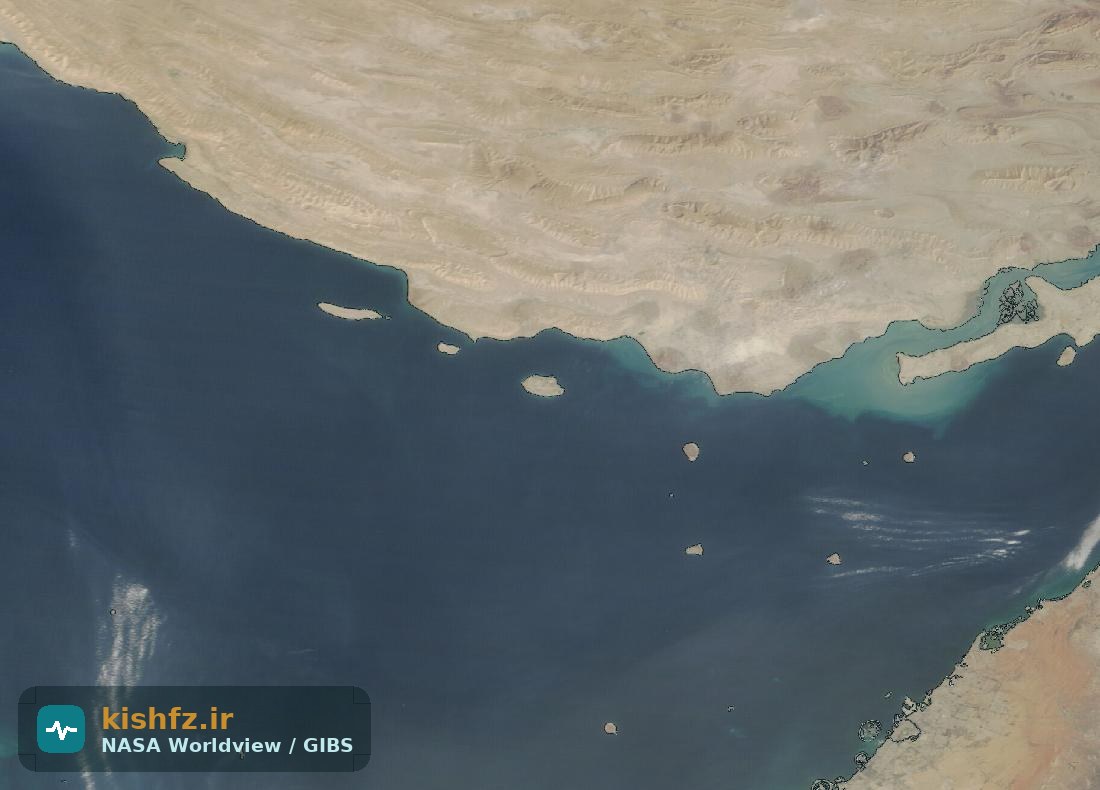
Kish from orbit
True colour, from the MODIS instrument on NASA’s Terra satellite.
NASA Worldview / GIBS
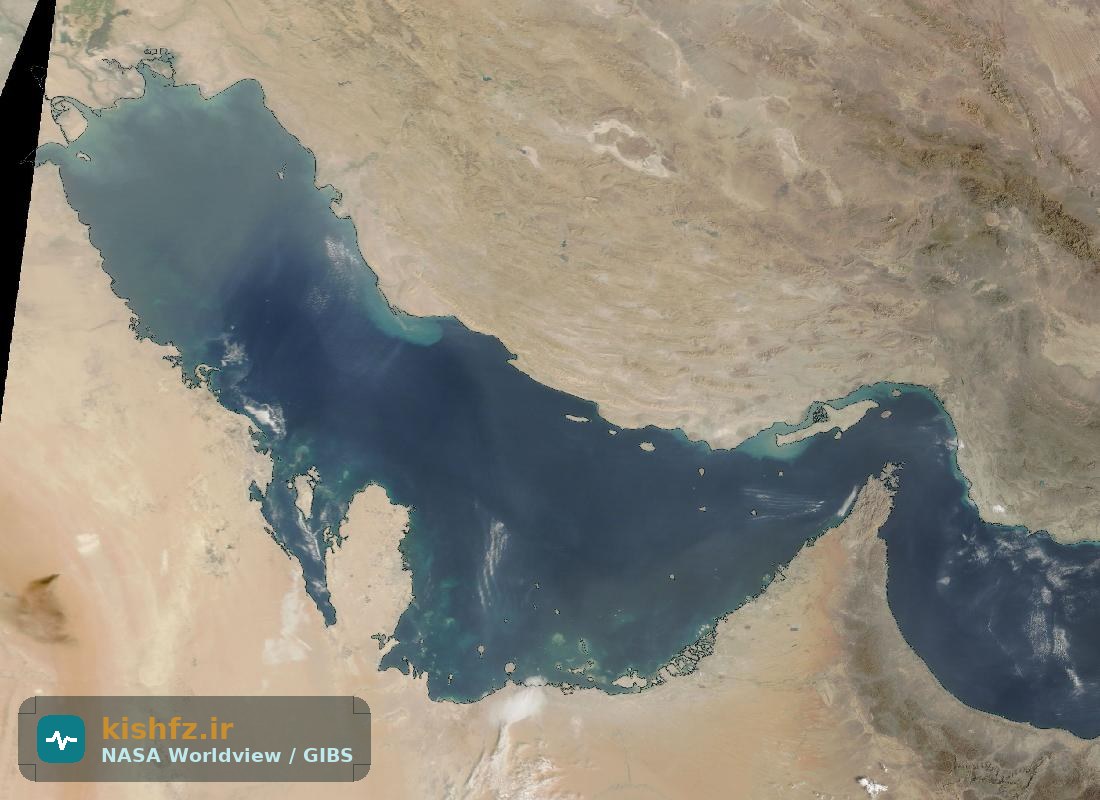
The Persian Gulf by day
The whole Persian Gulf in one pass, with the coastlines drawn on.
NASA Worldview / GIBS
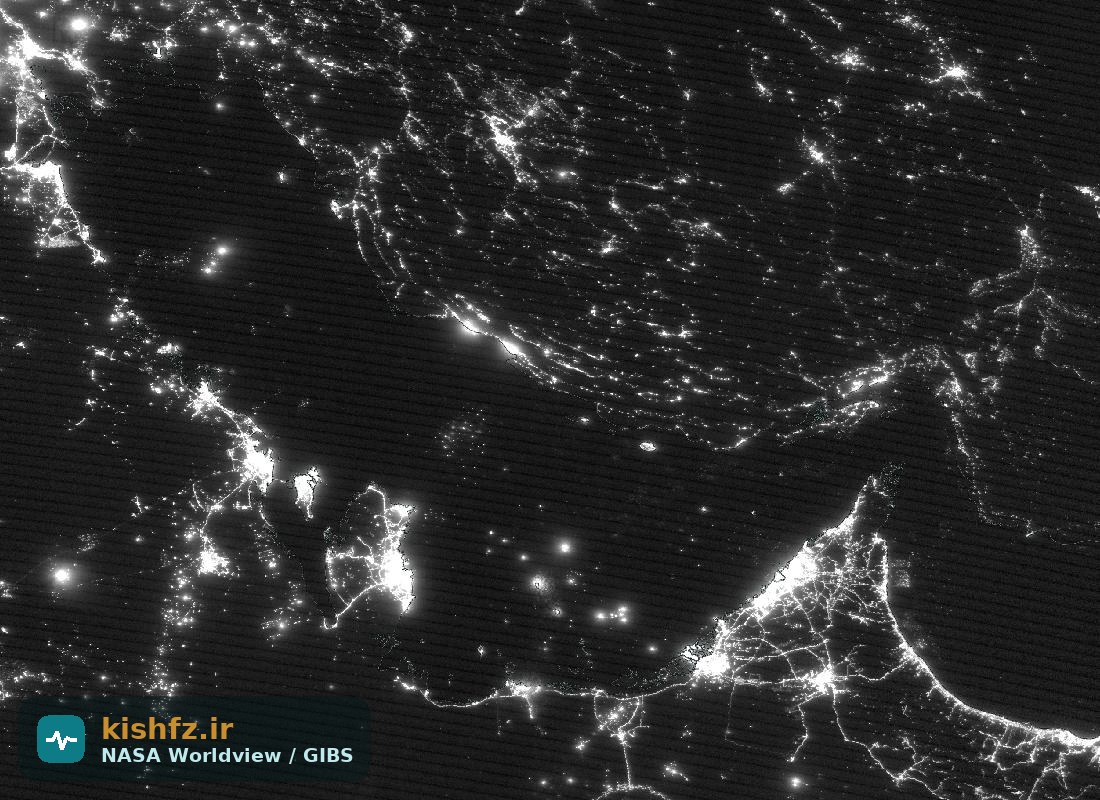
The Persian Gulf at night
VIIRS is sensitive enough to image city light: this is the region drawn by where people are.
NASA Worldview / GIBS

NASA Science
NASA’s Astronomy Picture of the Day.
"Happy New Year!" No, wait, this is not a fireworks display. This image shows Nebula Pa 30, observed with the Gemini North Telescope in Hawai'i. It is likely the remnant of an old supernova explosion: separate historical records by Chinese, Japanese and Arabic astronomers tell of a "guest star" that appeared in the sky for 185 days in the year 1181. It is believed that this bright new point of light came from the supernova that caused the fireworks in Pa 30. Astronomers don't know exactly what happened in this unusual explosion, classified as a Type Iax supernova, but it is thought to be caused by the merger of two white dwarfs. The mysterious central star in the image is extremely hot and produces a strong wind, possibly forming the radial filaments. Look closely at them: those pearl-like knots stringing the filaments are 4 light-days in diameter. Understanding how a supernova created this amazing nebula continues an 845-year old mystery (and counting).Tomorrow's picture: smörgåsbord
This explanation is in English; it has not been translated.
NASA APOD